| Pictures on Flickr can be found here: Central of Peru Railway https://www.flickr.com/photos/colinchurcher/albums/72157607077711507 Cerro de Pasco Railway https://www.flickr.com/photos/colinchurcher/albums/72157607089841645 Cusco to Machu Picchu https://www.flickr.com/photos/colinchurcher/albums/72157607081685807 Huancayo to Huancavalica https://www.flickr.com/photos/colinchurcher/albums/72157607089804765 Peru General https://www.flickr.com/photos/colinchurcher/albums/72157607074066554 Bolivia General https://www.flickr.com/photos/colinchurcher/albums/72157607096879567 Bolivia Railway https://www.flickr.com/photos/colinchurcher/albums/72157607096879577/
Tuesday 12 August 1997 - Lima to Cuzco It was nice to be able to get up in the morning and tie my boot laces without panting. There are some advantages to the thick soupy air of Lima but this was only a short respite because today we flew to Cuzco which is at 10.800 feet. It was a short flight and we quickly surrounded our bags and escorted them to the buses. In the airport car park there was a man who was taking pictures of everybody. More about him later. The name of the city is spelled either Cusco or Cuzco while the Quechua form, Qosqo, is also used extensively. Two flags are often seen flying from buildings, the red and white Peruvian flag and the rainbow - colored flag of Tahuantinsuyo which represents the four quarters of the Inca empire. The hotel Liberatador is the best in town and this was very good although the front desk staff could do with some training. One of the great luxuries was that the water was safe to drink in the room so we could brush our teeth with water. There was also heat in the room so there was a frenzy of washing. After
a late breakfast at Lima and a snack on the plane, all I needed for
lunch was an empanada and a banana on the street. I also purchased a
chirimoia which seems like a small soursop which I kept for later.
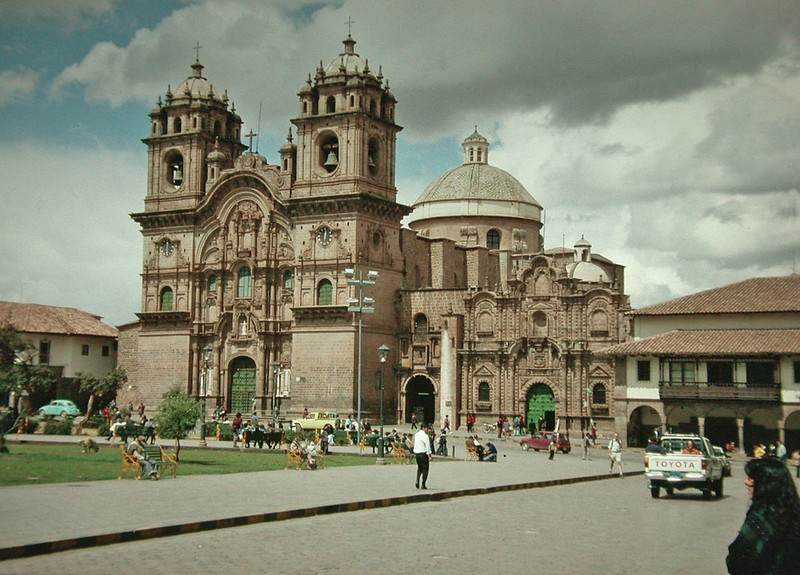
Cuzco is the ancient capital of the Incas and has some fine buildings
that were built by the Spaniards on the Inca foundations. The
foundations are very finely produced while the stone of the main
buildings is not so well finished. It is somewhat ironic that today
the main building material is adobe (mud and straw that is dried in
the sun) and one wonders at man's progress.
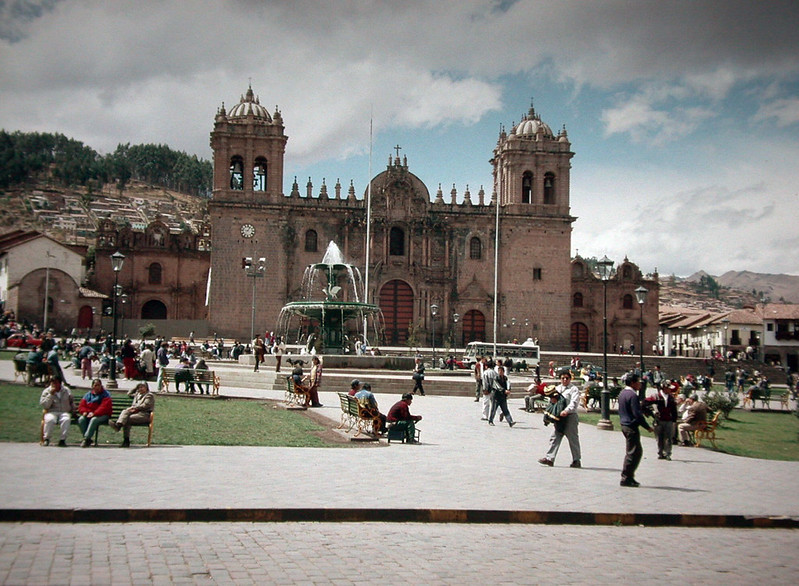
Cuzco is the main tourist point for Peru, and this is very evident. There have been a great deal of changes since I was last here over ten years ago and now there is much emphasis upon the tourist. The main square is Plaza de Armas where can we found some good, well run, restaurants and there are many stores selling quality merchandise. The colonial arcades whitch surround the plaza are ideal for this purpose. The town is prosperous and has benefited greatly from the tourist dollar. Although we were warned about our safety I didn't feel threatened and felt free to wander around within reason. In many places women and children dressed in colorful costumes and with llamas would be waiting for tourists to take their pictures, for money. In fact the city was highly motorized and the only llamas to be seen were the tourist llamas. We had a city tour in the afternoon. The local market by the railway station for Machu Picchu is a lively affair. People sell all manner of things including seaweed, yucca, many types of potatoes, freeze dried potatoes, (it gets cold here at night), spices, dried chili, beans. Lupin seeds are crushed into a paste.
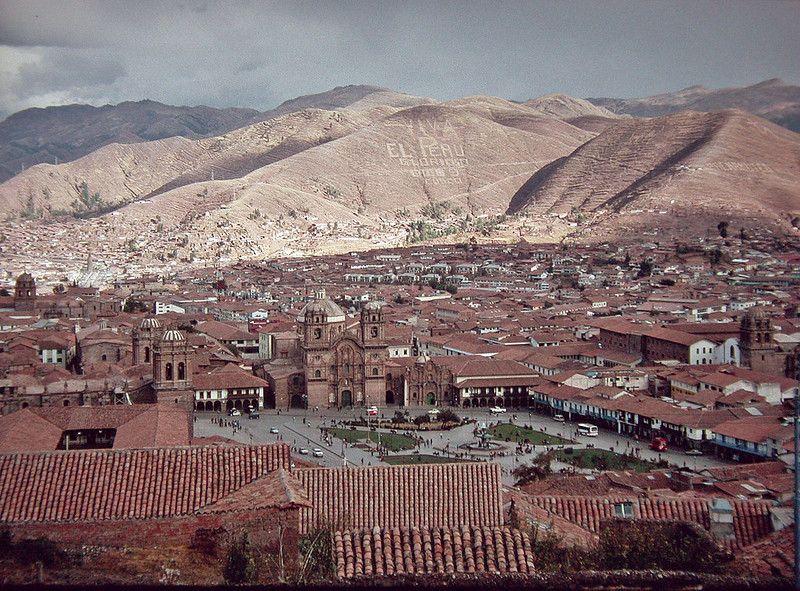
Cuzco is set in a bowl high up in the mountains. It is an attractive location and there are several places where one could obtain good views of the city. Each overlook has its quota of local women with llamas and trinket sellers. They descend upon each new coach load of tourists but were not intrusive.
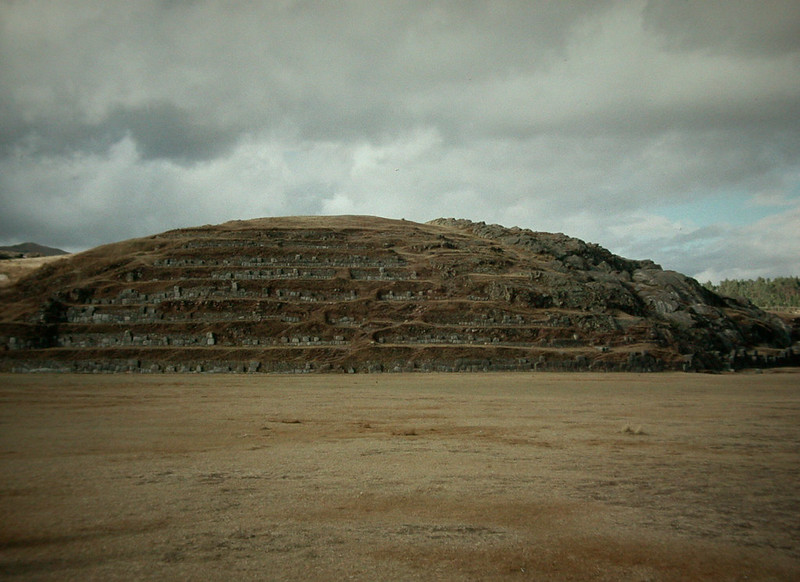
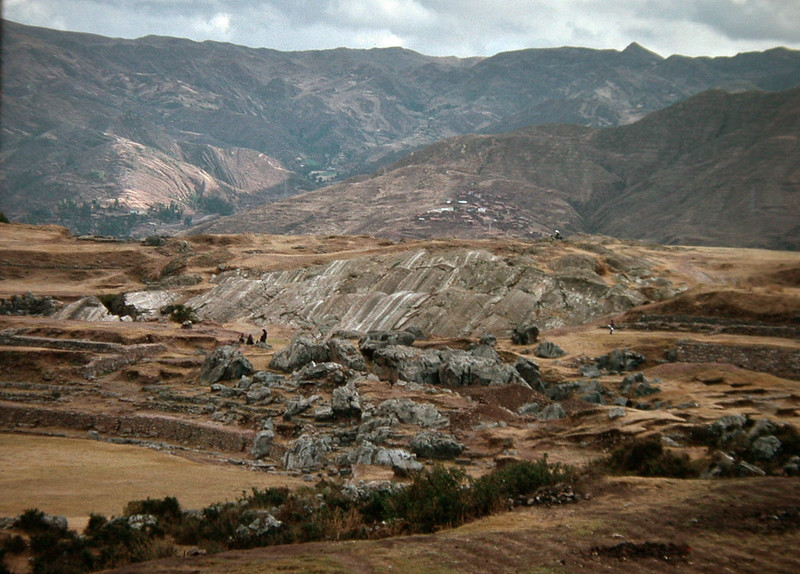
We visited the impressive Inca fort at Sacsayhuaman which means “satisfied falcon” It is a vast site that contains fortifications in the form of a zigzag. The Incas' stone workmanship is seen at its best although the Spaniards used many of the blocks for their own buildings in Cuzco it was a site of a very bitter battle some two and a half years after Pizzaro's entry into Cuzco. The fort was recaptured by Manco Inca who used it to lay siege to Cuzco. In the end, Aadesperate attack by fifty heavily armed and technologically superior Spaniards succeeded in retaking the fort. In the process most of the Incaforces were killed and thousands of dead littered the site. The bodies attracted the carion-on-eating Andean condors, hence the inclusion of eight Condors in Cuzco's coat of arms. It is amazing that so few Spaniards were able to achieve this with their superior weapons, armor and horses against so many. The stone blocks are fitted together with incredible accuracy. It is not known how this was done but there are traces of sand, which, it was believed, was used to polish the stone to perfect the fit. The largest of these blocks weighs about 300 tons.
Sacsayhuaman
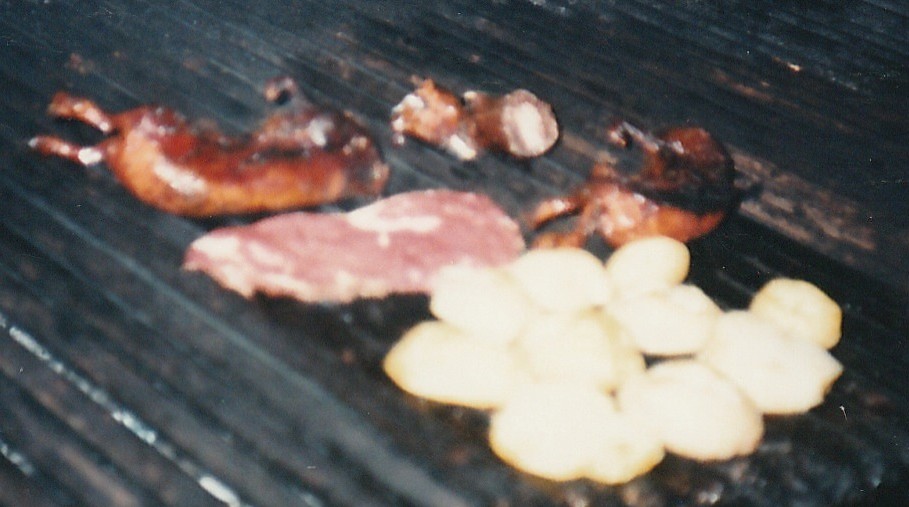
The photographer from the airport turned up taking more photos of us. This time he had a pile of postcards of Cuzco, each of which he had customized with the individual pictures. He would approach one of us and quickly flip through his packof cards to find the right one. I bought a card with my picture on it. This shows a great deal of initiative to take the shots, develop and mount the photos and find out where we were going to be later on so that he could sell them. On the way back to the hotel we saw some smooth rock striations which have been used as a slide by people for hundreds of years. This is as a result of glacial action and is not another example of Inca workmanship. We went to a restaurant in the main square and had cuy al horno. I started off with a slice of local provolone cheese cooked on the parilla (grill) and covered with oregano. The cuy was precooked and finished off on the parilla along with potatoes and stuffed hot peppers covered in batter and deep fried. The cuy was presented lying on its back and with his little legs in the air. The meat had a musty taste, partly from the herbs with which it had been cooked. It was very rich and I think I preferred it cooked in a picante sauce as at Huancayo. The Peruvian red wine was not very complex and ot particularly good.
And so the final score was: Colin - 2 cuy - 0
We walked through the colonial Colonnades on the way back to the hotel and watched the pickpockets in action. Two had bracketed us and come on a prearranged signal came together in an attempt to pump us. We knew what was going on, stood back at the last minute and clapped the performance. There were about six of them and it was quite obvious what they were doing and easy to avoid them. We even followed one of them and pointed him out to others.
|