| Pictures on Flickr can be found here: Central of Peru Railway https://www.flickr.com/photos/colinchurcher/albums/72157607077711507 Cerro de Pasco Railway https://www.flickr.com/photos/colinchurcher/albums/72157607089841645 Cusco to Machu Picchu https://www.flickr.com/photos/colinchurcher/albums/72157607081685807 Huancayo to Huancavalica https://www.flickr.com/photos/colinchurcher/albums/72157607089804765 Peru General https://www.flickr.com/photos/colinchurcher/albums/72157607074066554 Bolivia General https://www.flickr.com/photos/colinchurcher/albums/72157607096879567 Bolivia Railway https://www.flickr.com/photos/colinchurcher/albums/72157607096879577/
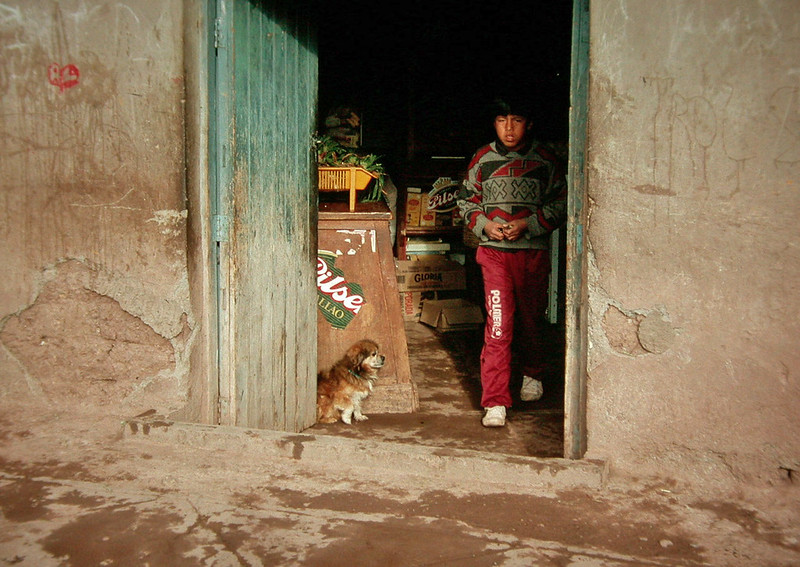
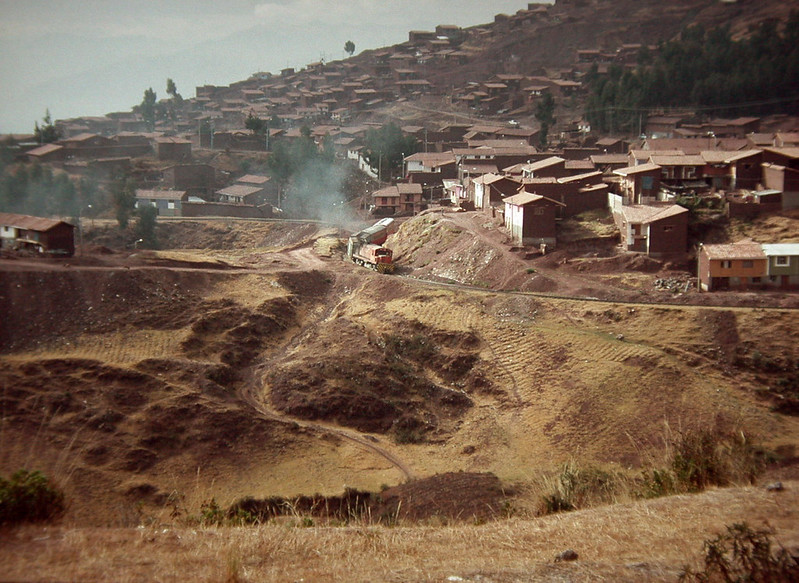
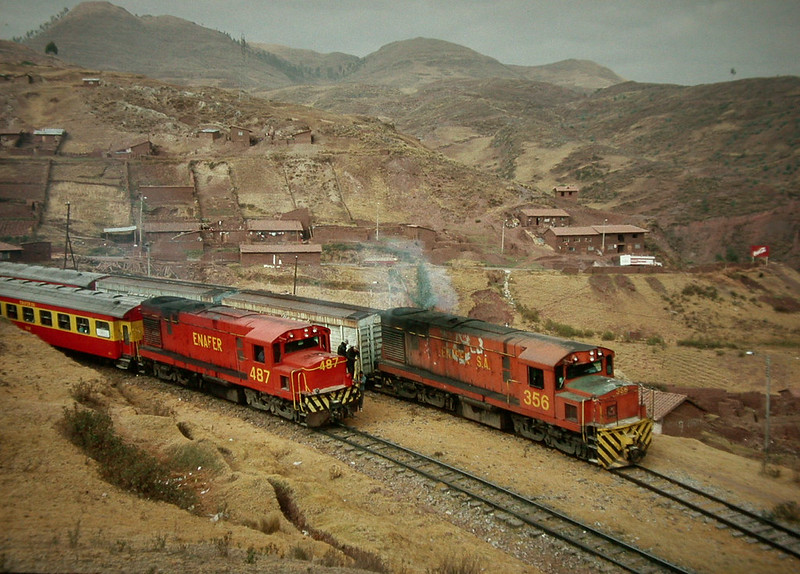
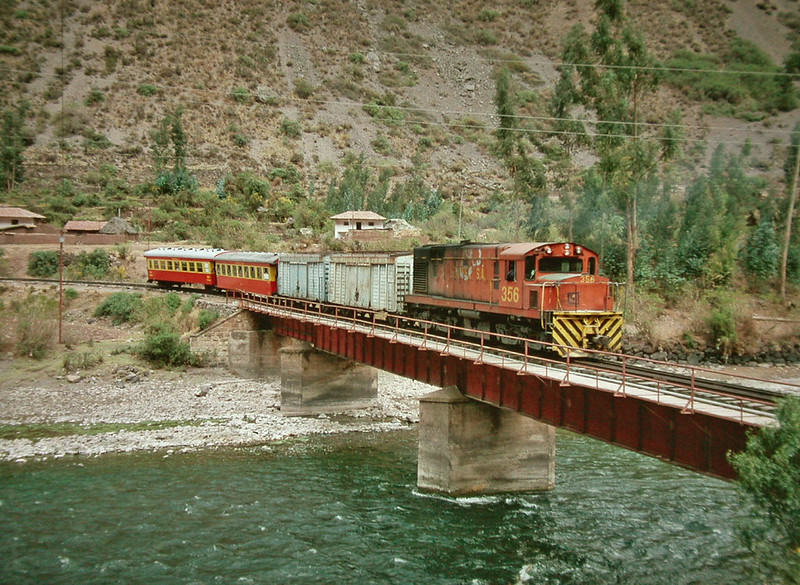
Wednesday 13 August 1997 - Cuzco to Machu Picchu to Quillabamba We huffed and puffed our way into the buses which took us to the narrow gauge railway station for a charter train down the Urubamba valley. The railway does not have very many locomotives, indeed they have no spare ones, and had to cancel the daily freight train to provide power for our train. The daily tourist train had got away around 06:00 but the local train was still waiting for a locomotive. People were sitting stoically in the coaches not knowing when they would leave. Locomotive #356 (built in Montreal) eventually appeared and coupled on to our train. Following some switching to put books cars in our train (we were to operate as a mixed freight and passenger train) we set off. It takes a great deal of time to get out of Cuzco because the train has to climb out the valley through a series of switchbacks. This gave great views of the city, covered with a light mist and with some steam or smoke rising from factory chimneys. It was cool but there was the promise of sunshine later. We stopped for a couple of photo run pasts while still in the town and it was fun watching the town wake up. The women was sweeping the street in front of the stores with some tree branches. The store dog was wandering around yawning to itself while the school children, some in uniform, were chattering to themselves, their satchels on their backs. Many people, including women with small babies in shawls on their backs, we're waiting for the local train which was still stuck in Cuzco waiting a locomotive. They could not understand why they could not get onto our train.
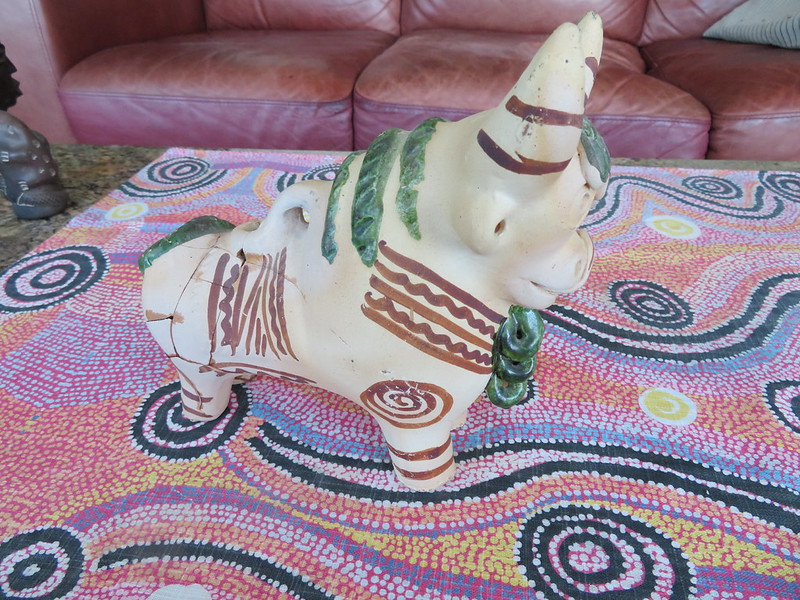
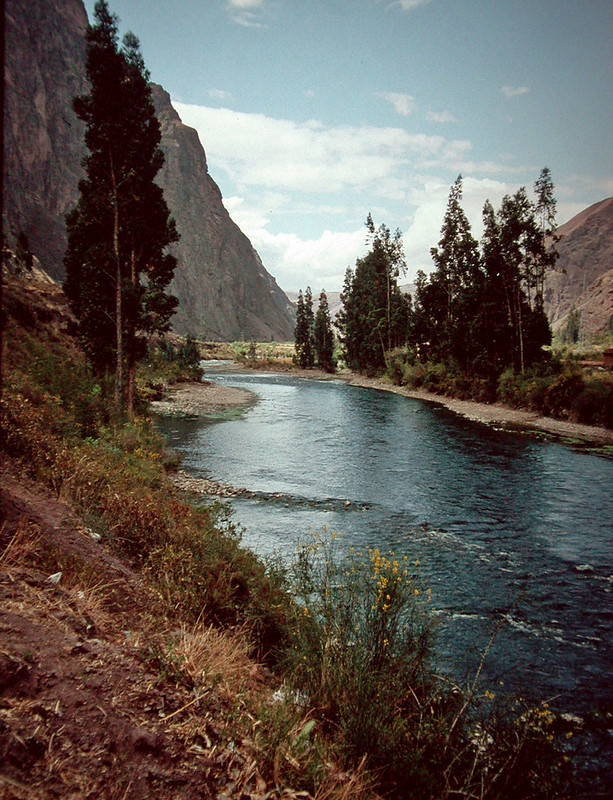
Most houses have a cross and two ceramic bulls which are placed on the roof to dedicate it when new. This is the charm for good luck and seems to be a meld of Christian and Inca superstitions. The bulls are very common. Wonder where I can get one - it would make a great souvenir. House construction is very active in Cuzco. Adobe is the most common material. In many cases the mud is dug up on site and dried in situ. In other cases the adobe bricks come from a brickyard. Adobe last a long time in this relatively dry climate. The more prosperous houses are completed with plaster or stucco which makes a permanent and attractive finish. We went into the siding at the top of the hill and the local passenger train hauled by #487, passed us. We watched it descend the horseshoe curve into the valley which runs all the way to Quilabamba. The Sacred Valley of the Incas is truly bucolic. Cattle graze in the pastures and the people cultivate their fields which are watered by ancient irrigation ditches. The onion crop looked to be a bumper one. In places the valley narrowed and there were signs of the Inca terracing.
 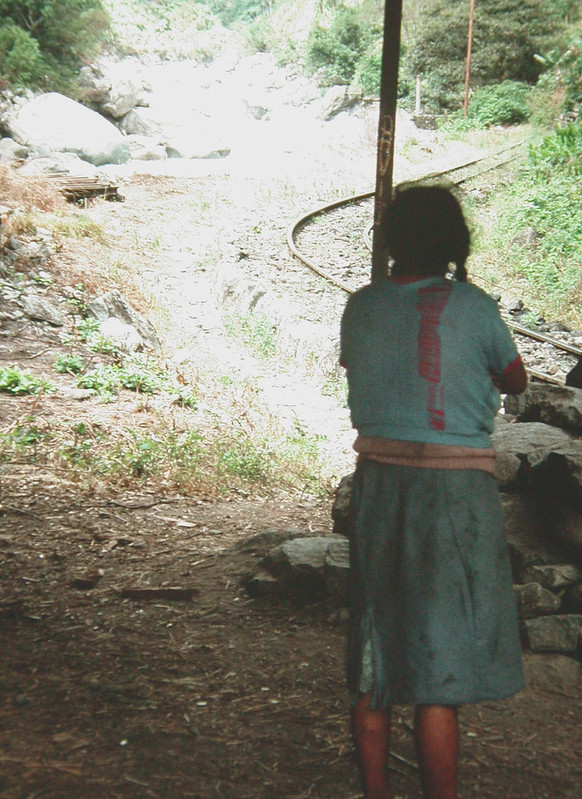 Ollantay Tambo is the last place accessible by road for travelers to Machu Picchu who must transfer to train here (many come direct by train from Cuzco). We stopped for a meet with the train but were immediately set upon by very determined sellers of carpets, blankets, hats, dolls, bananas, mandarins and bottled water. One man had a briefcase which he opened in a conspiratorial manner to reveal Kodak film. I was disappointed as it should have contained either wads of money or drugs. When the other train arrived there was a mad rush to that platform so that the tourist had to run the hawker's gauntlet to get to their buses. We picked up a gondola from a remote, peaceful siding A woman was walking along the tracks carrying a large bunch of red flowers and holding the hand of a small girl. We had to just received our boxed lunches and they were happy to receive some apples, crackers and candy. There was snow on the mountains yet the vegetation was tropical as we had been descending all the way from the summit at Cuzco. Some of the group were staying at Machu Picchu and left the train at Agua Caliente. The rest of us were going through to the end of the line at Quillabamba and would pick them up on the way back tomorrow. We stopped at Ruinas station for Machu Picchu. I decided not to go up as there was only a limited amount of time, the ride up and back takes about an hour, and because I had been there before. Instead I chose to remain at Ruinas, relax with a beer, and talk to the people. I ate the chirimoia which is milky white inside and contains a few pits around a sweet pulp. It was good and made a change from bananas. The place has changed greatly since I was last hear and it is now possible to buy a meal and sit in the sun with a drink. There is very little room in the valley alongside the railway and there is no room for expansion. There was strong competition from the various restaurants and stial holders. Purchase a beer at one place and one incurred the wrath of the neighbor. When they realize that we were with a special train several of the ladies gave me a hard time pointing out that it was an old locomotive that would not likely made it make it to the end of the line. I responded that it had been made in Canada and was there for very reliable. They did have a point though as #356 was badly in need of a coat of paint and it had a cracked frame. The members of our group returned from a two short visit to Machu Picchu and we set out down the valley for Quillabamba. Quillabamba is only some 3,456 feet above sea level and is in the Peruvian part of the Amazon jungle. The line was built quite recently down the valley and many online communities have no road access. The railway literally runs along the main street of most of the towns. Many tropical fruits were in evidence, particularly bananas and the bush contained many birds of paradise flowers. We entered a siding to pass a regular train. Many people were waiting on the platform, not only to catch the train but to sell bananas and potatoes to the passengers. One old lady had a number of gourds. A young woman got down, chose a gourd and started to haggle over the price. In the end, she gave the old lady some coins and said "that is all I'm going to give you”. The offer was accepted with bad grace.
Rail mouinted altar at Quillabamba
|