| Pictures on Flickr can be found here: Central of Peru Railway https://www.flickr.com/photos/colinchurcher/albums/72157607077711507 Cerro de Pasco Railway https://www.flickr.com/photos/colinchurcher/albums/72157607089841645 Cusco to Machu Picchu https://www.flickr.com/photos/colinchurcher/albums/72157607081685807 Huancayo to Huancavalica https://www.flickr.com/photos/colinchurcher/albums/72157607089804765 Peru General https://www.flickr.com/photos/colinchurcher/albums/72157607074066554 Bolivia General https://www.flickr.com/photos/colinchurcher/albums/72157607096879567 Bolivia Railway https://www.flickr.com/photos/colinchurcher/albums/72157607096879577/
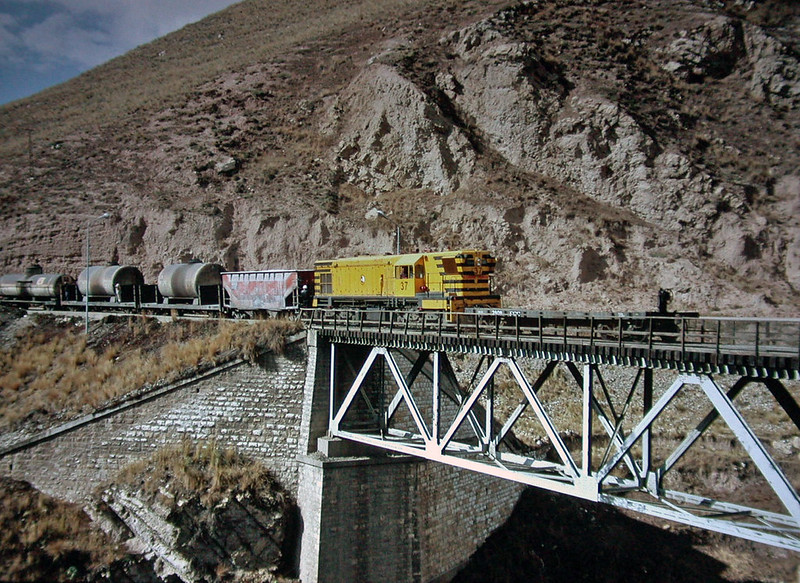
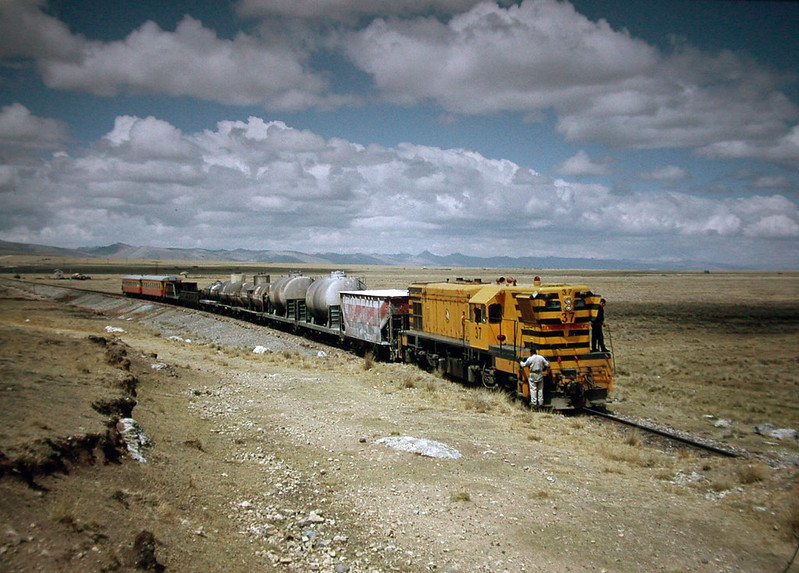
Sunday 10 August 1997 - La Oroya to Cerro de Pasco and return I have known about the railway line to Cerro de Pasco in the remote Peruvian Andes for many years and today I will finally ride it. Breakfast was buffet style in the Miners Dining Room. It started with porridge and was very substantial. Before boarding our train we took a look at a display showing various aspects of mining. There were a number of full-sized mannequins on benches. As I passed one, he said “buenos dias, Señor” and scared the living daylights out of me. There was an electrician working on the display. He had fun with several members of our group in this way. The sun was ing brightly and would do so now for the rest of my time in Peru. The railway had put a flat car in front of the locomotive in case of an attack by the Shining Path. They preferred to have a flat car blown up rather than a locomotive. The purists complained but this was company policy. They agreed to set off the flat car for our photo stops. Tt was a tough climb up to the first summit of the line at La Cima (13,822 feet). We ran beside a clear stream for most of this section with flocks ff martins diving and swooping. The whole area has a bad reputation for polluted waterways but this part was fine with lots of wildlife in evidence - herons, black ibis, ducks and snipe. The cattle and llamas have ribbons tied to their heads to signify ownership. Some people were living in combination adobe and wood huts at this altitude. They had dark skins and red cheeks. The altitude is getting to people. We are all moving around like the living dead. The youngest member of our group, Danny, needed oxygen. All around one can hear people yawning and gasping for breath. It was also cold and I had virtually all my clothes on for warmth. I hope it doesn't get any colder than this or I'll have to buy a sweater.
The
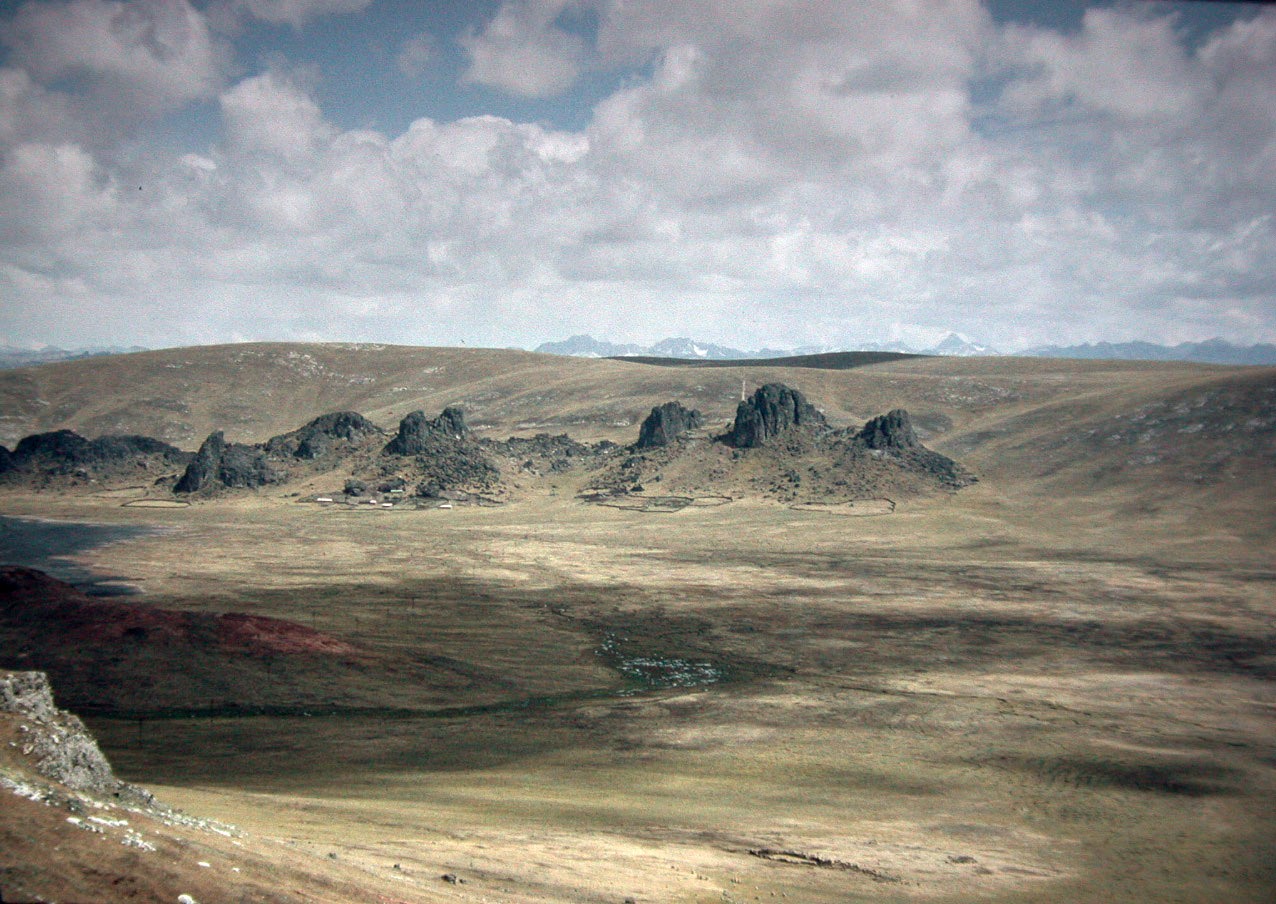
line runs along a wide open valley with a range of snow covered
mountains in the distance to the west. Llamas and vicunas dotted the
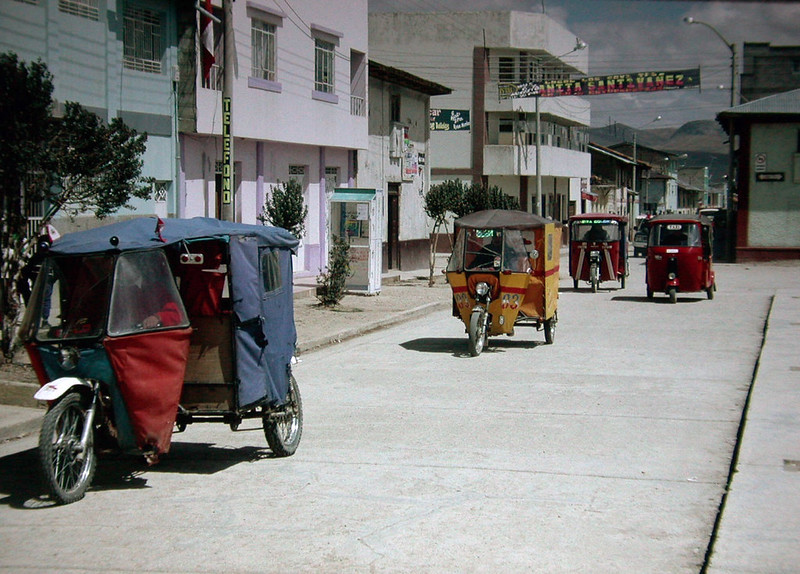
sparse grass. We stopped for a short while at Junin which gave me the
opportunity to walk into the small market and enjoy the sight of the
three-wheeled taxies adapted from motorbikes. It was pleasant,
although cold, in the sun.
Junin With all the fuss about buying supplies
for the restaurant car, lunch was a small disappointment.
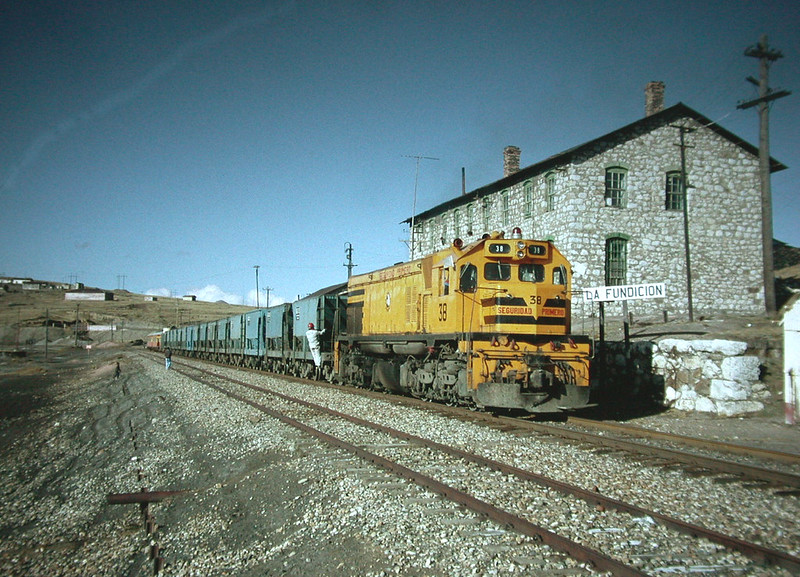
We had a magnificent run past just before Ninacaca with wonderful views across the stark scenery. The grass was very short and there were short saisy or edelweiss type flowers without any stalk so they hug the ground for warmth.
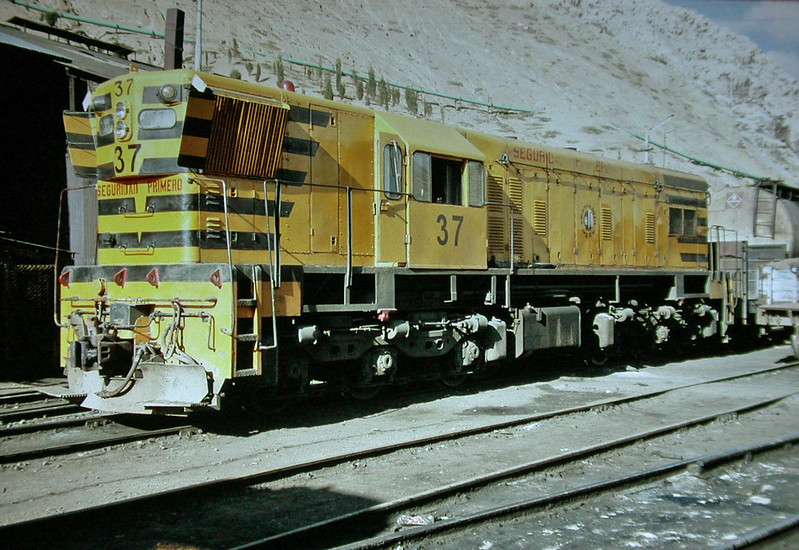
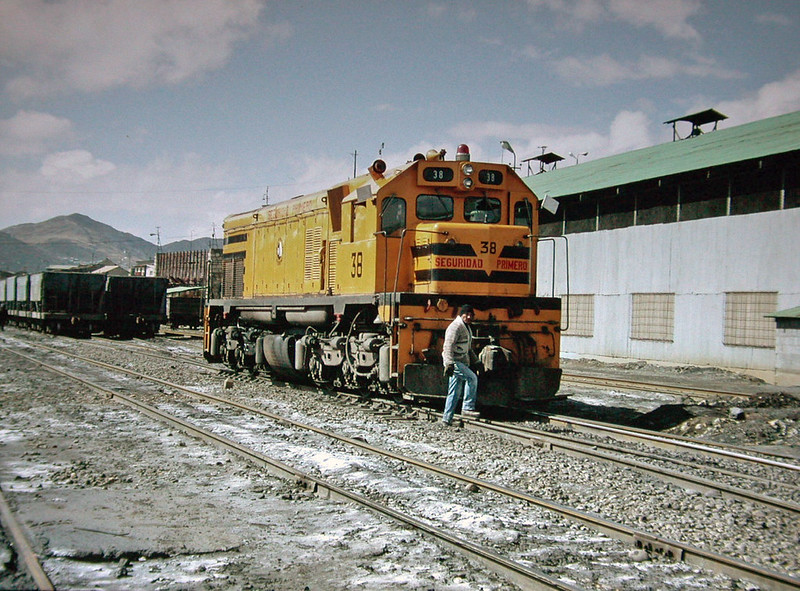
We reached Cerro de Pasco, the highest point of the line at 14,208 feet where we stopped for the best part of an hour. It is not a particularly memorable place. We piled into a grossly overcrowded bus to run across town to see the mine which is an enormous hole in the ground. My Spanish is definitely improving as a number of us were looking at a locomotive which was in a good position for photography but had a flat car attached. I was delegated to ask the engineer to uncouple the flat car and back up a short way so that we could take our photos. I successfully managed this though I had to use a hand signal for “backup" - I should have used regressar. I was delighted that I had managed to do this and the crew were happy as they all received Operation Lifesaver pins for their trouble.
Thanks to my Spanish we were able to take this shot with the flatcar out of the way.
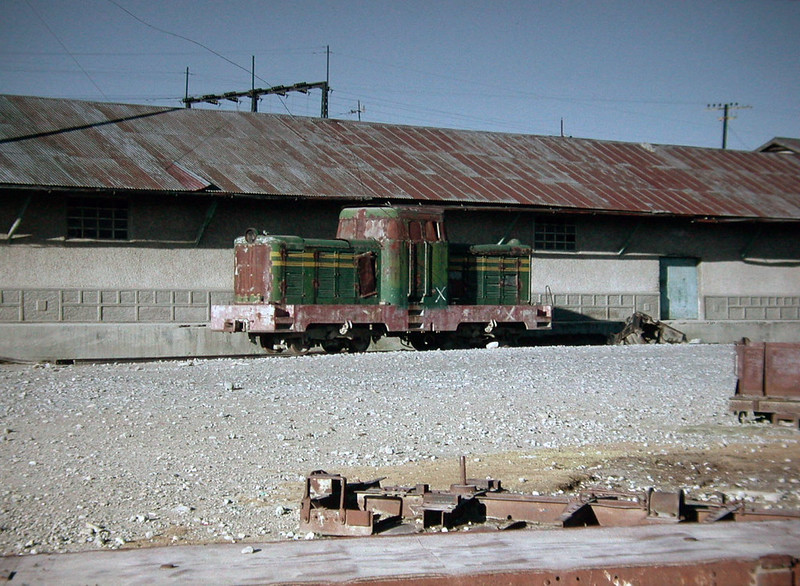
We left Cerro de Pasco at 16:00 and took advantage of the evening sun for photography. I rode the cab to Selby where I had to get the engineer not only to stop but to stop with the passenger cars at the station building so we could look at a mining locomotive that was abandoned there. This was no easy feat for him as there was a long string of freight cars on the front of the train. Coming into Selby we had two near hits with long trucks at road crossings. Normally a locomotive will make short work of a truck and I have always felt safe in the cab. However, this was different because of the flat car we were pushing ahead of us. I feared that the flat car would dig under the truck and throw it up into the cab. Chicken dinner on the train in the dark was not very exciting but it did satisfy our hunger. It was snowing when we arrived at La Oroya on the first passenger train over this line in 15 years. The hot shower was great!
|