| Pictures on Flickr can be found here: Central of Peru Railway https://www.flickr.com/photos/colinchurcher/albums/72157607077711507 Cerro de Pasco Railway https://www.flickr.com/photos/colinchurcher/albums/72157607089841645 Cusco to Machu Picchu https://www.flickr.com/photos/colinchurcher/albums/72157607081685807 Huancayo to Huancavalica https://www.flickr.com/photos/colinchurcher/albums/72157607089804765 Peru General https://www.flickr.com/photos/colinchurcher/albums/72157607074066554 Bolivia General https://www.flickr.com/photos/colinchurcher/albums/72157607096879567 Bolivia Railway https://www.flickr.com/photos/colinchurcher/albums/72157607096879577/
Friday 8 August 1997 – Huancayo to Huancavelica It was cold in the room last night. Peruvians combat this by the use of large numbers of thick heavy blankets.
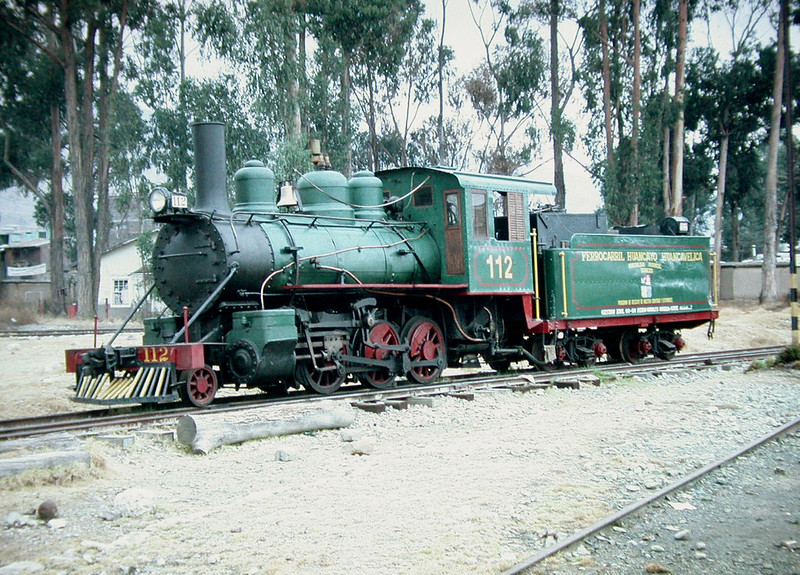
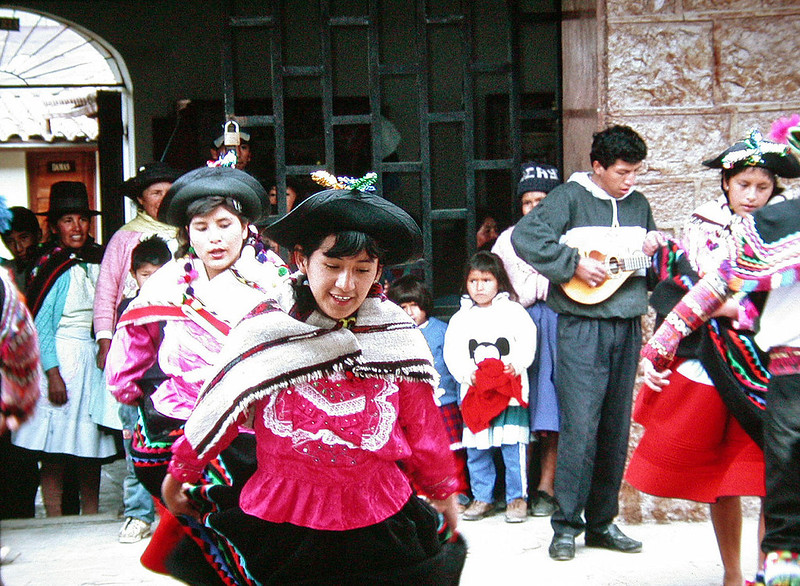
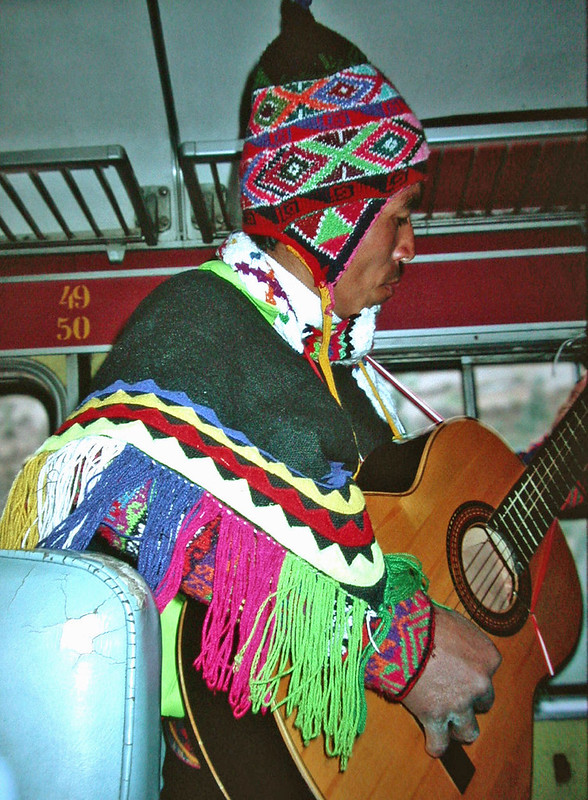
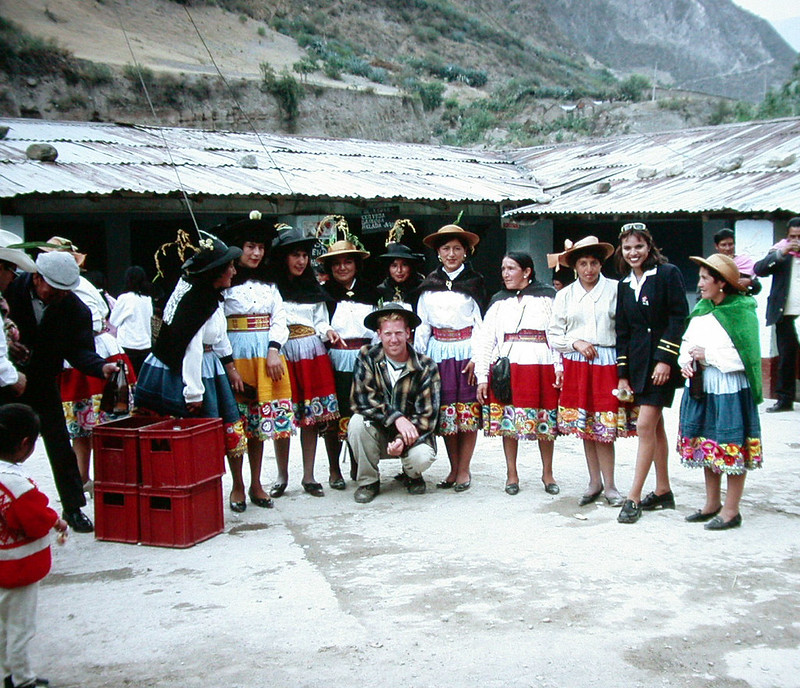
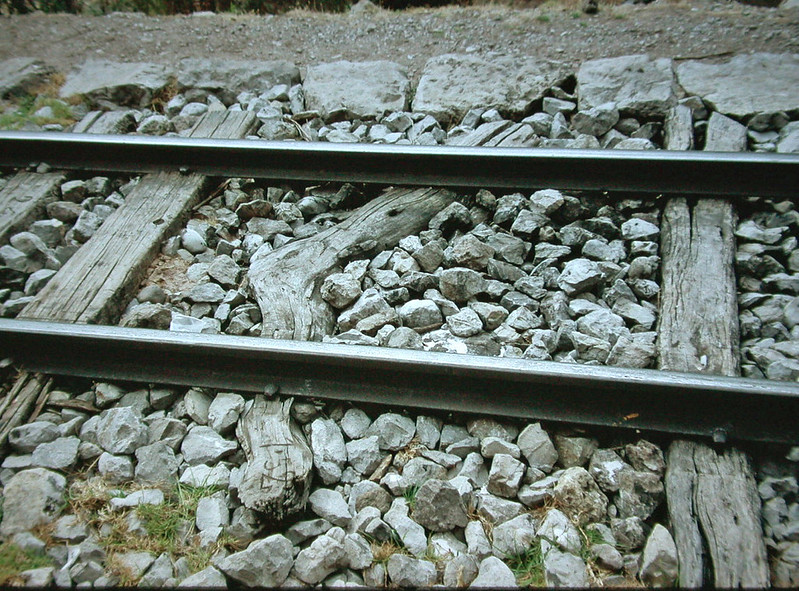
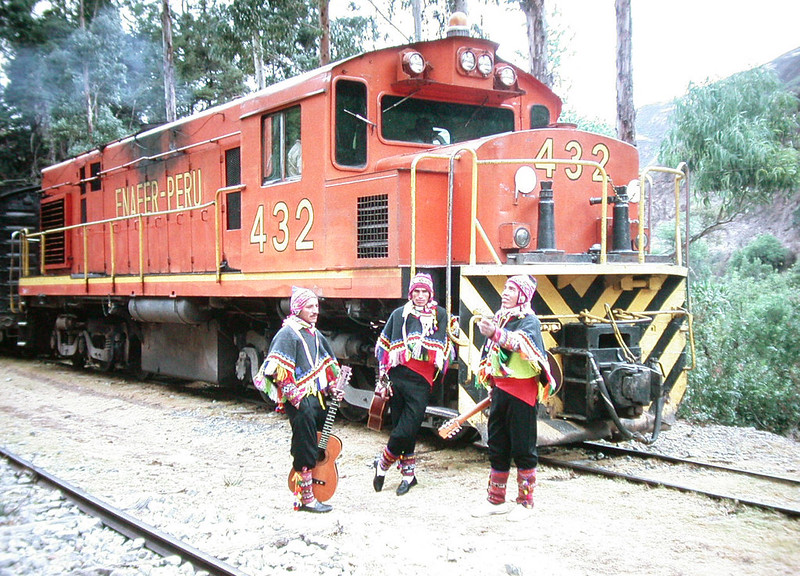
Huancayo The railway line to Huancavelica is narrow gauge (three foot) whereas the line from Lima is standard gauge. The narrow gauge station is across town from the standard gauge one at which we arrived last night. This section of line has always had a passenger service, in spite of Shining Path, because there is no good alternative bus service. The route to Huancavelica runs down the valley of the Mantaro river and then up a side valley. Huancavelica is at 12,065 feet. We arrived at the well-kept passenger station well before the scheduled departure of our charter but after the departure of the first passenger train. I purchased some bananas from a lady with a stall outside the station and was met by a whole bunch of people, many in local costume, in the wide circulating area by the train. The local TV and Chamber of Trade was recording our every move and I think they had more cameras than we did. Hostesses, smartly dressed in white blouses and dark navy suits were circulating with trays of drinks called chicha de jora. This is a milky brown drink made from quinoa, a native Indian grain. It is not alcoholic itself but will ferment in one's stomach in a couple of days. Have to make sure I keep things moving. We were given a demonstration of a local dance by four boys and four girls in their teens accompanied by three men with guitars. It is called sarui in Quechua. The grain harvest is carried out in the mountains in June and July. On the full moon of these months the unmarried men and women go out to thresh the grain. The men want to prove they are good workers while the women wish to demonstrate they can sing well. They started off with a girl singing to wake the men up and they both begin to thresh the grain. The men start to drink chicha, get drunk and fight amongst themselves. They then start to argue with the women and there is some pushing and shoving. Eventually the women show a little interest so that finally the man picks up a woman and carries her off. This still happens in real life today although most of the marriages are already arranged. The next day the boy goes to the girl's father and apologizes for what he has done to the daughter while the boy's mother goes to him with a bowl of soup to see what shape he is in after all the fighting, first of the other men and then with his prospective wife. The dance depicts this up to where the man carries off the woman. The last man to leave was small and stature and he dropped the girl so they were both rolling around on the floor. The girl was upset that he had spoiled her exit and caught him a whack around the ears as she ran off.
Today we had even more people accompanying us on the train. Nurse
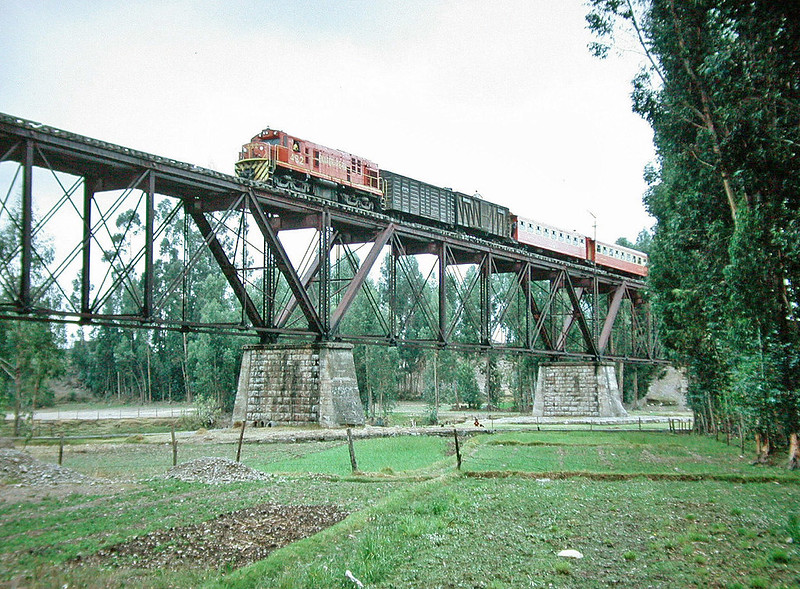
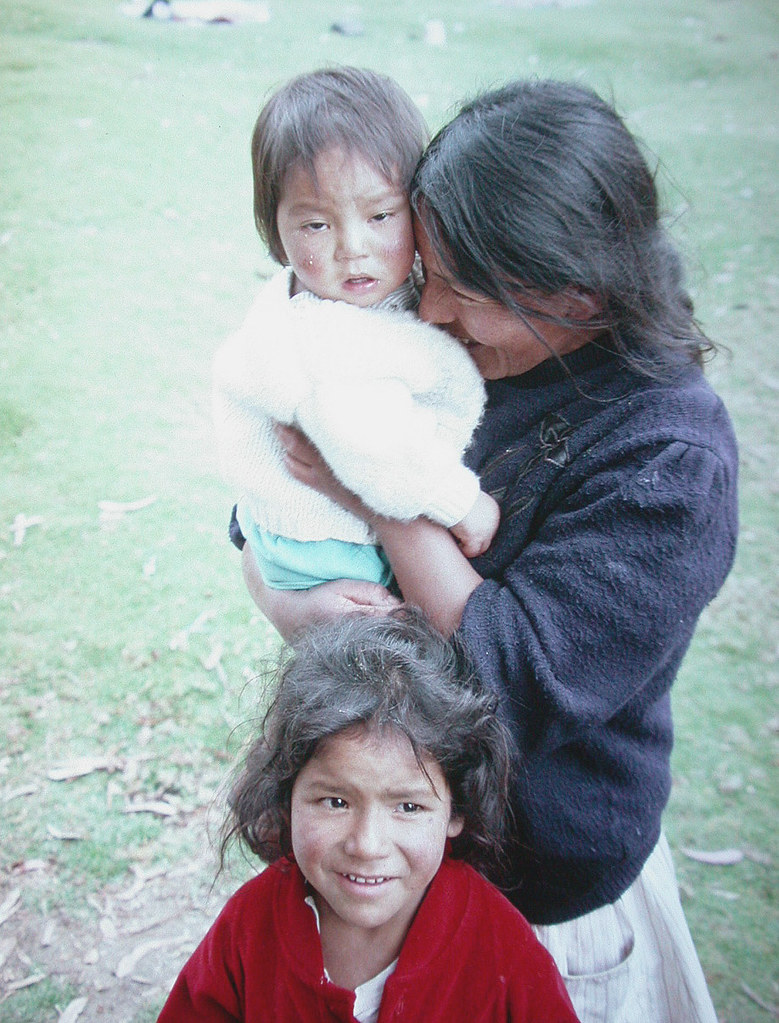
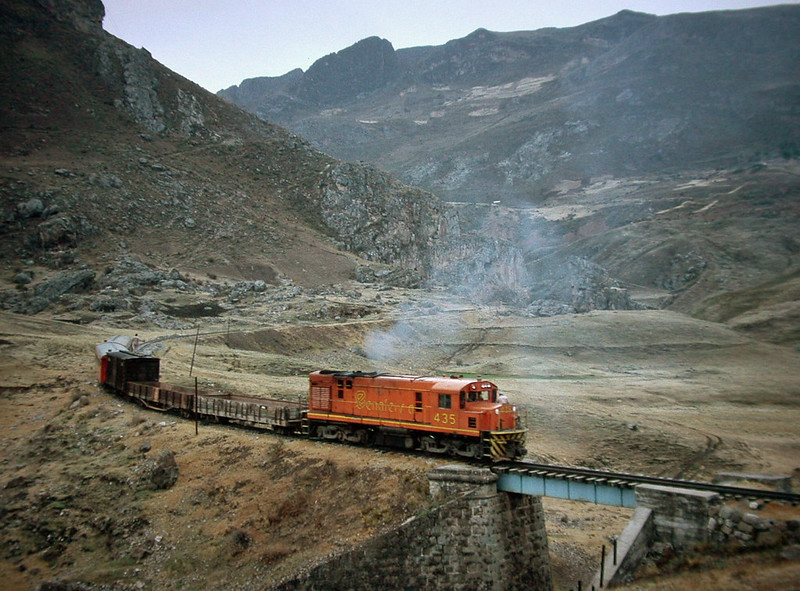
with the oxygen bottle No wonder the train seemed crowded. The stewardesses were 18-21 and were studying tourism and hospitality at Huancavalica. There is a special tourist train going to Huancavalica on Sundays and returning on Mondays and they go out on this to gain experience. I gave one an Operation Lifesaver pin and each one, in turn, came and sat down next to me and started talking and would eventually get around to asking for a pin. In this way I managed to have a Spanish lesson from each one so everybody was happy. It's a surprising that their French is better than theie English. Many have learned French at L'Alliance Francaise both at Lima and Huancavalica. We set out under a cloudy, but bright, sky. They use the same diesel locomotives on the section of line but provide them with narrow gauge trucks. So we were treated to the familiar chant of a Canadian locomotive sounding as if it were coming apart but pulling hard. This particular one needed some adjustment because every time the engineer gave it full throttle, there would be clouds of dense black smoke and flames would shoot out of the exhaust, sometimes two feet in the air. Huancavalica is set in a white fertile valley. Many people were working in the fields while the women were washing the clothes in the river. People wore bright clothes with red scarves. The line runs onto a high embankment and crosses the river. We stopped on the other side and clambered down to the valley to get some pictures as the train backed to crossthe bridge and came forward. There was a double run passed at this point so people could change their camera angle. It was here that I met Senora Gomez who was just returning from the river with her daughter and small son, Alexander. They had been washing clothes in the river when this bunch of gringos invaded the area from the train. She was amazed that anyone would want to photograph the train and even more surprised when I told her the list of countries from which we came. Alexander was still a little small to get it into much mischief. He had red chubby cheeks which is common with children born at such high altitudes.
Senora Gomez with daughter amd Alexander The valley quickly narrowed and became V-shaped. The fields are smaller and there were many sisal plants, with yellow flowers, on the hillside. Some rock formations were impressive with twisted and contorted layers. I rode the cab from Izcuchaca to M. Caceres. The cab layout was similar to yesterday's. The engineer knew the road and controlled his train skillfully. He used the dynamic brake a great deal which bunches the train but creates a high-pitched whine. We had a couple of boxcars in our consist. We met a couple of opposing trains, both of which had six or so passenger cars and both of which were full. Because there is a regular passenger service on this section of line there was lots of activity at each station at which we stopped. We stopped at most stations to pick up train orders. Each station stop became an opportunity to meet people and buy fruit and snacks. Many people would make funny remarks in Spanish. If I responded in Spanish they would reply in Quechua and laugh at my blank look. It was all in good fun. Everywhere we went and everything we did was duly recorded by the cameras of the Chamber of Trade.
At one point we went into a siding for a meet at a remote location where the valley was steep and narrow. As the approaching train came around the bend a man came scrambling down the cliff at high speed and gave a packet to one of the train crew. The hills seem to be almost unscalable at this point yet people must be living just over the top.
We arrived at Huancavalica while it was still light. It is built in a high wide valley and there are many adobe dwellings. There were many people milling around but the guard kept them at bay while the bags were transferred to the buses. We rode off to the hotel behind a police motorcycle escort with lights flashing. El Presidente is the best hotel in Huancavelica and stands on the central square, Plaza de Armas. It is quite basic and the wooden floors are polished with a mixture of wax and kerosene. After some while the kerosene sticks in the back of one's throat. The holes in the sheets were nicely darned and the toilet and shower was a common one, segregated by sex, down the hall. The Plaza de Armas is pleasant and the stores are well maintained and there are small triangular gardens. There were lots of people walking around in the evening. All were dressed in dark clothes, hats and scarves and seemed to look colder than it really was. We ate at El Restaurante Roy which was not bad - beef steak a la Parrilla with a great amount of rice and some fries.
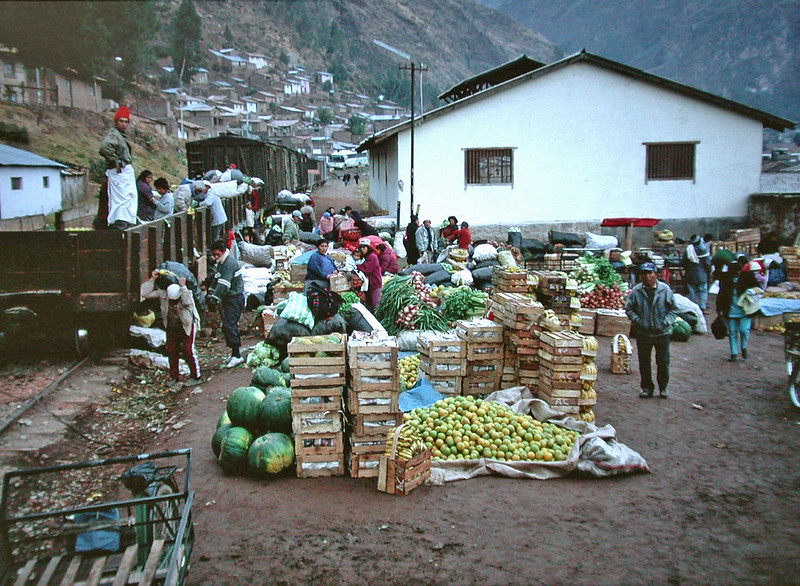
Saturday 9 August 1997 Huancavelica to Huancayo to La Oroya Today we retraced our steps back to Huancayo and La Oroya. I slept well under the vast weight of the blankets but the temperature in the room dropped through the night from 56° to 50°. We heard some fireworks in the night. The locals celebrate on Friday night so that they will be sober enough to go to church by Sunday. Huancavelica means a straight, tall stone. The earliest signs of habitation in the area of cave paintings from the Chavi culture which are over 7,000 years old. The Spanish had a great influence in the area. The natives worshipped the old gods through small stones. If a Spaniard came across a native unexpectedly he would not realize when the native dropped a stone that this was a form of worship. There was a vast underground city under the church and square. This contained an underground bullring as well as five churches. We were taken back to the station and had to wait a little while for our train. There was a small local market in the freight yard where people were loading a gondola car with fruit and vegetables for villagers down the line. A lady who sold me some bananas told me that there was a feria (fair) today at Yauli.
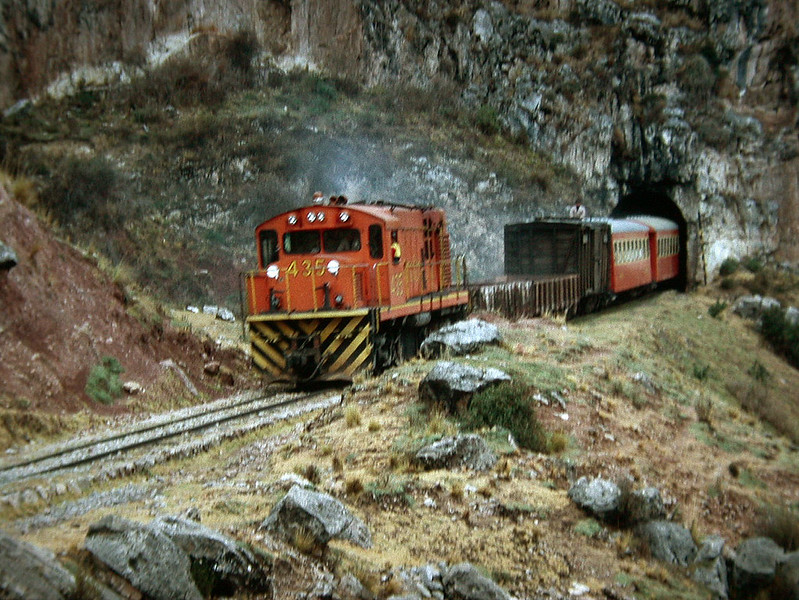
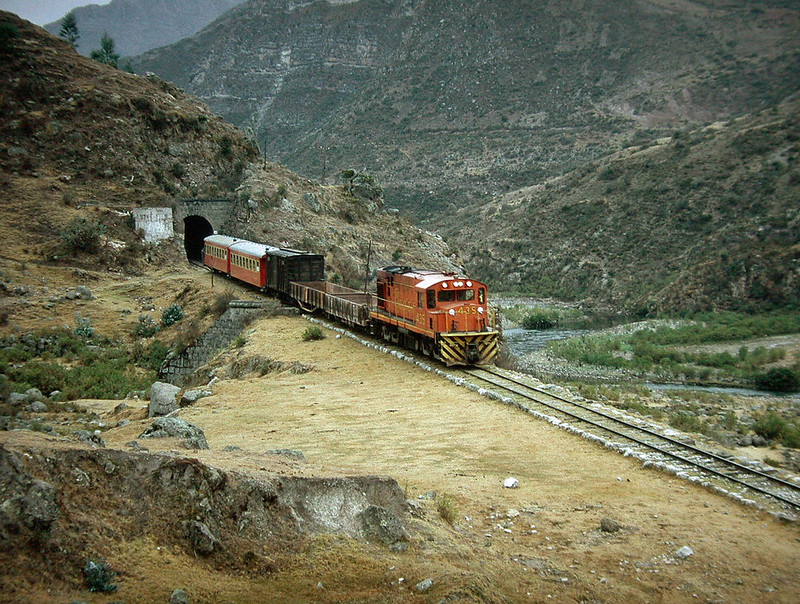
We left town under a cloudy sky although it looked more promising and we hoped for some sunshine. We stopped quite soon after leaving Huancavelica to take some pictures in the hills. We stopped by a tunnel in the middle of nowhere when a woman and her children appeared walking down the track, and to our amazement, through the tunnel. The countryside appears to be empty but there is always someone around. There was an unscheduled stop for a braking problem with one of the box cars at the front of the train. The crew fixed it by completely dismantling the entire brake gear from one end of the car within about 15 minutes - amazing. We didn't get much chance to see the feria at Yauli but I purchased a colorful chullo or hat from a boy who had a number to sell. It seems that each town has a different, distinct pattern. The chullo is very warm as it covers my ears. There is a strict protocol among our group, everyone must stay in the photo line so that there are no rail fans in people's pictures. Locals are exempt because they add color. I tried to claim status as a local with my chullo which would allow me to wander out in front but this didn't work - I wasn't surprised. The chullo was a very good friend until we got away from the cold weather. I even slept in it. We were told to expect a longer stop at M. Caceres. There was a group of people in local costume with a small band including a Peruvian harp. I was one of the first out and was immediately offered a glass of cana (cane rum). This livened up the occasion so far as I was concerned but was complicated by the fact that I had the only spare glass and there were others waiting to try some. I took it back in one go and felt very happy afterwards. They asked us to join the dancing but the altitude was soon have put a stop to such exertion.
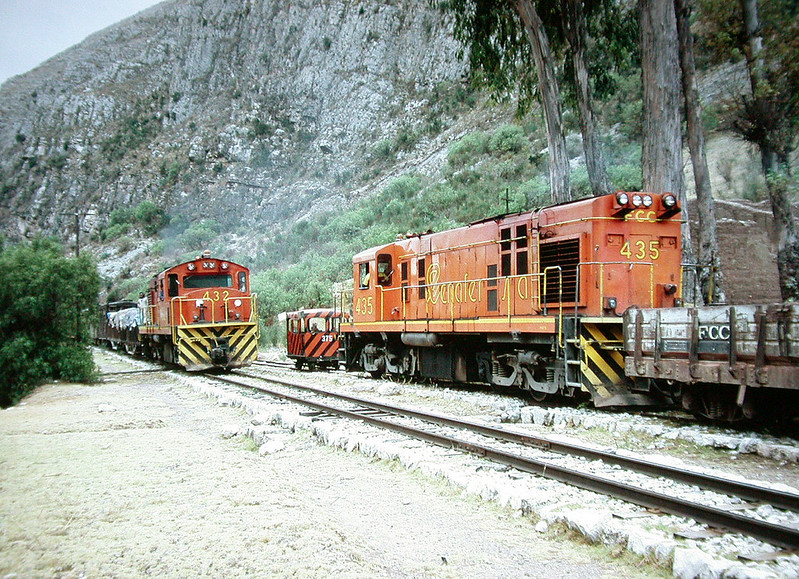
Many people were out and about as it was Saturday afternoon. People were carrying large white lily type flowers which are called cartucho. On the approach to Huancayo many people were strolling along the tracks. One young man was impressing his girl by playing chicken with the train. He eventually left the tracks and turned his back to the train were upon the engineer through an oily rag which hit him in the back of the head. At Huancayo there were tears from one of the hostesses who had to say goodbye to Danny, the 23 yeah old youngest member of our group. At Huancayo we had a change from the narrow gauge train from Huancavelica to a standard gauge train which would take us to La Oroya and eventually Lima. There is a dual gauge track across town between the two stations at Huancayo and so we were able to ride across town. There was some complicated switching which finished up with the two train standing side by side on different gauges. The photo was made even more interesting by the fact that the locomotive numbers were consecutive although with different gauge trucks. Another interesting rarity was that we had traversed the same piece of track in different gauge trains.
The trip across Huancayo was a riot. The tracks go along one of the main streets which were full of stalls, it being Saturday afternoon. To make matters worse, the street was still under repair so the cars were all over the place. Many of the women had long double pigtails which are joined together with black ribbon. We went very slowly nudging the errant car or stall holder out of the way. At the second station there was a wait while the restaurant car crew decided to go into town to buy supplies. They had only had almost 2 days waiting for us to go to Huancavelica and back. And so the first passenger train in almost ten years left Huancayo for La oroya. There was a photo stop at Malpaso and we we stopped to pick up the gondolas we had dropped off the other day - they had been filled with silica. As night fell the sky cleared and we were hopeful for clear weather for tomorrow. La Oroya is a company town (the Cerro de Pasco company) and we stayed in the company private hotel. It was quite well appointed although it was very difficult to find our rooms and we certainly did not appreciate having to backtrack up and down stairs with our bags at this altitude (12,272 feet) . Dinner in the miners dining room was substantial with soup chicken and fruit.
|