| Pictures on Flickr can be found here: Central of Peru Railway https://www.flickr.com/photos/colinchurcher/albums/72157607077711507 Cerro de Pasco Railway https://www.flickr.com/photos/colinchurcher/albums/72157607089841645 Cusco to Machu Picchu https://www.flickr.com/photos/colinchurcher/albums/72157607081685807 Huancayo to Huancavalica https://www.flickr.com/photos/colinchurcher/albums/72157607089804765 Peru General https://www.flickr.com/photos/colinchurcher/albums/72157607074066554 Bolivia General https://www.flickr.com/photos/colinchurcher/albums/72157607096879567 Bolivia Railway https://www.flickr.com/photos/colinchurcher/albums/72157607096879577/
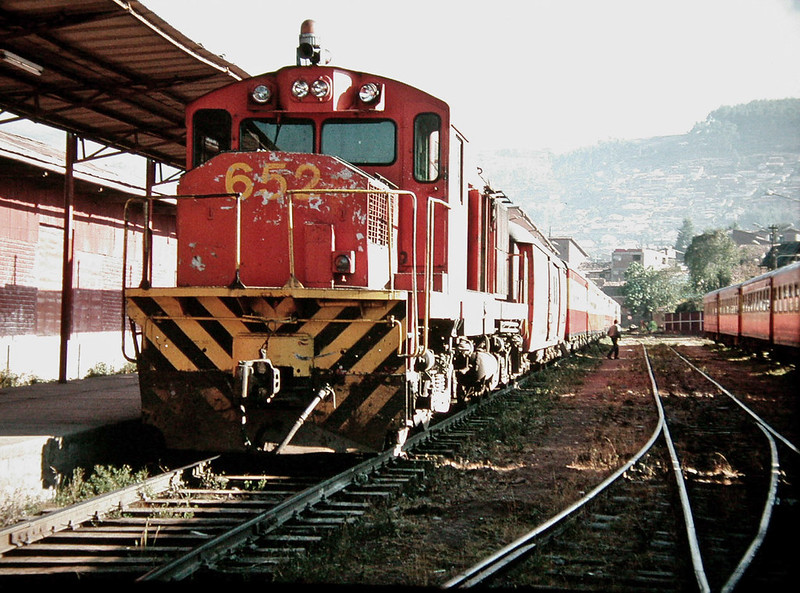
Friday 15 August 1997- Cuzco to Puno.
There is a regular passenger service over this line and I was impressed to see a host and hostess standing to greet passengers at each door. There were big grins from the crew on our car when I gave them Operation Lifesaver pins which really helped to break the ice.
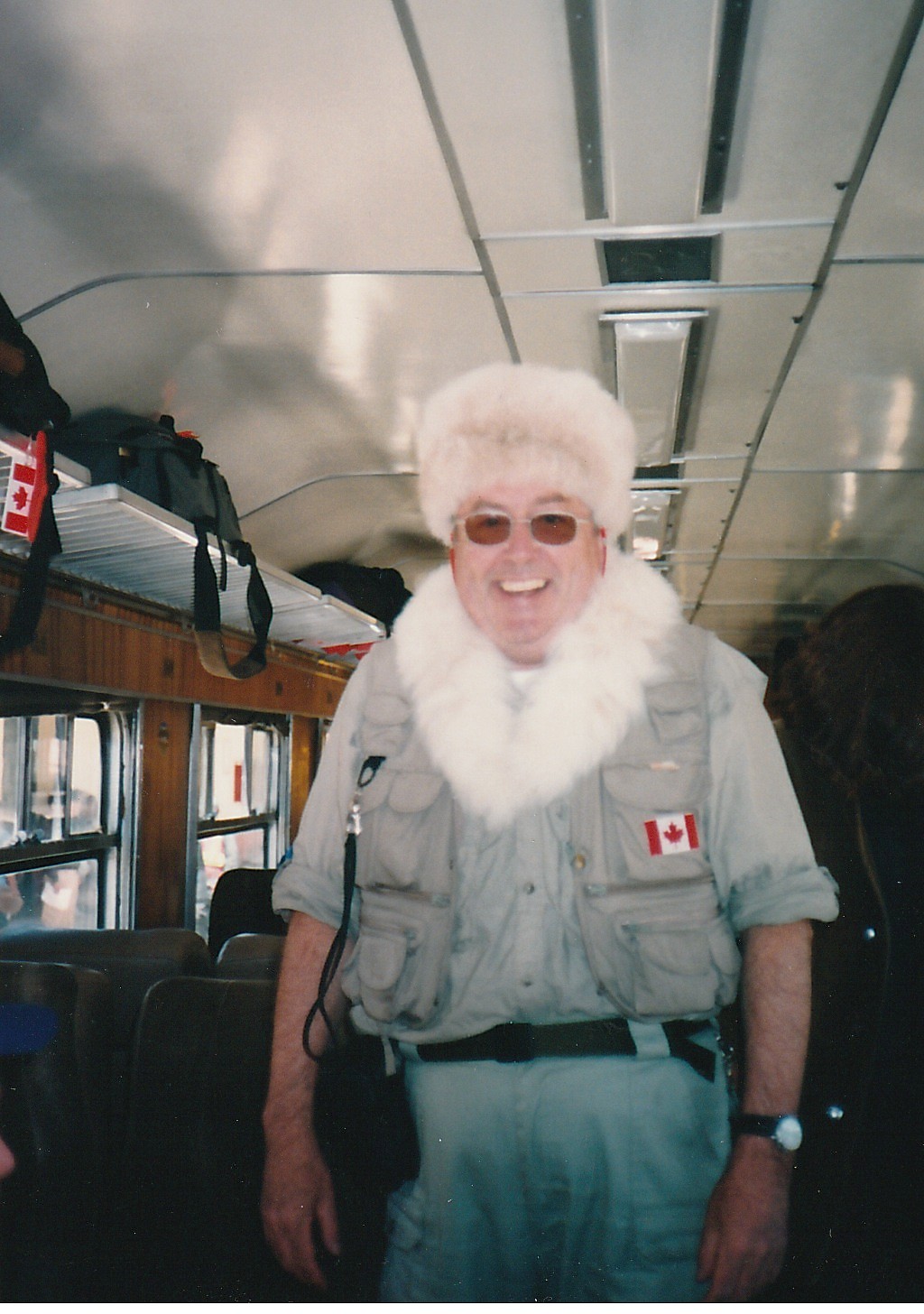
We traveled along the valley away from Cuzco gradually climbing until we reach the altiplano in the early afternoon. There were a number of large villages all of which are the color of the local soil, some red and some brown. A man was carrying a plough over his shoulder and leading two oxen out to the fields. Some of the fields had large rocks lying around so that the plough had to go around them. There were many eucalyptus trees by the rushing river where women were doing their washing. As we climbed higher, the valley became drier and there were sheep which were watched over by women spinning wool, their children by their sides. The well-cared for villages were very attractive with the adobe houses and well maintained cobblestone streets. At San Pedro we had a short wait for a freight train which gave us time to look at the marshes with ducks, Ibis and wading birds. There was a 20-minute station stop at Sicuani where many people were selling their ways mostly wonderful alpaca leather and fur goods. It was a great deal of fun with so many people milling around and bargaining in a good-natured manner. I purchased a nice fur hat for Mary as well as an alpaca collar for toys for the cats. I was happily wearing my purchase which, it seems, created a breakthrough in the price of hats (10 soles) which others used to bargain. Jim, from New Zealand, had got the price down to 12soless but the seller would not budge further. Jim went back into the train and sat down. Just before the train left the seller knocked on the window and agreed to 10 soles. I reminded Jim that he was only outgoing over 70 cents and that the fur hats were a bargain in any case.
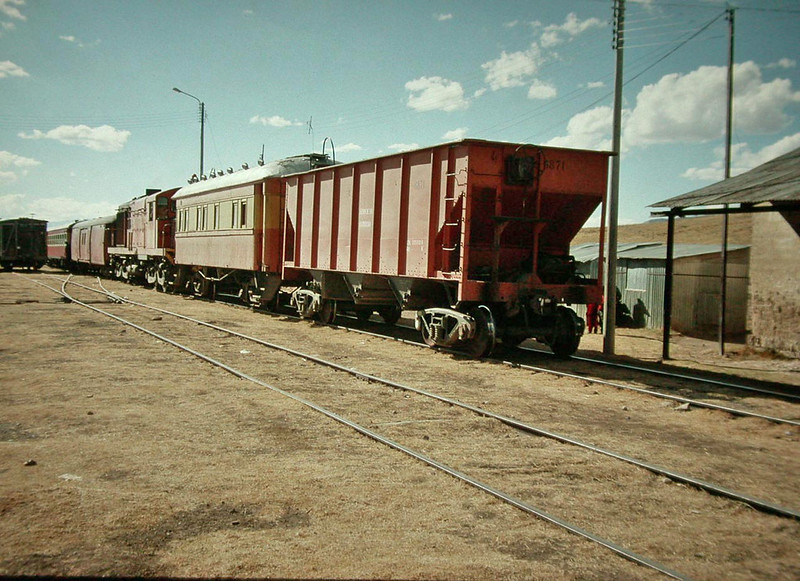
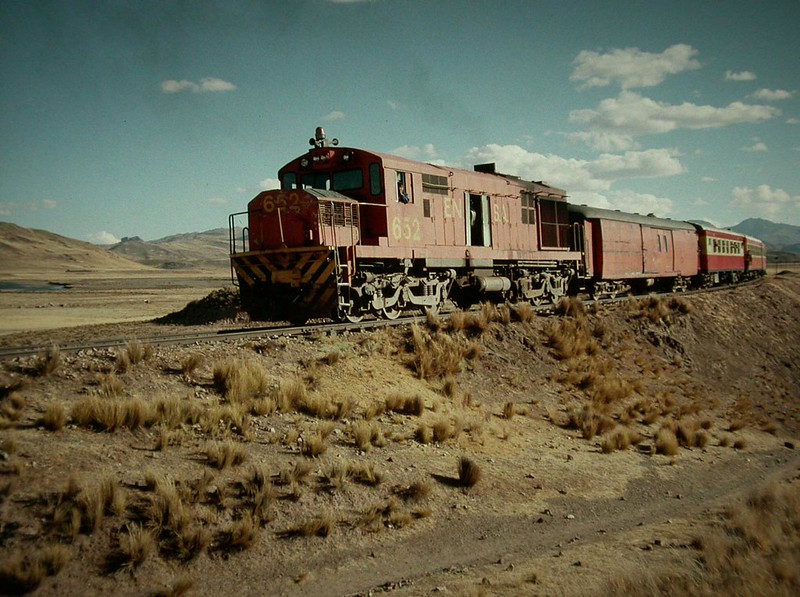
We climbed out of the valley and on to the Peruvian part of the altiplano. The scenery changed to a wide flat valley covered in short brown grass and with a range of mountains on both horizons. Here were to be seen herds of llamas and alpacas. At Chuquibanbilla the previous train had left a hopper car and the pay car on the main line. This is not good practice although allowed for in the rules. Our train had to switch these onto a siding before we could proceed. We were running late because the train crews, surprisingly, agreed to do a run past for us - this is not normally done with a scheduled train. We had to surreptitiously exit the train before the people in the first car realized what was happening. Earlier they had got in our way at a regular station stop.
There was a long delay at km 20.3 while we waited for a freight train - this was the price we had to pay for the run past. The sun went down and it was cold. There were no lights in our car so that drinking the Soda Criolla was a challenge, the poorly maintained hydraulic springs provided a very lively ride. We arrived at Juliaca at 18:35 and left at19:30 while the railway did some switching and transferred our bags from the ex-British Railways parcels van to a boxcar. Paul and John from New Zealand left us here to take the overnight train to Arequippa and back to Lima. Arriving at Puno we found that our train load of passengers was locked in the station compound. We let everyone else go first while our bags were retrieved. Our bags were then then lined up and three independent people had to count them and agree upon the number of bags to be transferred to the hotel. We finally made it to the hotel which is on an island in Lake Titicaca reached over a causeway. There was confusion in allocating room keys because they had allocated rooms with one double bed to the married couples. Each married couple had to present itself and make representations as to why they needed two beds. In all cases it was obvious as they were too big to share a latin cama matrimonia. I took advantage of the delay to browse the hotel gift shop and found a ceramic bull which is used on the house roofs. I bought it on the spot (12 soles) bracket and, in so doing, incurred the wrath of several members of the party. It was the last one and several people offered me a good price if I was prepared to sell. Puno is at 12.000 feet and there was speculation that we were using the highest hotel elevator in the world.
|