| Pictures on Flickr can be found here: Paraguay https://www.flickr.com/photos/colinchurcher/albums/72157607011216273/ https://www.flickr.com/photos/colinchurcher/albums/72177720330003522/ Chile https://www.flickr.com/photos/colinchurcher/albums/72157607011231603/ https://www.flickr.com/photos/colinchurcher/albums/72157607007299952/ Argentina https://www.flickr.com/photos/colinchurcher/albums/72157607013806781 https://www.flickr.com/photos/colinchurcher/albums/72157607010477660/ https://www.flickr.com/photos/colinchurcher/albums/72157607010477694/ Saturday 28 October 1995 We
bought food for the next three days just in case we could not get any
on the way - cans of tuna and corned beef, smoked salmon, crackers,
chocolate, fruit and empanadas. Bariloche has a great number of
chocolate shops and it is easy to find a good selection. The very air
in Bariloche is permeated with the smell of chocolate; chocoholics
would be in heaven here.
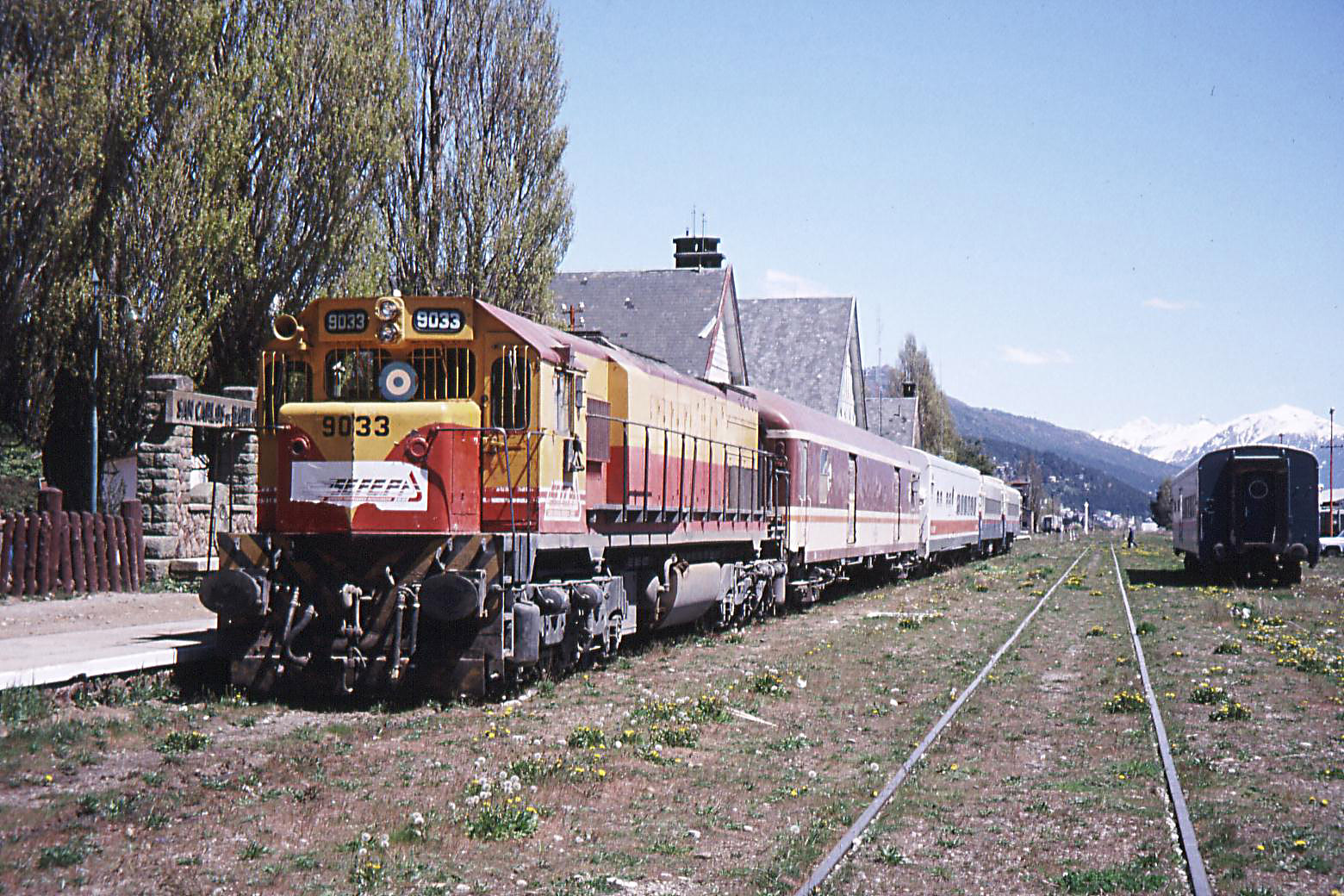
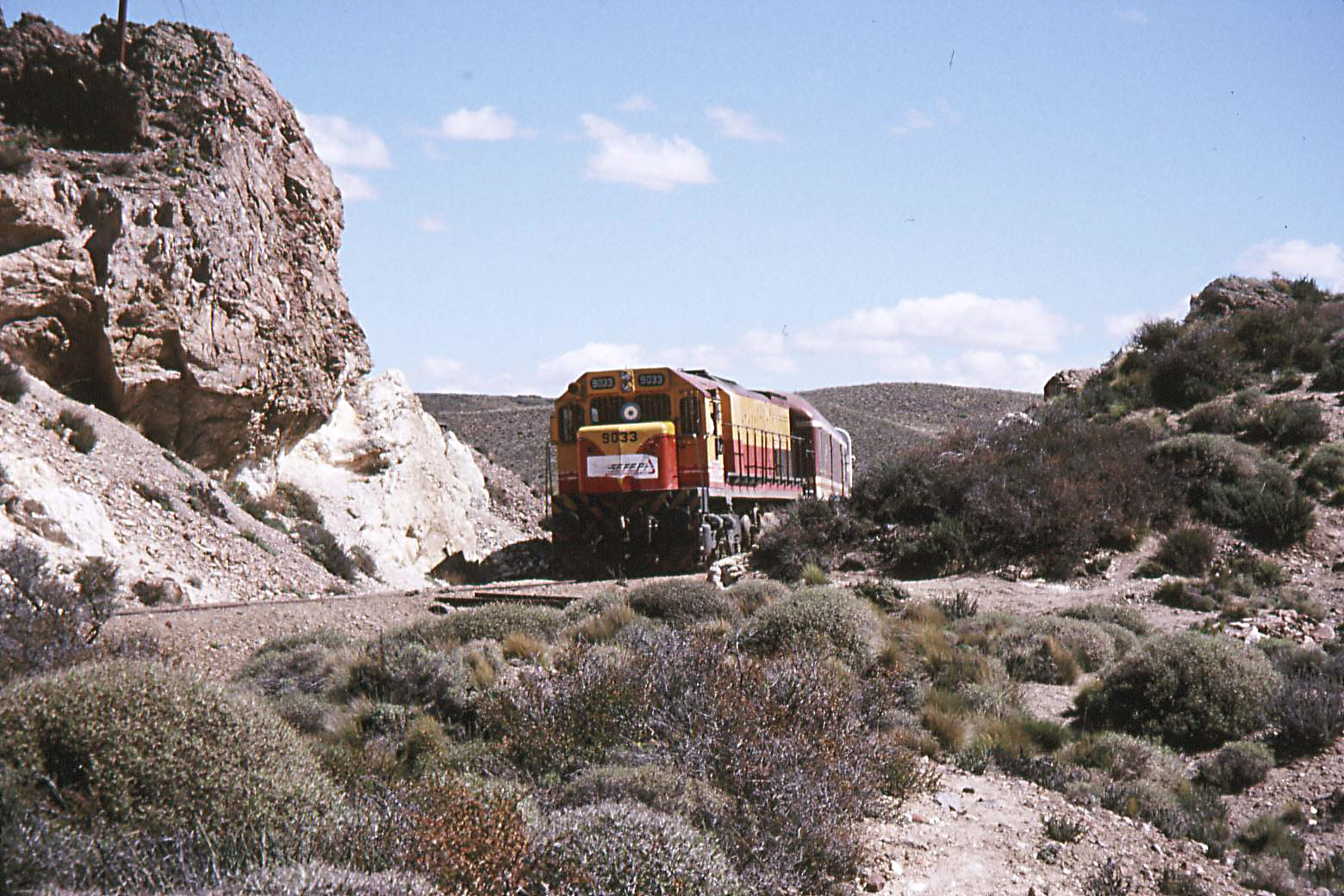
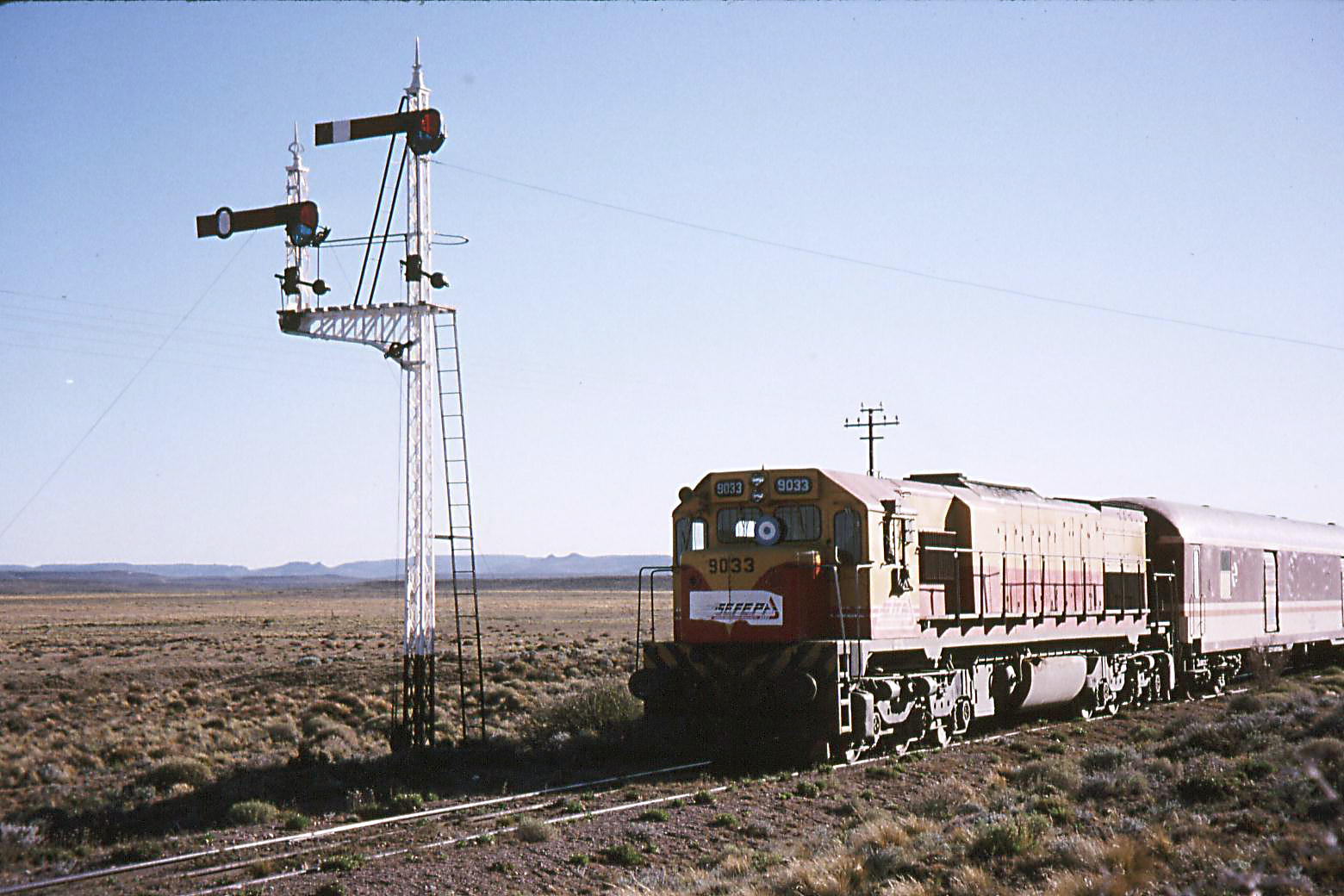
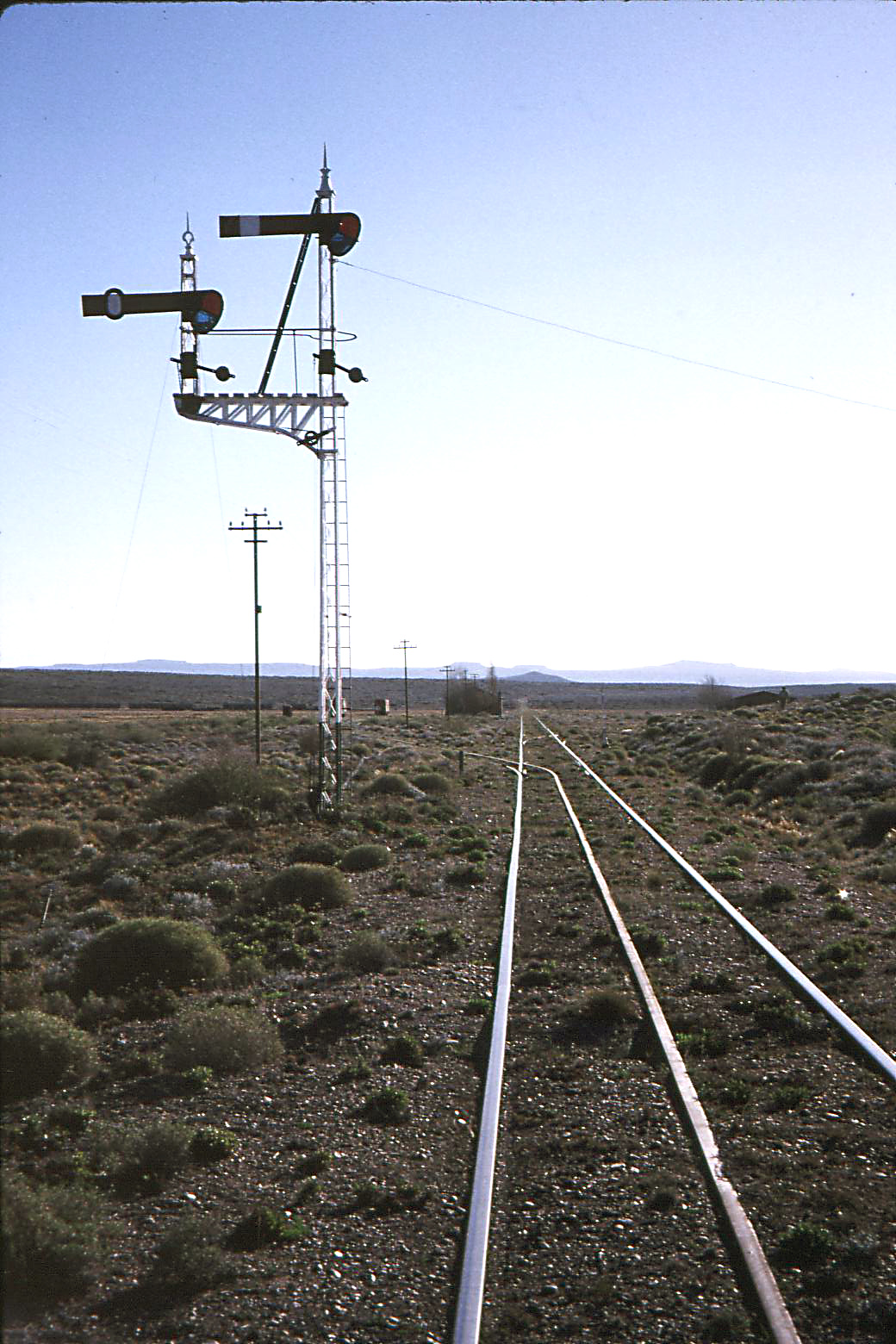
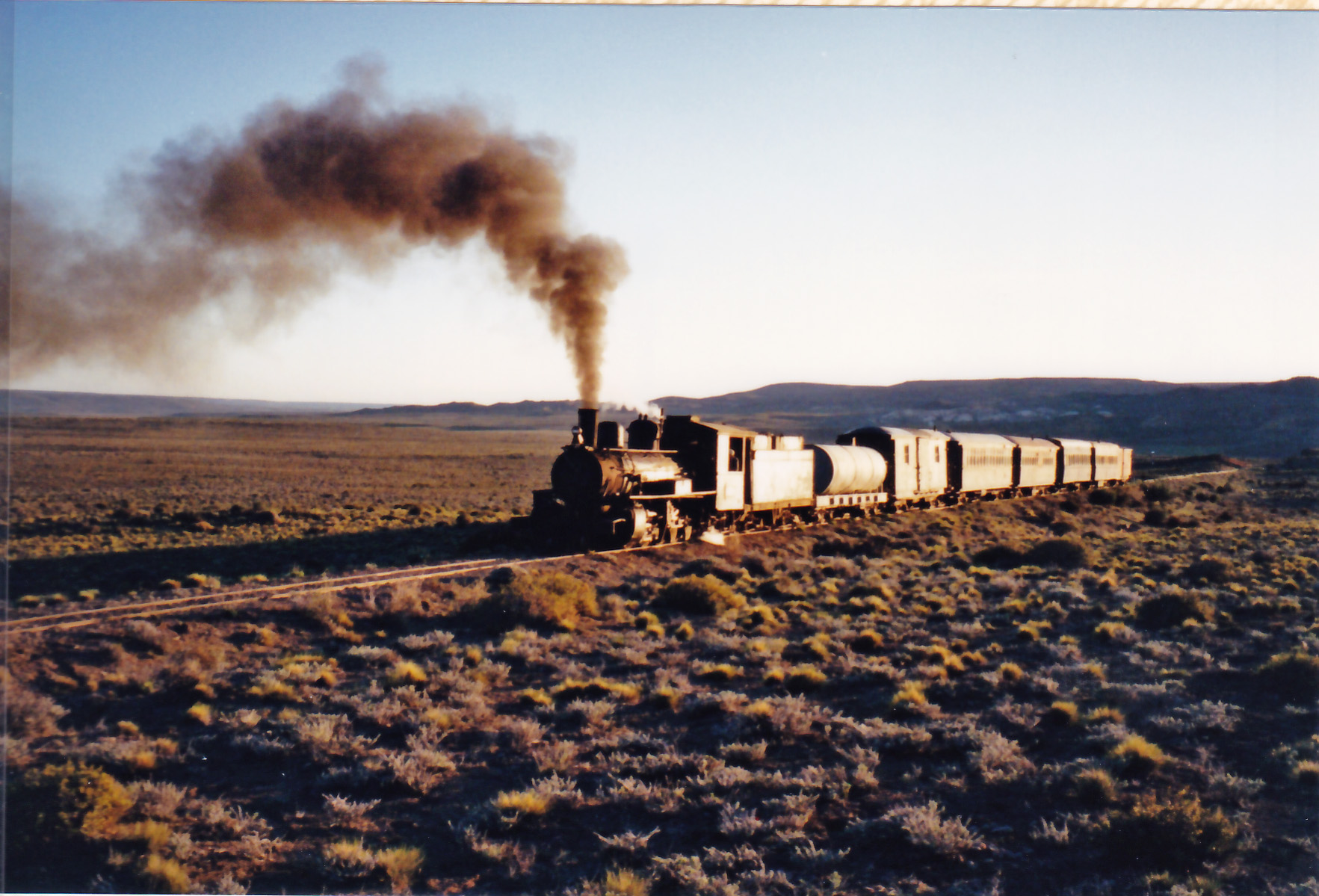
Bariloche There were several runpasts with the last being at the junction of the narrow gauge to Esquel. From here the line is dual gauge for some 23 km into Ingeniero Jacobacci. We got out to examine this oddity which was the reason for which so many of us had traveled halfway around the world. It is a switch with no moving parts set in the desert with the signals by the side and a small station and yard a little way away.
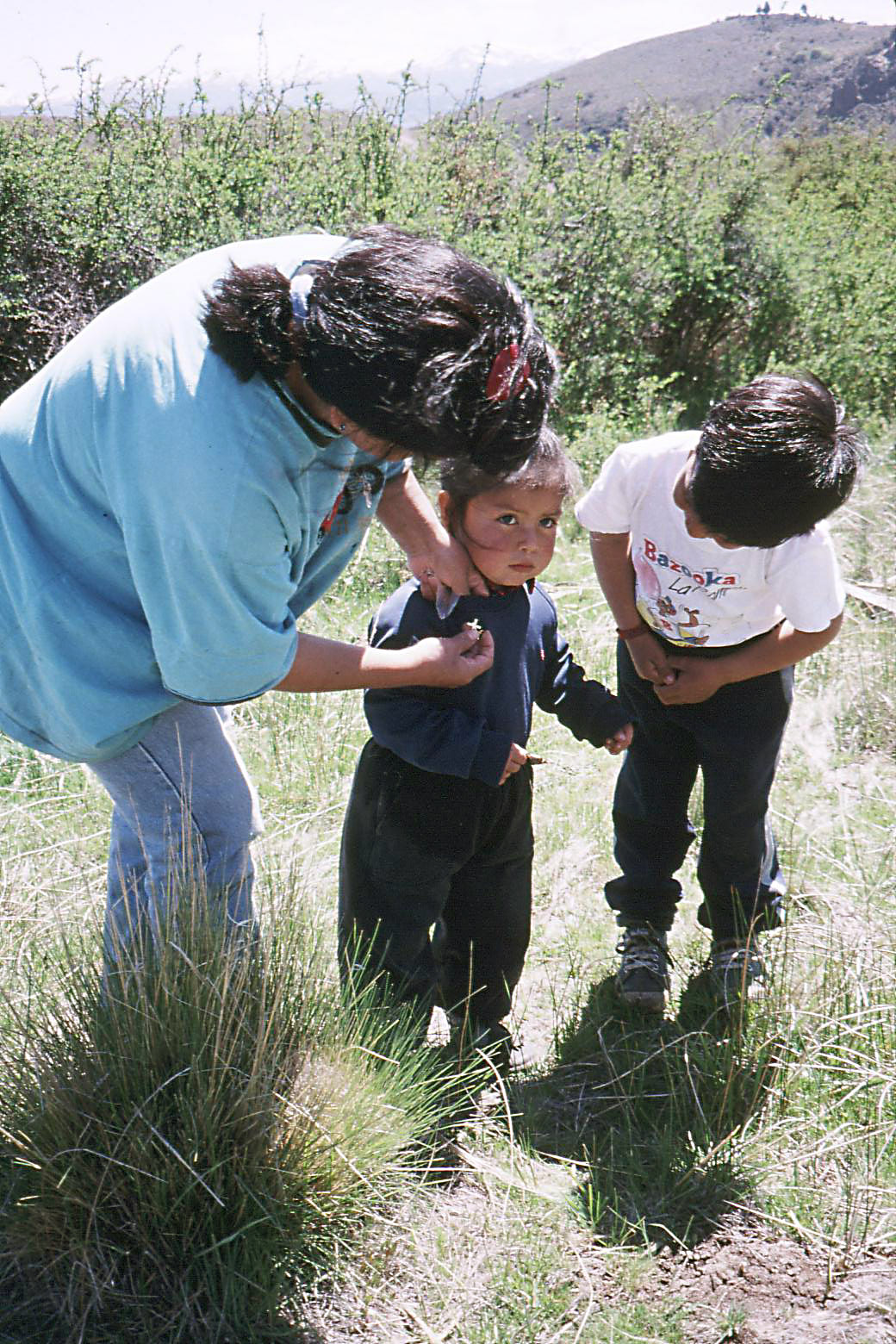
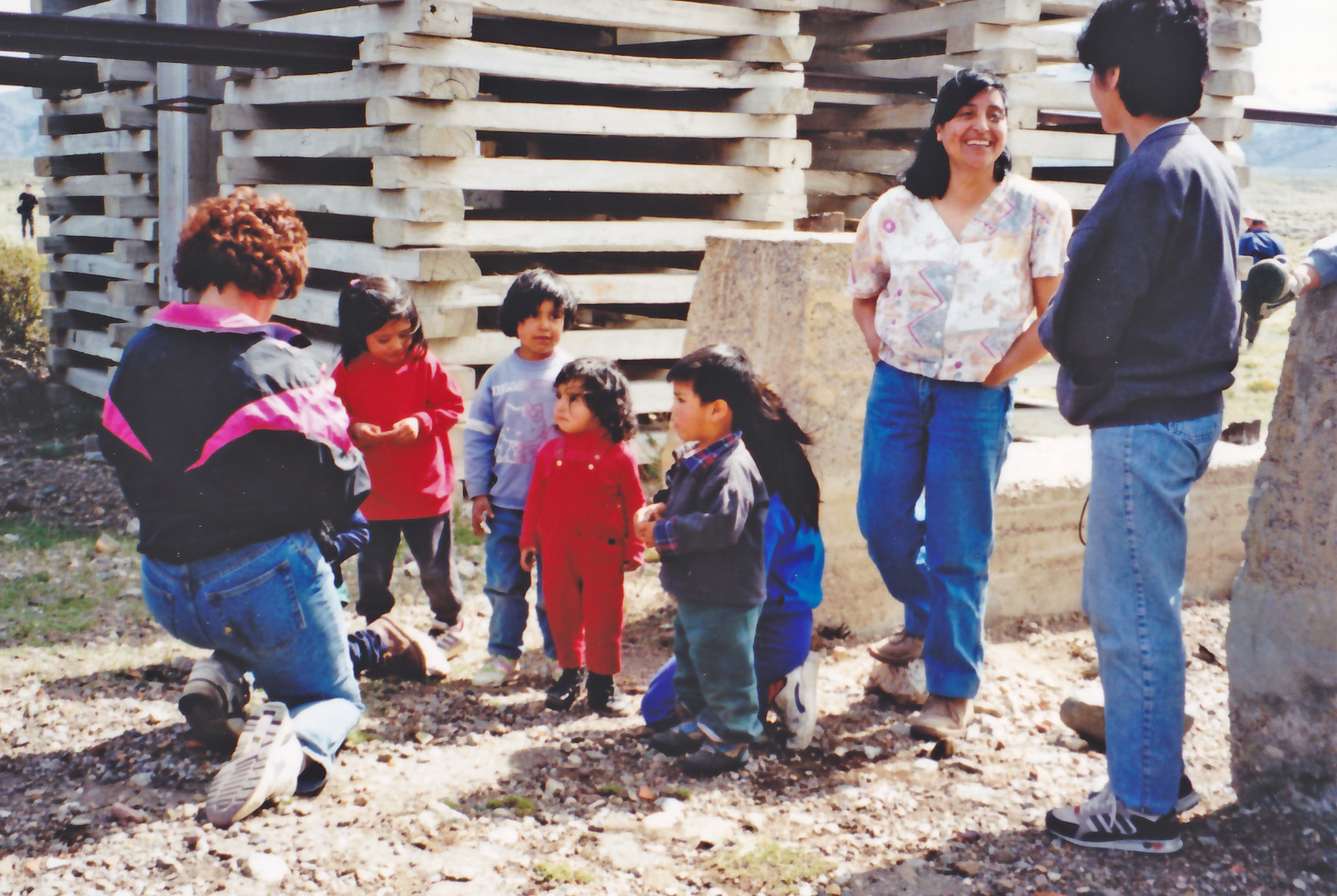
Left - the junction: right - giving kids Operstion Lifesaver Pins Ingeniero Jacobacci is quite a pleasant little railway town. The most impressive building is the police station which is built like a castle with turrets. The hotel, unexpectedly, offered dinner which we refused because of the amount of food we already had with us. We found a panaderia at which we bought some tortillas and some dulce de leche scones. The hotel room was quite good, considering what we had expected. Paul Theroux was all wet when he described this place; it is much nicer and larger than we imagined. 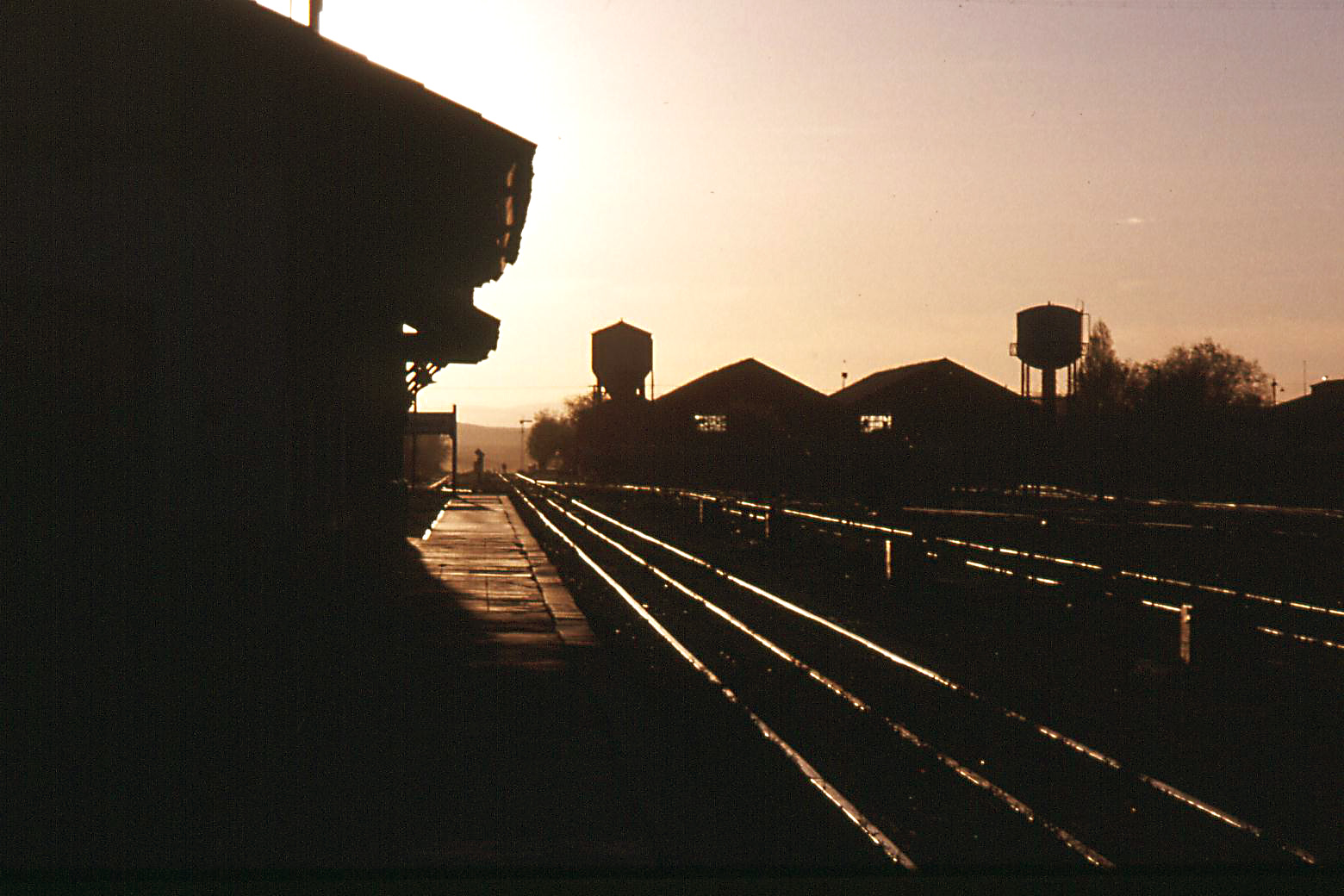 Ingeniero Jacobacci
Sunday
29 October 1995
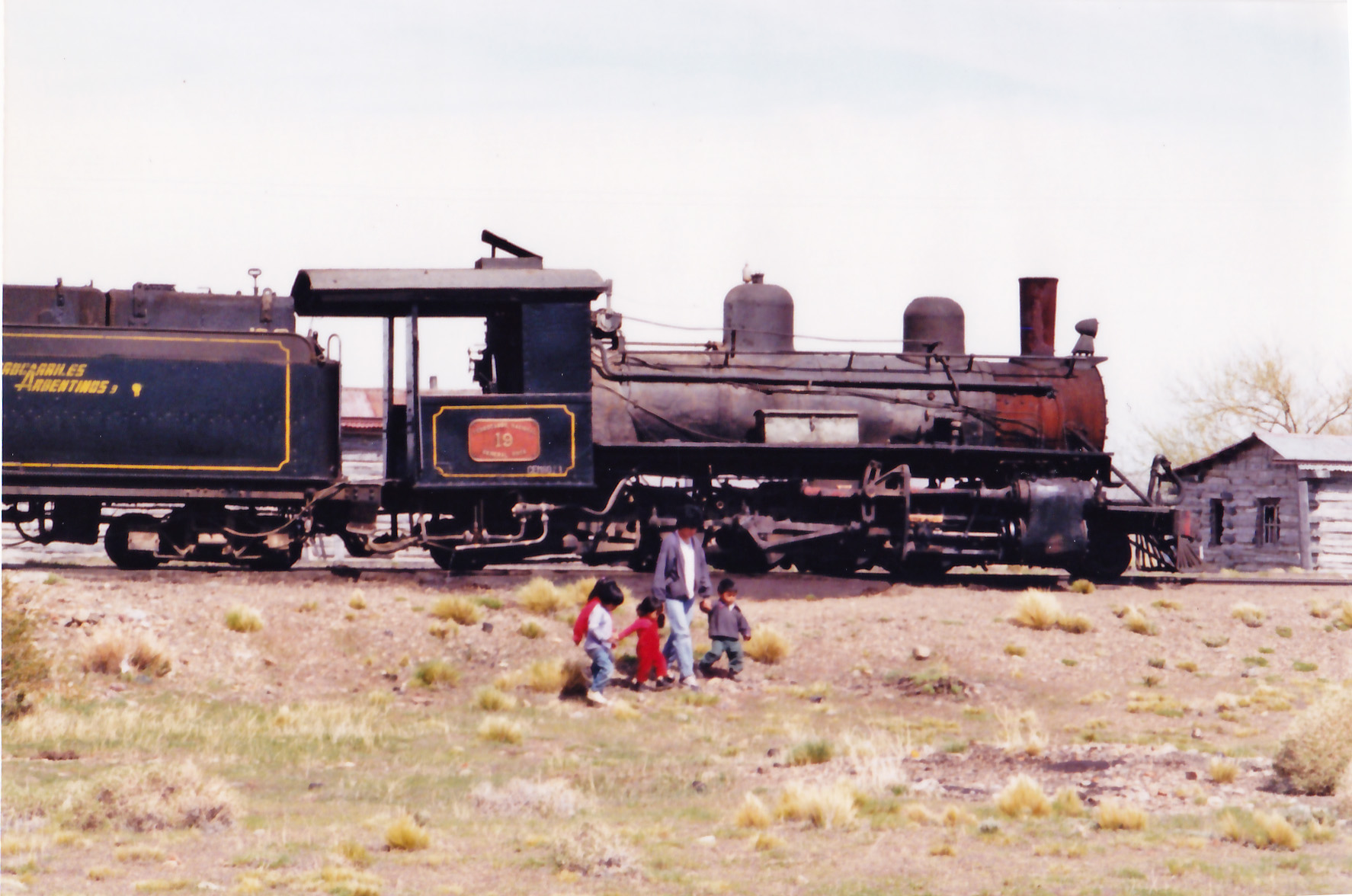
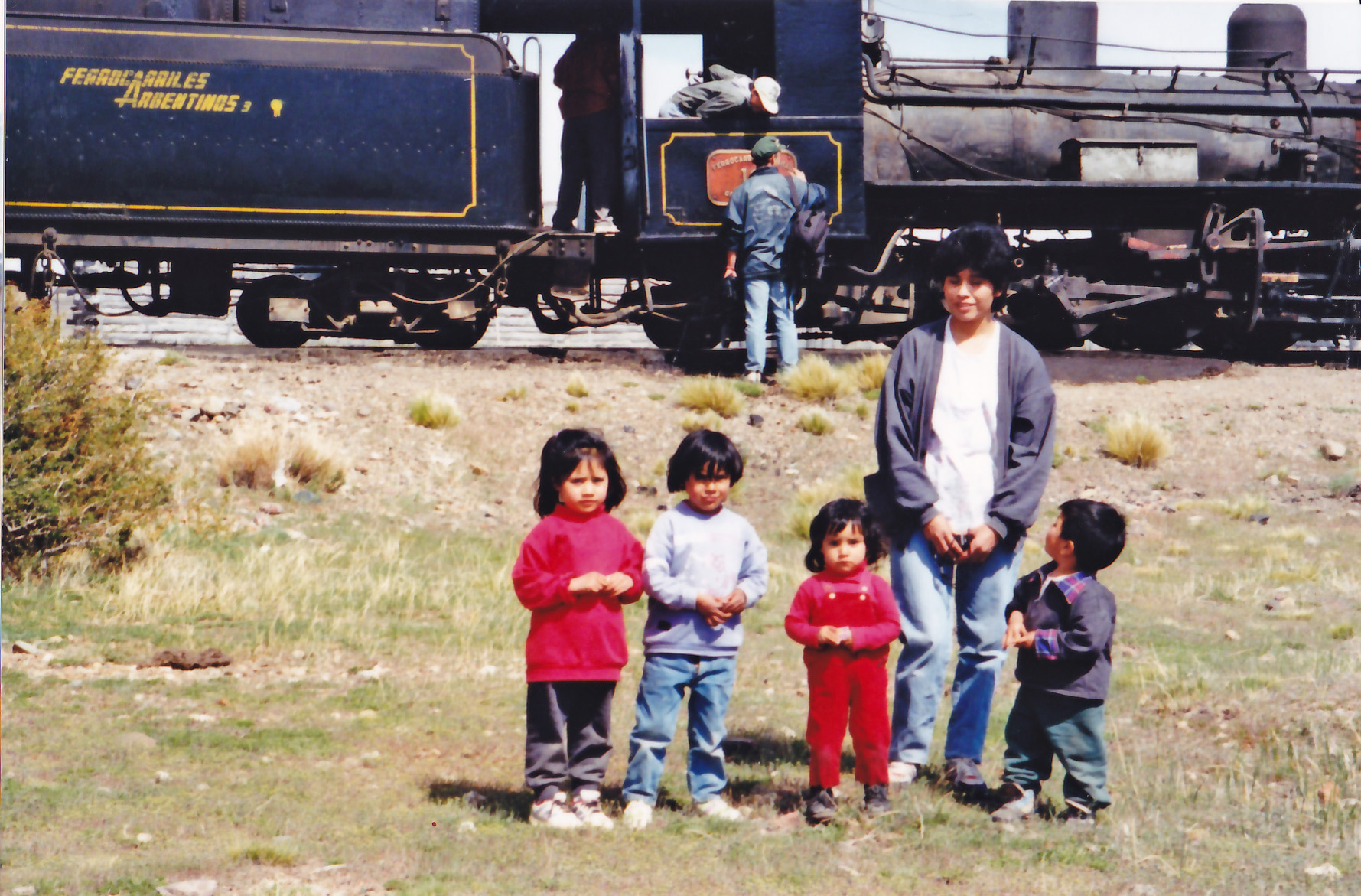
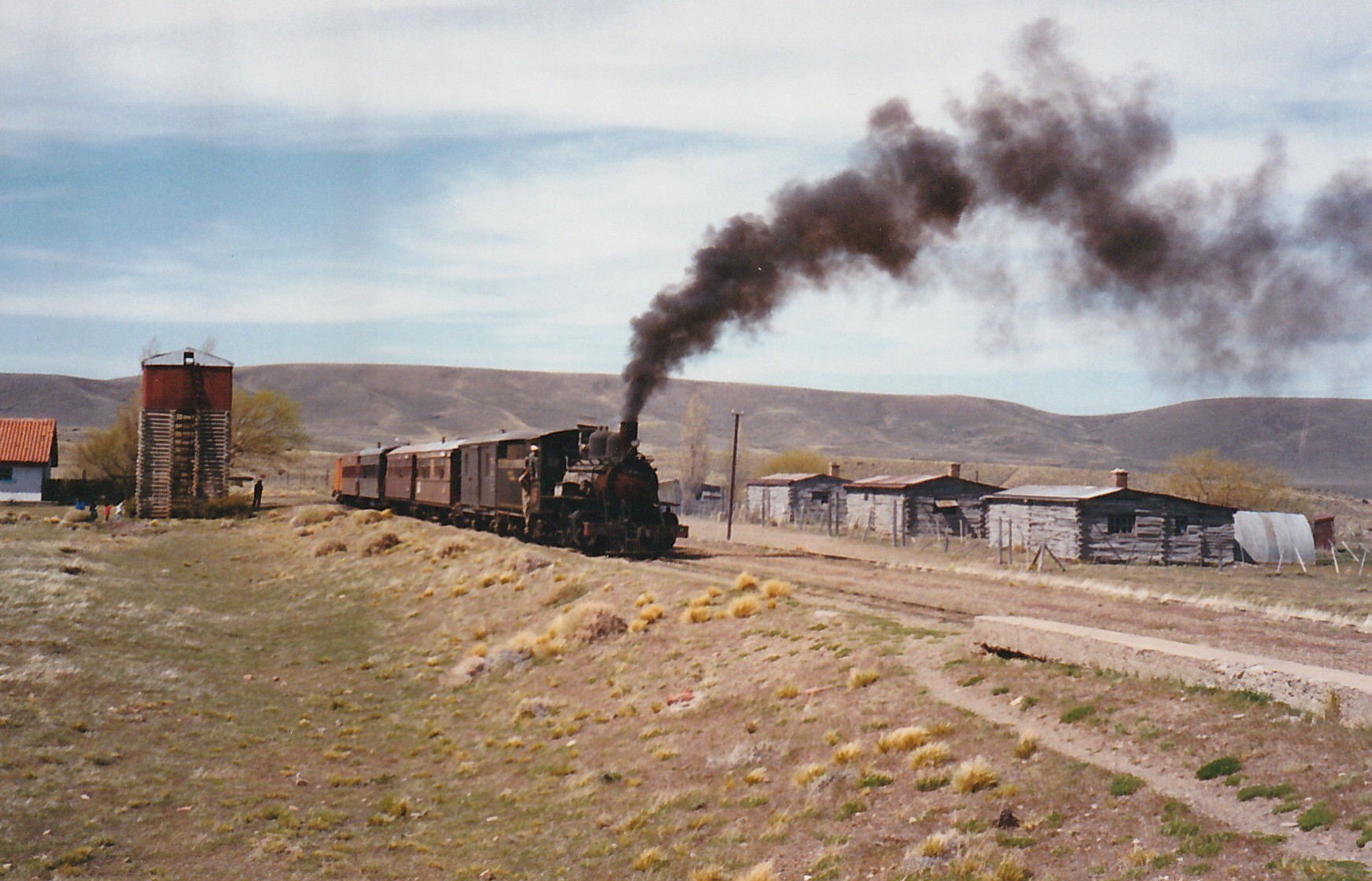
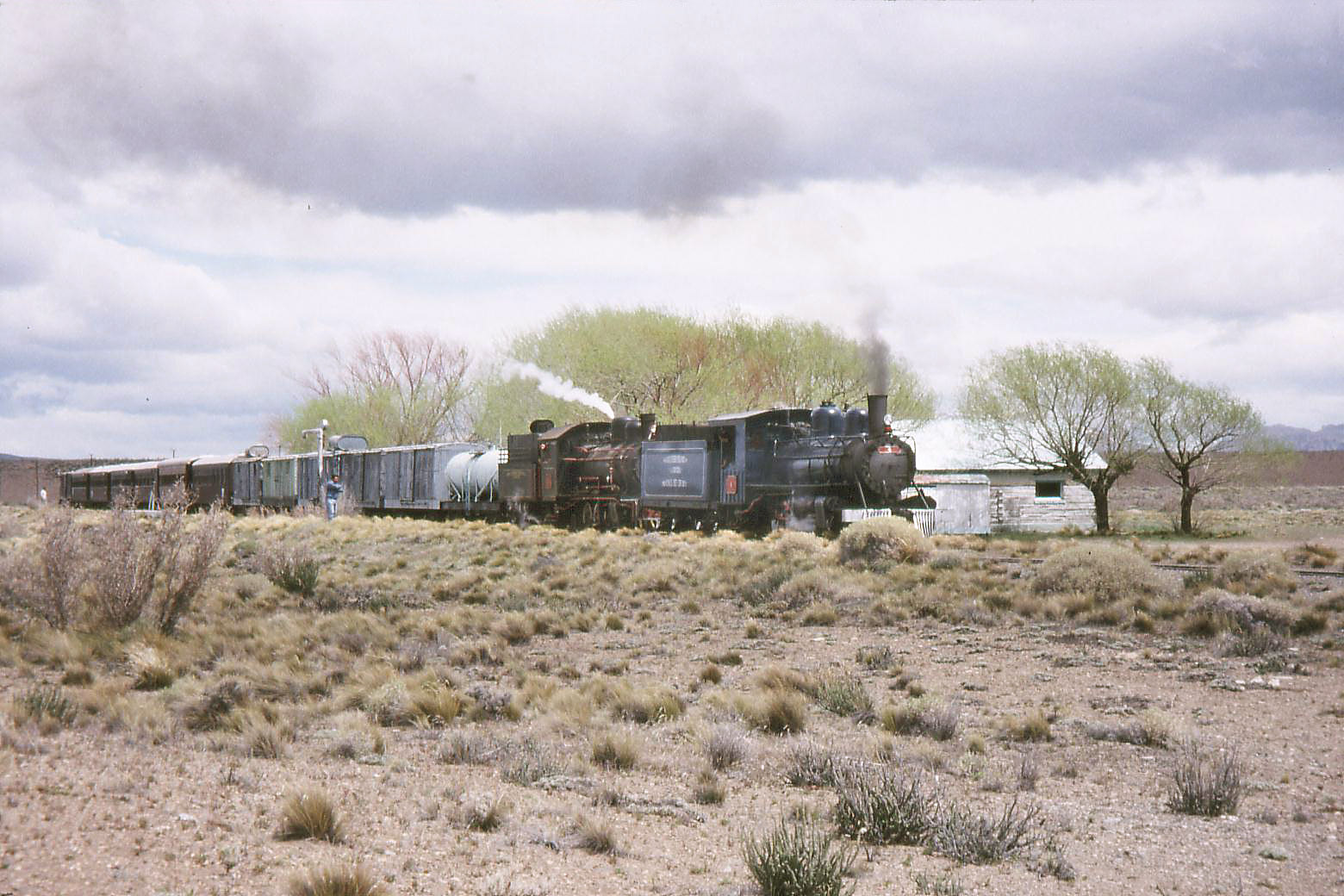
Baldwin #3 did well and we got to Cerro Mesa where #19 was waiting to take us forward to El Maiten. Cerro Mesa is an oasis of green trees in a brown and yellow desert. There is a river flowing through the village which has salmon. To make money for the local school, volunteers at the school had put on a continental breakfast to which several people went out of a sense of duty because it was around 11:30. The volunteers were disappointed with the turnout but when there are active trains shunting around the railway yard, the hard cores can't be expected to walk away from them to drink coffee. Lunch was supposed to be provided by a man with a brown coat but this does not turn up until very late in the afternoon at El Maiten and then was very expensive. A woman and a couple of children were selling pastries on the platform- dulce de leche scones and delicious bastilitos which will fine pastry with honey enclosing some jam - a little bit like wontons. The little girl selling them usee tonges to get them out of the basket.
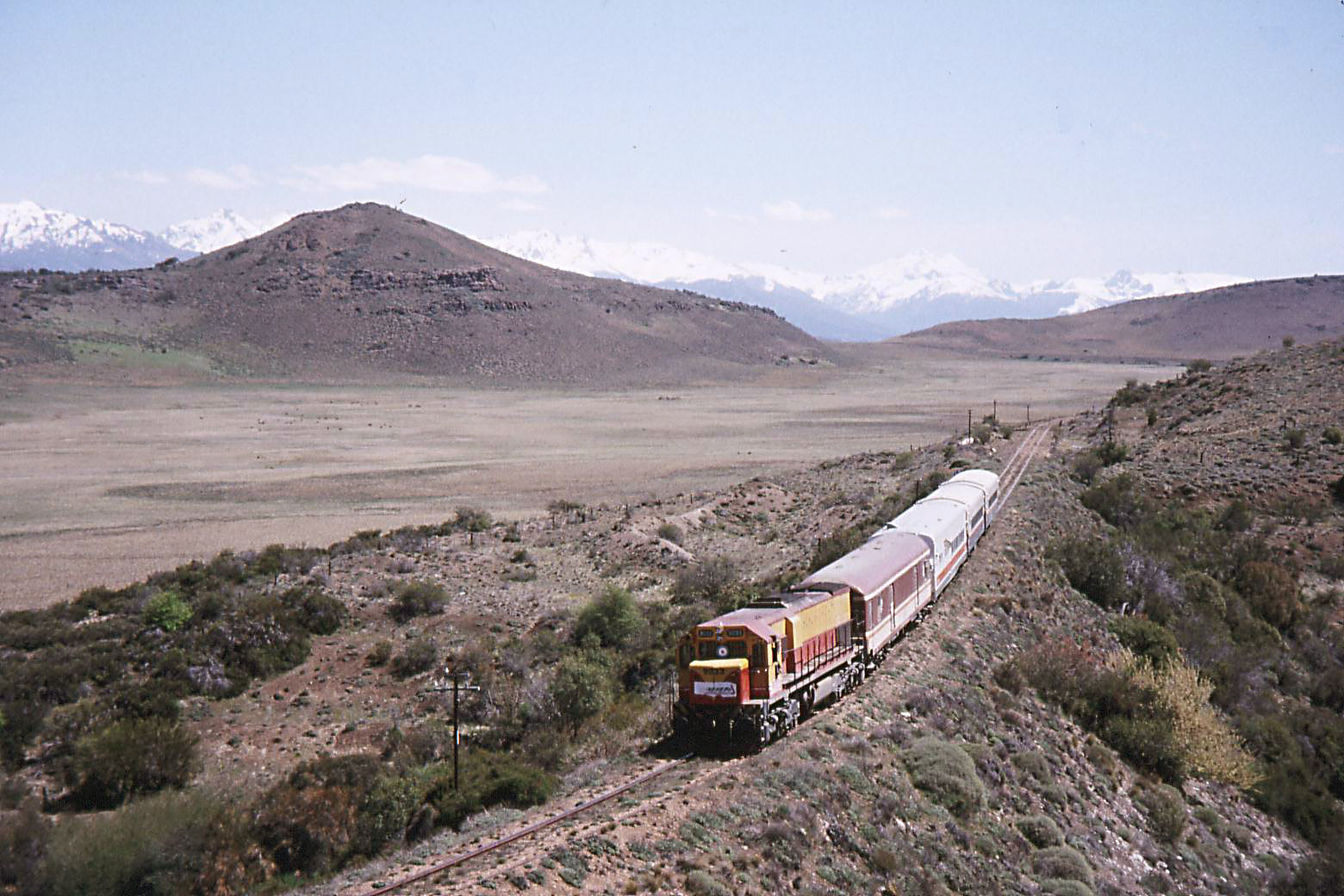
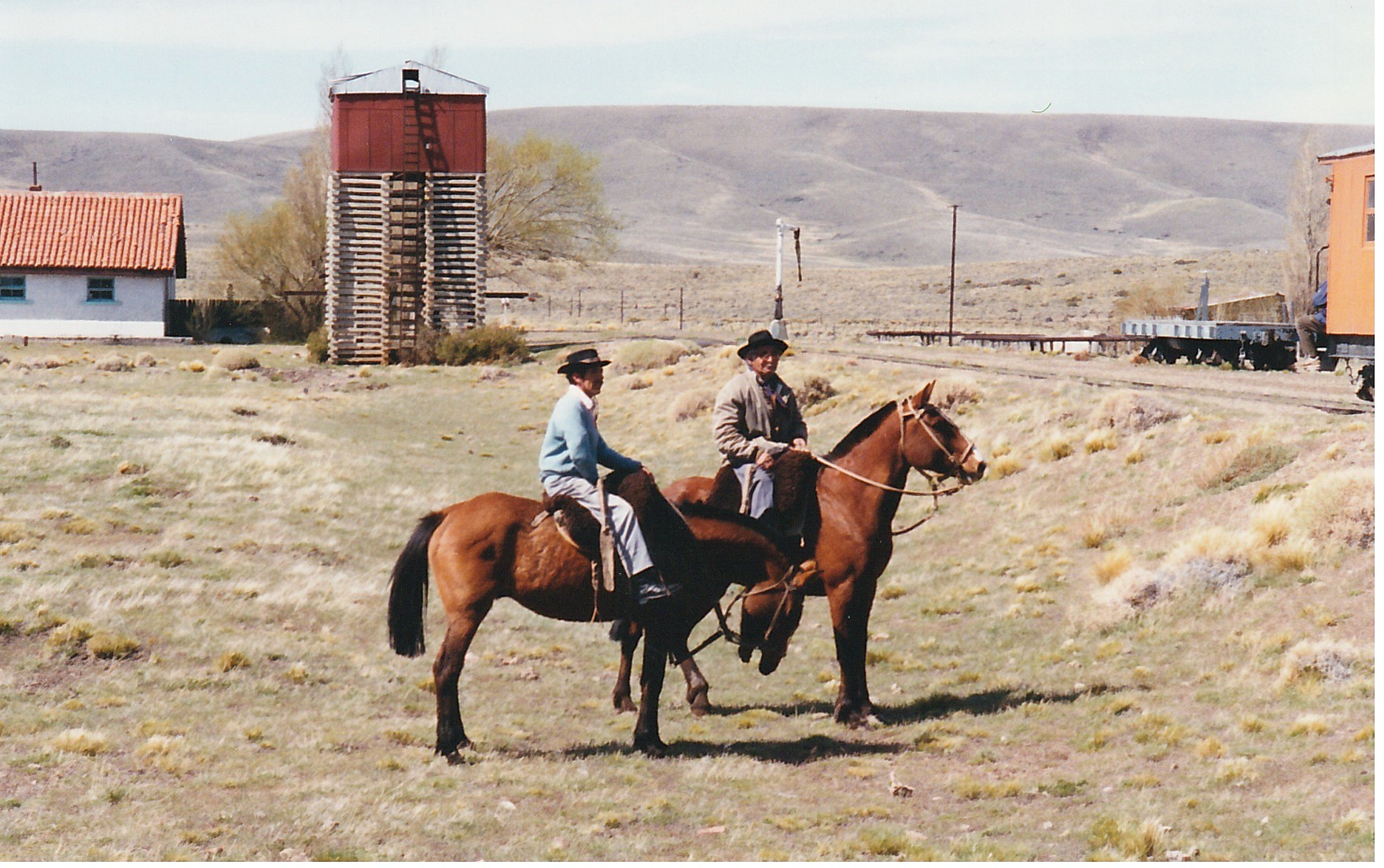
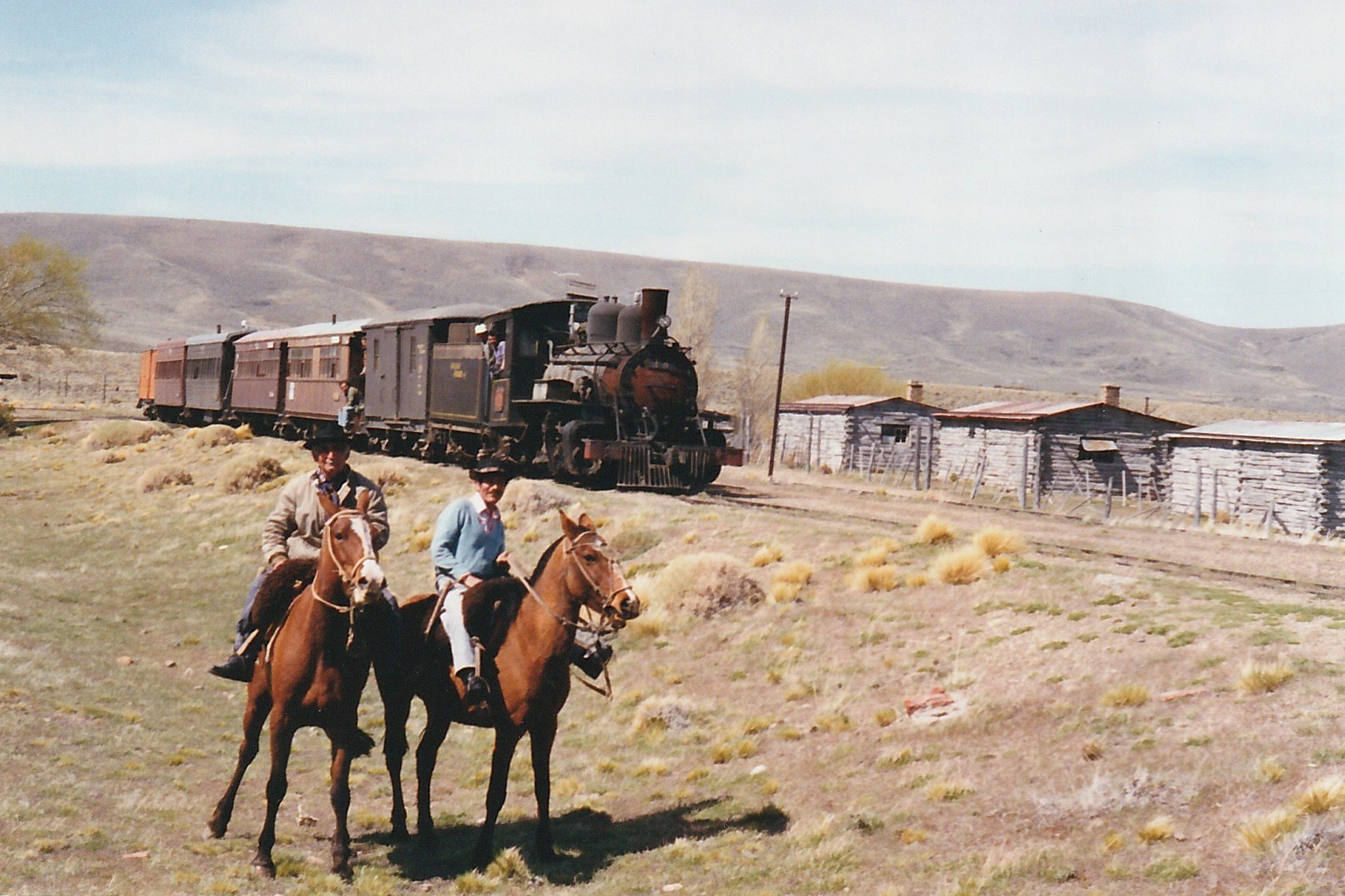
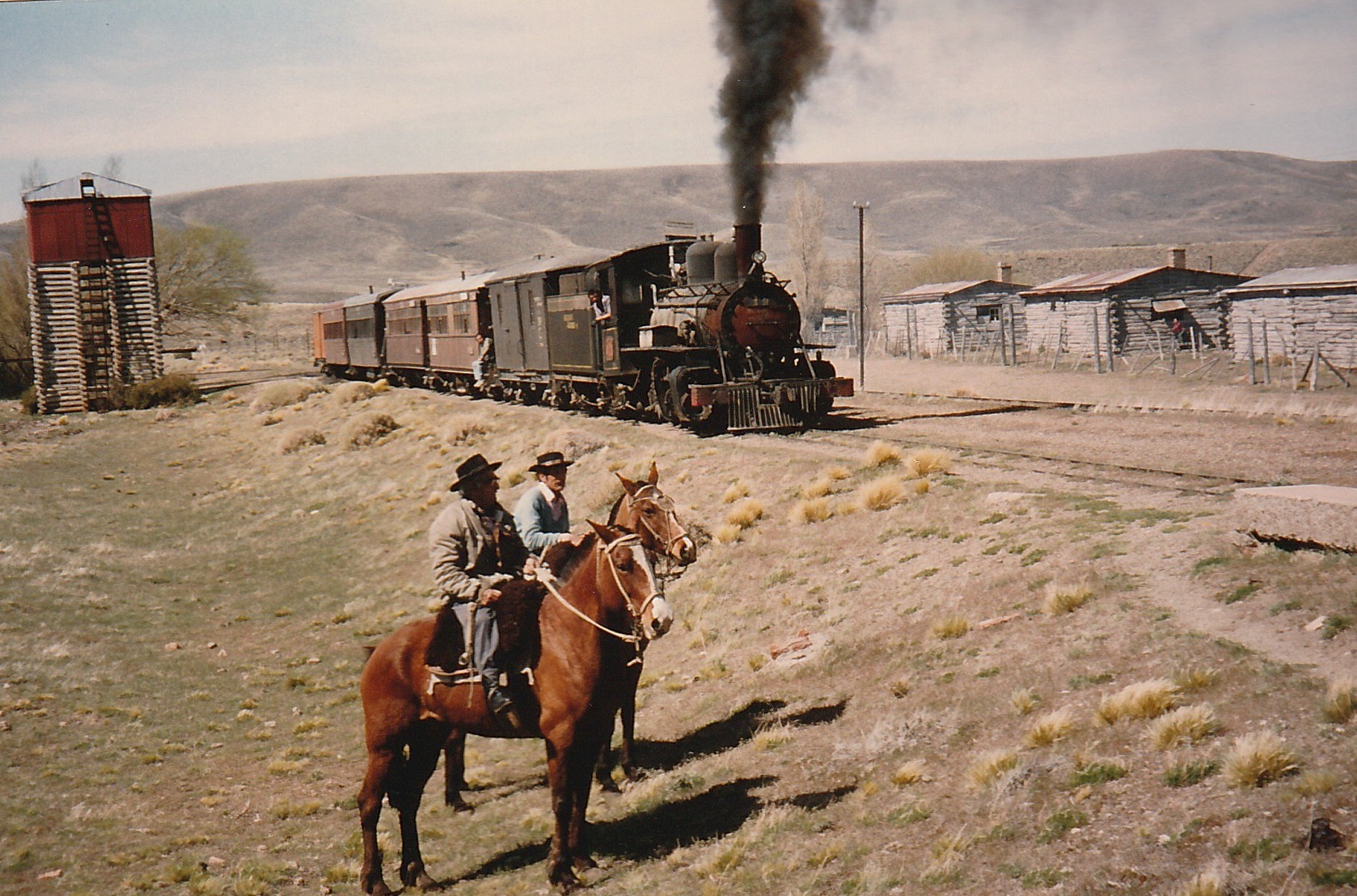
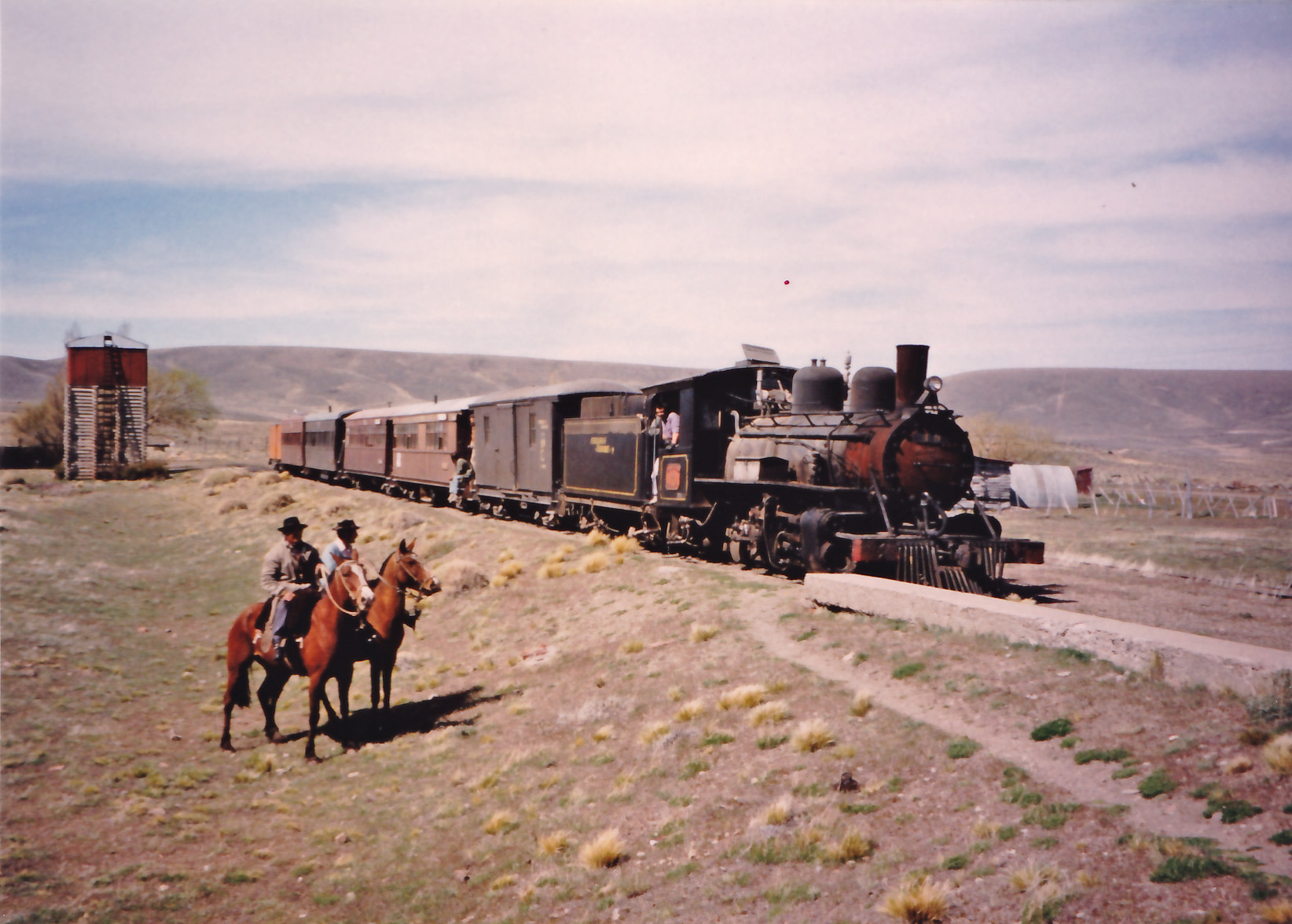
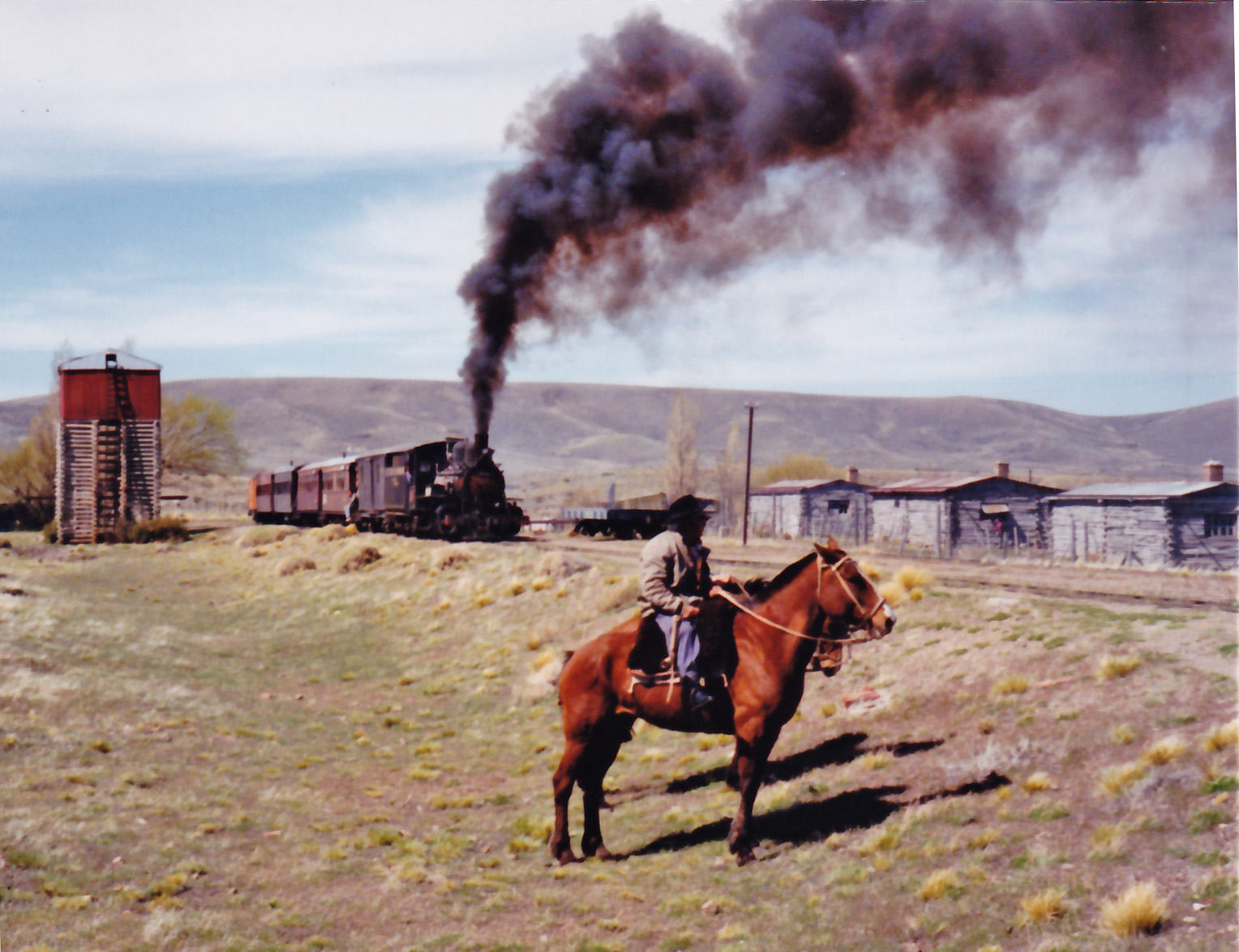
Cerro Mesa #19 took us on to El Maiten with very few stops, There are some fierce grades and we were down to walking pace in a couple of places. We stopped for water at a small station and found a couple of men on horses who posed for our gaucho shots. It was quite a performance.
First the train arrives, then the gauchos
Two gauchos or one? The approach to El Maiten was
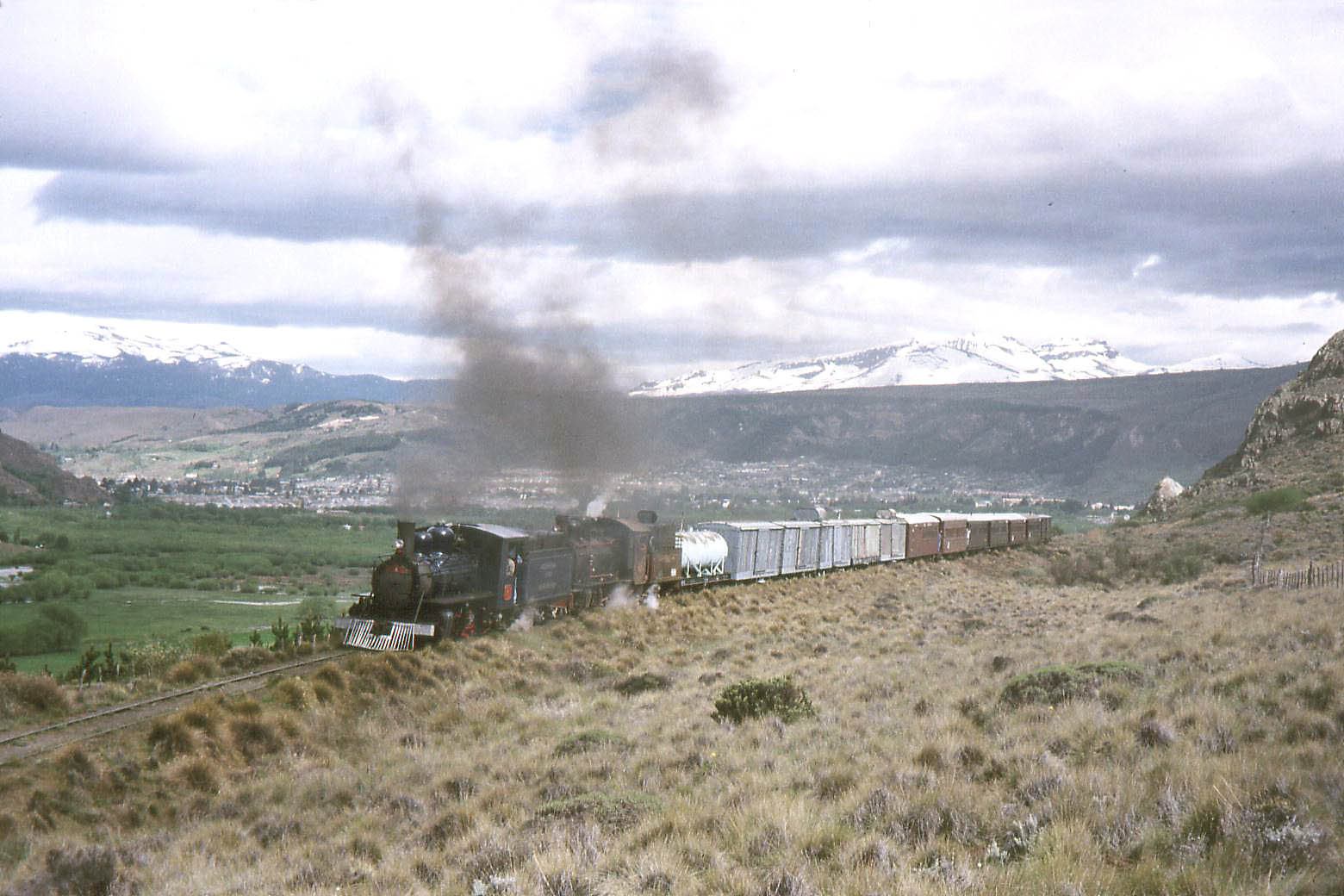
magical. We came down a fairly steep hill overlooking a broad green
valley where the trees were in new leaf. The snow covered mountains
formed the perfect backdrop for the typical angry evening sky. Some
of the fields appeared completely yellow with dandelions and there
was some standing water. Horses were grazing in the fields and
several were running loose.
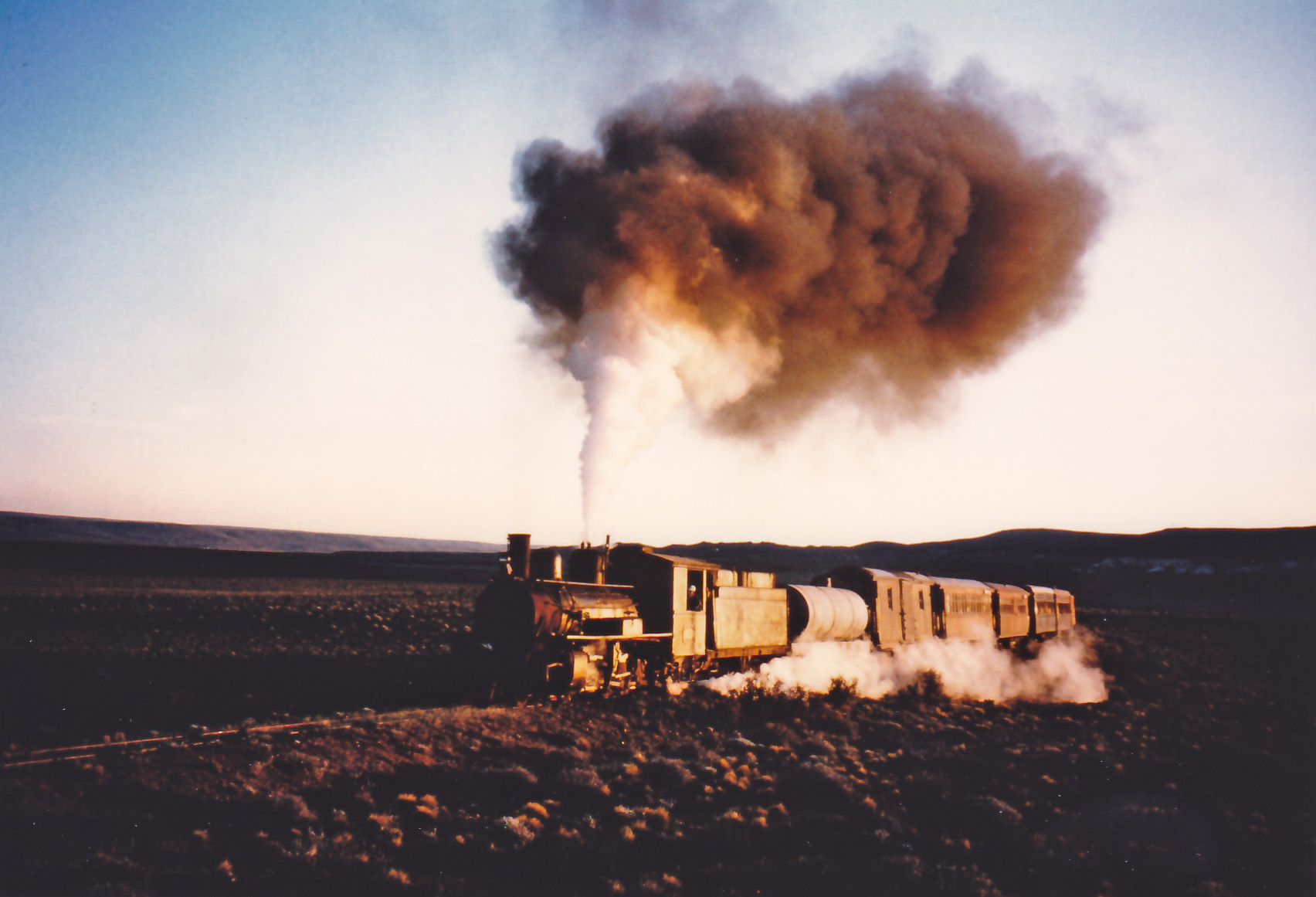
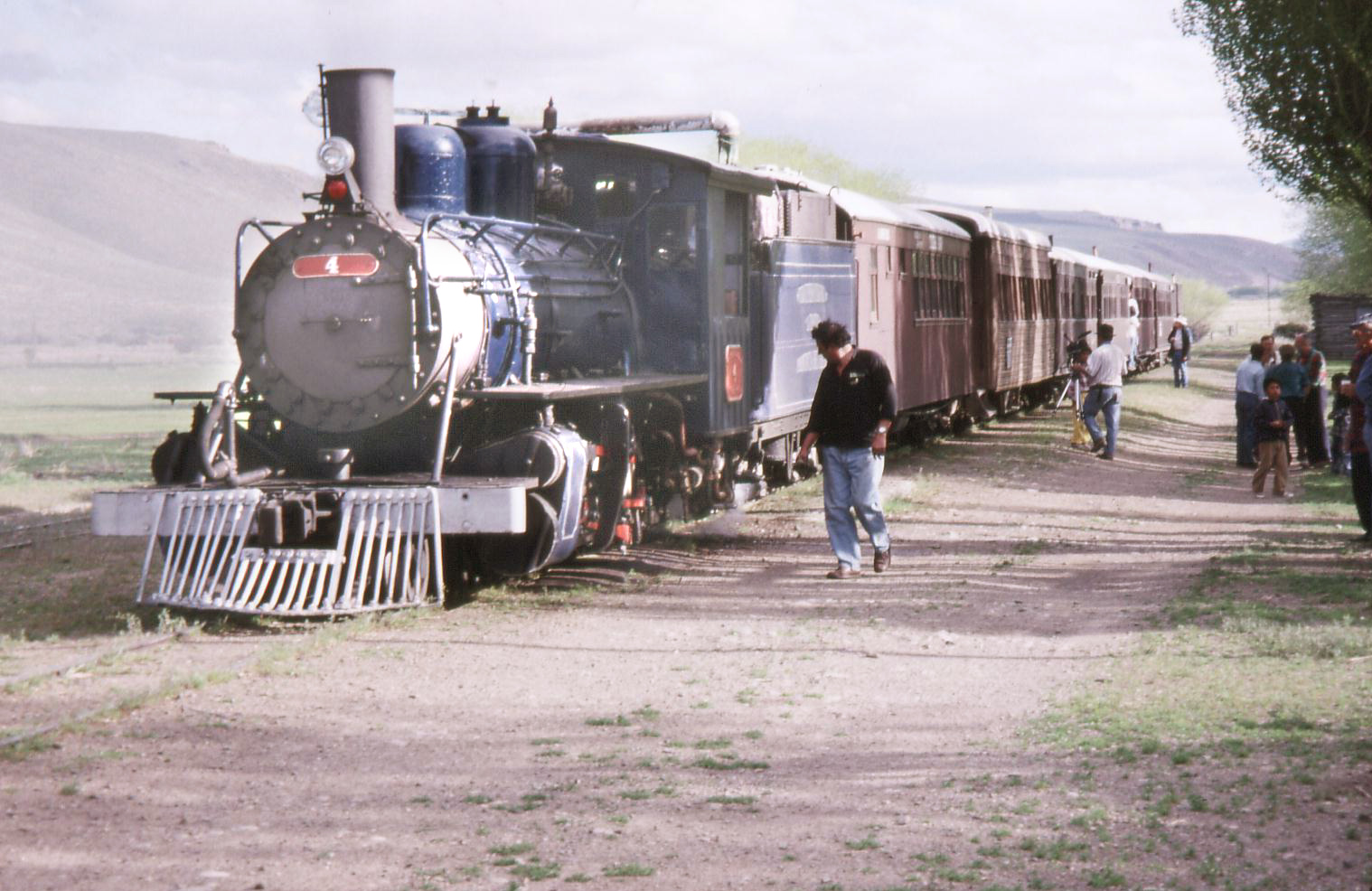
Monday 30 October 1995 Today we rode from Esquel to El Maiten. It took some time to put our train together which was a freight train with a passenger train behind. There were two locomotives, #4 (Baldwin) and the #114 (Henschel). Esquel is set against a dramatic backdrop of mountains. The winds were very high as we left town. We saw several flights of scarlet ibis as well as some black necked swans. Many of the railway buildings are made from ties (sleepers), probably because this was the only building material available. Mary had a close encounter with a barbed wire fence which left two long bloody scratches above her right knee and a big hole in her pants. Barbara Hannah provided some antibiotic ointment and bandages which Mary ministered to her scratches, and then sewed up the hole in her pants.
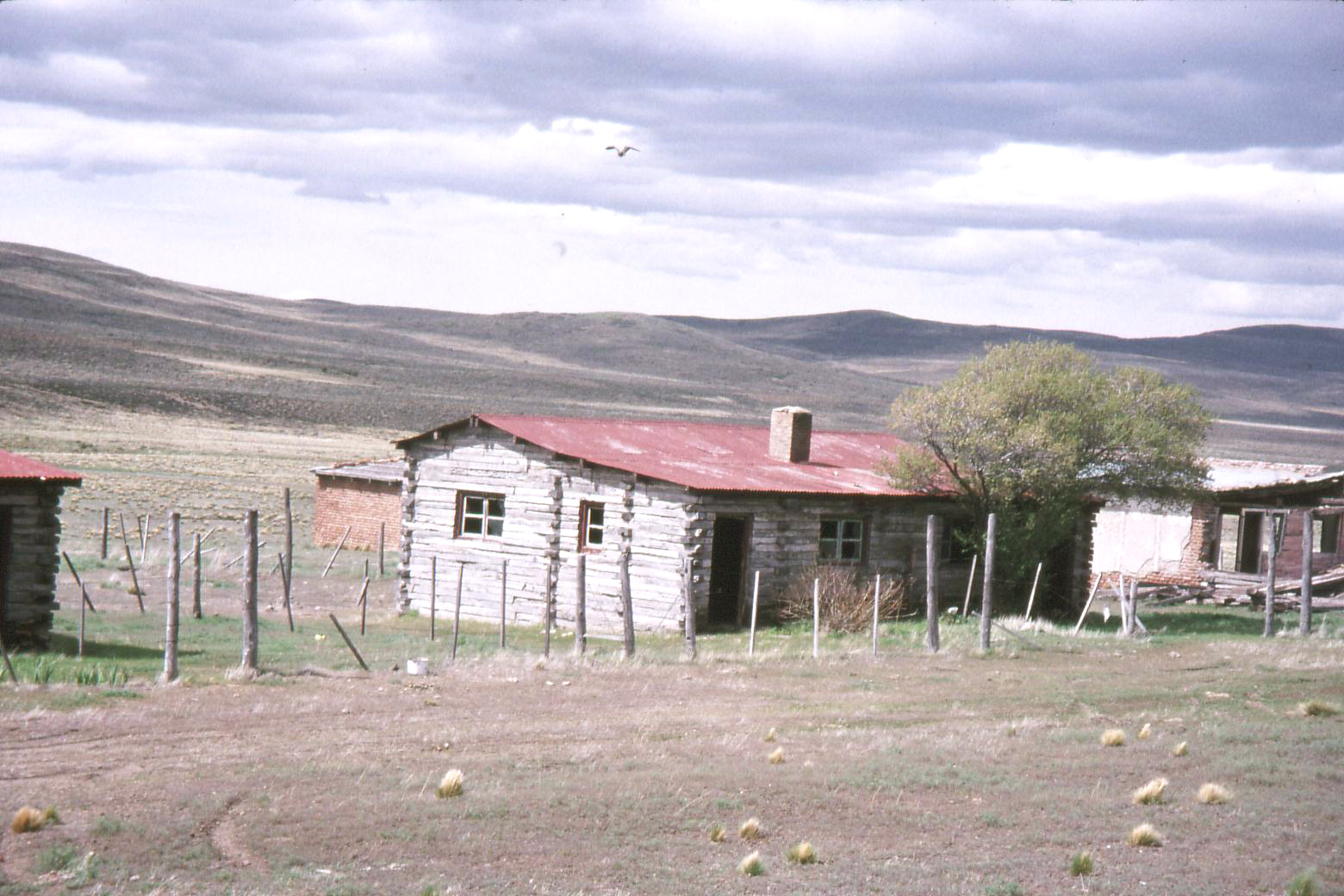
Many railway buildings were construcvted from ties (sleepers) Adrian
Pardo from Buenos Aires subsequently wrote the following post on the
internet. The two trains were split at Lepa and Colin rode the head end of #4 from there to Leleque. The engineer ran with no vacuum while we were climbing a steep grade and only opened the vacuum brake for the descent.
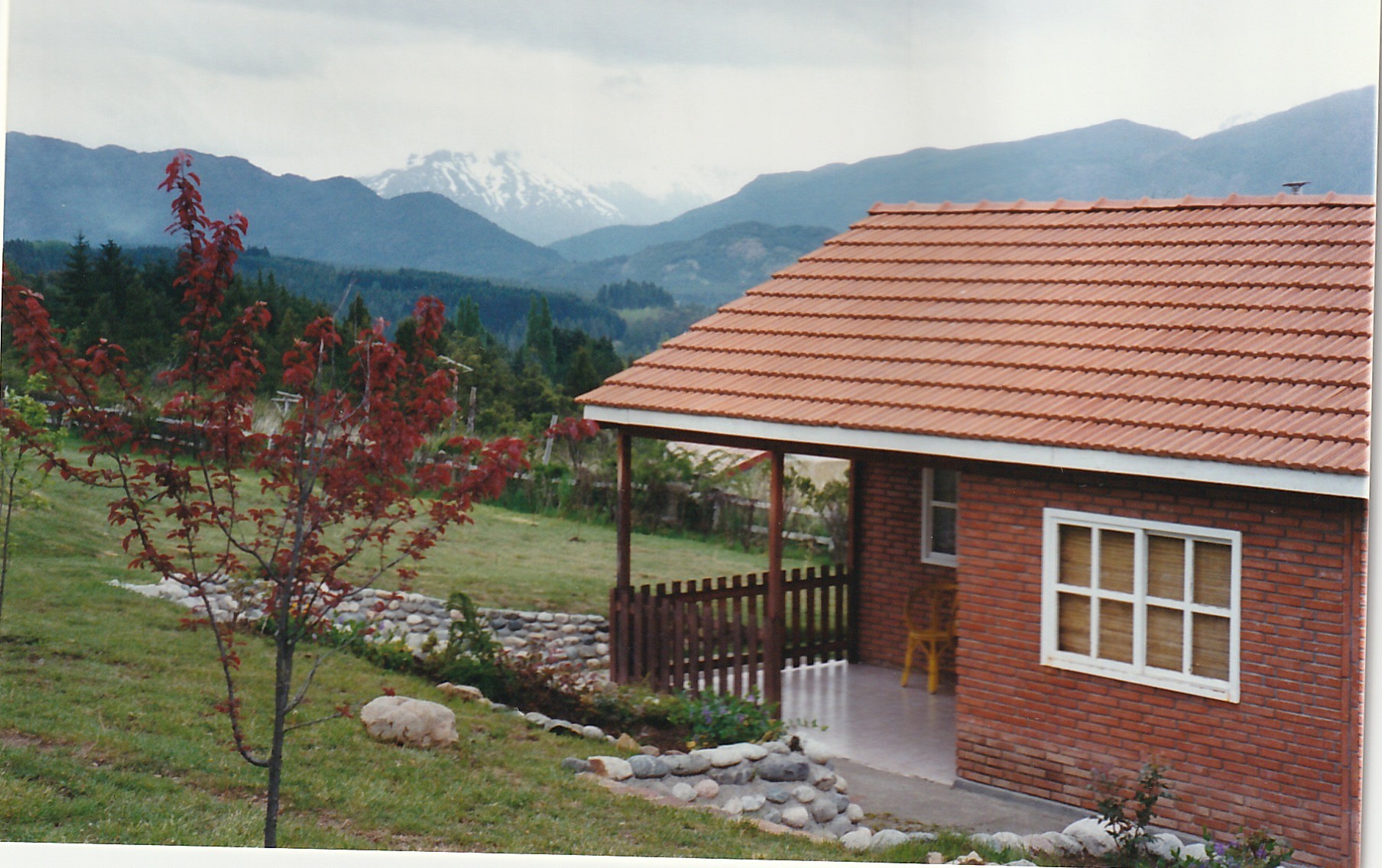
Leleque Once again the arrival at El Maiten was quite dramatic with an angry sky and a setting sun against the mountains. We took buses to El Bolson but there was complete chaos sorting everyone out and their baggage to the correct hotel. We arrived after 10:00 and had been told that there would be no dinner provided, which was fine because we didn't want to eat that late, but just wanted to get to our room. Instead upon arrival suddenly it was announced that dinner was provided after all and we wouldn't be going to the hotels until later. Colin said he had a “medical problem" and had to get to the hotel, so after a long wait, the few of us who wanted to skip dinner were bussed with our luggage to the five hotels while the rest of the group ate dinner. Part of the delay was caused by the fact that our bus driver didn't know how to get to our hotel, so the hotel had to send someone out to show him the way. Eventually we made it into our little cottage on the ranch outside of town and fell into bed after ministering to those barbed wire scratches. The pants got ditched and didn't make it home.
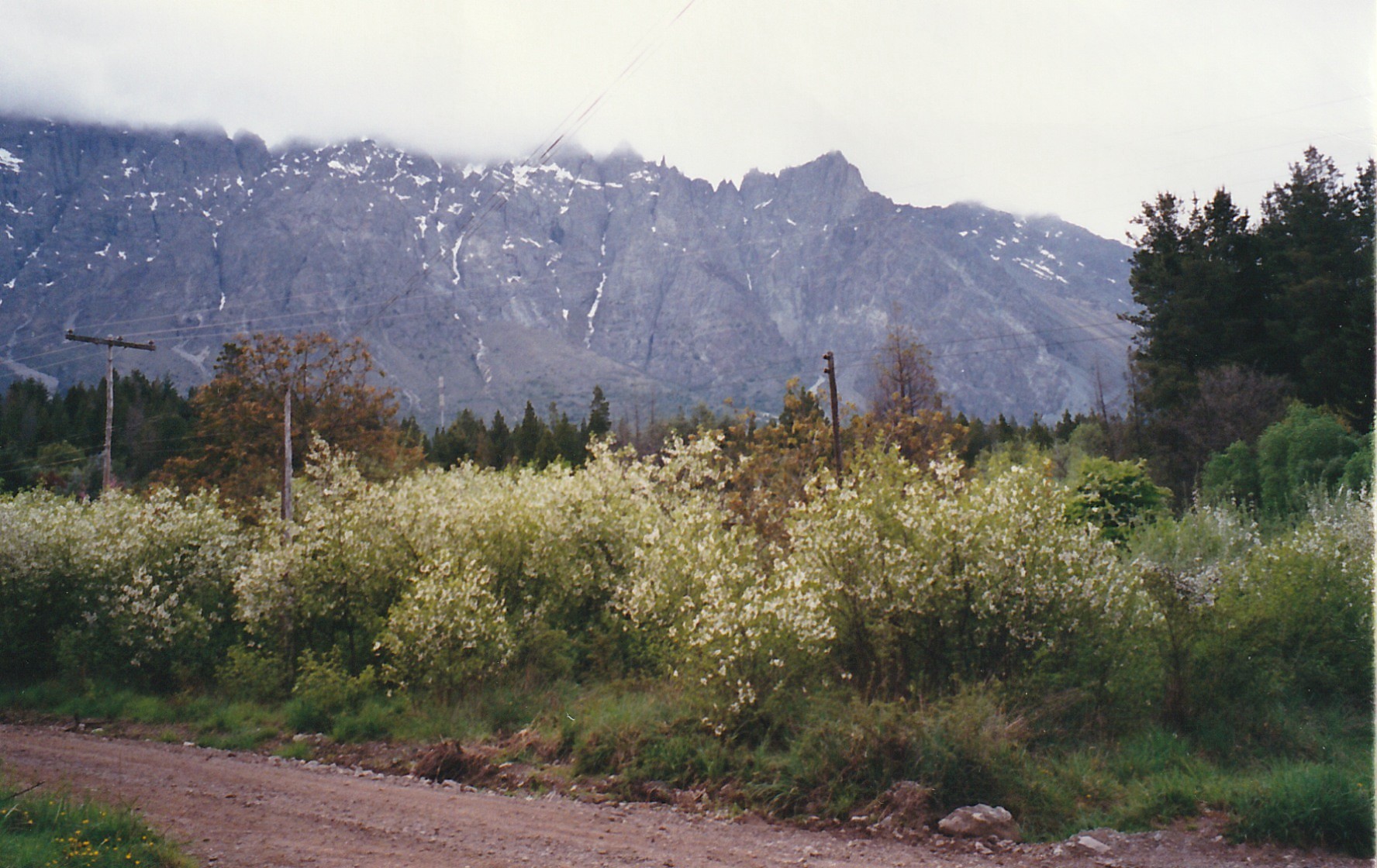
Tuesday 31 October 1995 We decided to go directly by taxi to Bariloche rather than go with a group to Cerro Mesa and then return to Bariloche this gave us some time to spare at the ranch which was set on the side of a valley some way out of El Bolson. There were a couple of t eros on the grounds and they had evidently a nest. As we approached they made a lot of noise, then would watch us intensely and shout out only when we moved. One of the hotel dogs took us for a walk along the road behind the hotel. We passed an apple orchard which was for sale. The trees were in full bloom and we wondered whether it would make a retirement home for us. The place was very peaceful and we could hear the ibis honking in the valley below. (Shades of Linden Lee)
El Bolson
The
taxi worked well. A total of four vehicles took us all to Bariloche .
They went in convoy and kept in touch by two-way radio. The road has
been improved and is now well engineered although there is still much
surfacing to be done. The journey took less than 2 hours and this is
quite an improvement on a couple of years ago.
|