Cornwall Standard Freeholder 28 January 2026
Cornwall Locomotive Number 17 Gets Ticket to Ride Out 12 More Months of Fundraising
Cornwall Ontario - Cornwall council has agreed to let the Friends of Engine 17 ride out 12 more months of fundraising efforts related to refurbishing and relocating the well known locomotive artifact within the city.
The group provided a letter to the city dated December 2025, sharing that $56,000 has been raised to-date to support the local preservation of the locomotive, which the Ontario Land Tribunal had previously deemed to be an important heritage artifact.
"We are encouraged to report that $56,000 has been secured through the generosity of a select group of donors and is currently held by the city," reads the letter.
"We continue to seek additional support from corporate partners at the $10,000 level and plan to broaden our outreach to invite smaller donations from other supporters."
In late 2024, Cornwall Community Museum and SDG Historical Society senior curator and administrator Brent Whitford made a pitch to council on behalf of the Friends of Engine 17 with a plan for fundraising and related cost estimates to move the artifact to the Benson Centre.
Last April, the group of local heritage advocates was given the green light by council to proceed with its efforts.
On Monday, Coun. Dean Hollingsworth made the motion to allow the group an extra year of fundraising.
"The city, of course, has already committed $44,000 to move the train, which means we'd spend $44,000 and have really nothing to show for it," he said.
In 2021, council decided in a 6-5 vote to gift the locomotive to the Eastern Ontario Railway Museum in Smiths Falls, and pay approximately $50,000 to move it there.
The money for the relocation would come from $100,000 council added to the 2017 budget to repair Locomotive 17, moneys that should remain in reserves.
"The idea of losing $55,000 in fundraising, and an additional $44,000 with nothing to show for it without giving the friends the opportunity to push ahead with this seems a bit premature," said Hollingsworth.
"It seems crazy to watch all that money walk without giving the committee full opportunity."
Many councillors praised the Friends of Engine 17 for its dedication and hard work.
"A few years back, there was not too many people that wanted to wash their hands of this project more than I did," said Coun. Todd Bennett.
"My main reason back then was, well, people seemed to complain nothing was happening with this thing, and nobody was stepping up to do anything about it either. In this case, I'm happy to say people have stepped up. And this is a lot of money you've raised. An extra 12 months is the fair thing to do, the right thing to do. Thank you for stepping up."
While all councillors voted in favour of granting the extra time to fundraise, some shared words of trepidation.
Coun. Sarah Good asked if there was a cost estimate for ongoing maintenance of the artifact.
Cornwall's general manager of infrastructure and municipal works Michael Fawthrop explained there are no cost estimates at this time as they would vary dependent on the scope of the project.
An operating budget dedicated to the locomotive's ongoing maintenance would be necessary, he assured, in order to prevent its degradation.
"I have got great reluctance because that means one more winter in the elements. That train has been rusting away for years," said Coun. Elaine MacDonald, who ultimately supported the extended fundraising timeline.
"I don't know at what point for our train the degradation outpaces the community efforts to salvage it in some way."
The business plan proposal from the Friends of Engine 17 pegged the project at costing, in its entirety, $153,036.
This includes $128,311 related to the locomotive itself, with a 2024 cost estimate for its refurbishment, and 2017 city cost estimates related to a track for the artifact to sit on, and its relocation.
It also includes $24,725 related to two interactive display kiosks and two display cabinets.
Locomotive 17 was acquired by the Cornwall Street Railway Light and Power Company in 1962, and retired by CN in 1971 when it purchased the Cornwall company's assets (Cornwall Street Railway Light and Power Co. is known as Cornwall Electric owned by Fortis Ontario).
It had been used for those nine years to move railway cars around the city and is a testament to the electromotive engine and Cornwall's industrial past.
Shawna O'Neill.

Kingston Whig Standard 13 March 2026
Two Station Buildings Along Montreal Street to be Demolished
Kingston Ontario - It's the end of an era for two out of three railway station buildings in Kingston's downtown.
According to a news release from the city, two of the buildings, located at 810 Montreal Street, will be torn down.
CN owns the buildings and said that the structural integrity of the baggage building and the breezeway attached to the baggage building have deteriorated so much that any entry poses extreme safety risks.
CN has informed the city that "demolition is the only viable course of action and that it will demolish these structures," read the release.
CN has shared that it is taking this action under the federal legislation in effect on the historic railway station.
For the public's safety, CN has installed fencing around the site to prevent access during and after demolition.
While the two railway station buildings will be removed, CN has determined that the "stone railway station building" on the property does not need to be demolished and that restoration efforts will be explored moving forward.
"The railway station buildings are designated as heritage buildings under both federal and provincial legislation. When the city designated the buildings in 1987 (under provincial legislation), CN was a Crown corporation. The intent of the designation, and its consideration within the North Kingstown Secondary Plan, was to protect the heritage character of the buildings if and when CN sold them and to ensure that any future adaptive reuse or development proposals considered the heritage character of the buildings," the release read.
Kingston Whig Standard Mar 25, 2026
Train baggage for Kingston was not to be checked
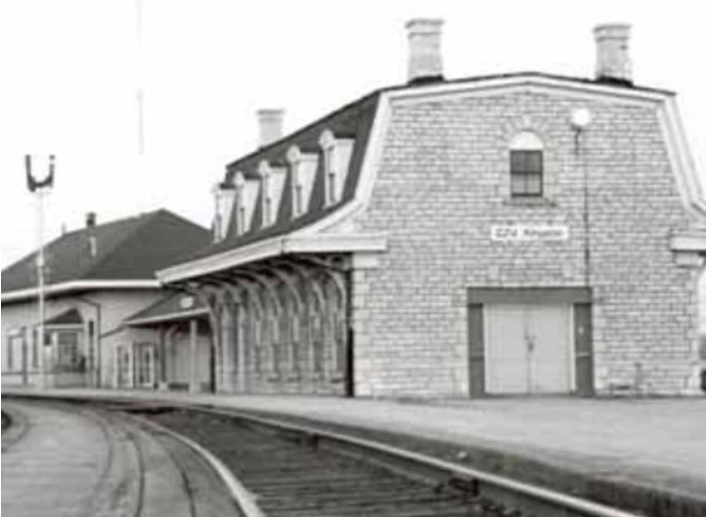
English architect Francis Thompson designed eastern Ontario's first Grand Trunk Railway station at Kingston, built in 1855-1866. The once-beautiful limestone heritage building is now a memory, preserved in photographs. (Circa 1990s/Canadian National Railways) jpg, KI, apsmc
Grand Trunk Station was designed by architect Francis Thompson, born in 1808 to a construction family in Woodbridge, Suffolk, England. Following in the footsteps of family, he learned construction skills and architectural designing that became the foundations of his career. Thompson’s father was a builder and surveyor, two of his uncles were architects and his grandfather was also a builder.
In 1830, the young architect married Anna Maria Watson, “and the newlyweds then emigrated to Montreal in British North America (Canada),” said Wingfield Station 1947. Joy mixed with grief when the next year, the Thompsons became parents to baby boy Francis Jacob. A year later, 23-year-old Anna contracted the dreaded bacterial cholera and did not recover. Thompson carried on, establishing his architecture career with house designs, churches, court buildings and commercial construction.
Partnering with fellow English immigrant architect John Wells, Thompson co-designed Montreal’s first indoor market in 1832, named St. Anne’s Market. Planned in Neoclassical style, the building was a vast 100 metres in length. “Even more remarkable,” the architects “erected the building squarely on top of Little Saint-Pierre River … (made) possible through the construction of a gigantic stone vaulted canal,” wrote Louise Pothier and Hendrik Van Gijseghem in “The Parliament of United Canada in Montreal 1843-1849” (Canadian Parliamentary Review 2017). The expansive building was the temporary home of pre-Confederation parliamentary sessions.
Returning to England in 1837 for his son’s formal education, Thompson was engaged as the North Midland Railway architect. Constructing railway stations and warehouses, Thompson was also commissioned to design several bridges for the new Derby to Leeds line. The architect’s projects met with acclaim and appreciation, and he went on to design a roundhouse, and a complex of housing and buildings related to several railways in the region.
In the era of new rail lines, the station designs were left to Thompson's skill and innovation. He devised three architectural plans for the North Midland stations: Classical; Elizabethan; and Grecian. He also altered each station design "to be in harmony with local surroundings," according to Wingfield Station 1947. "Thompson's other considerations for the design of the stations were the need to impress the new passengers and help instill a sense of confidence in the new railway age."
In the meantime, Thompson married his second wife, Elizabeth, in 1840. Also contracting cholera, Elizabeth died in 1852. (Life was risky and difficult for women in the 1800s.) A year later, Thompson married his third wife, Mary Ann Groves, from the market town of Wareham in South Dorset. Taking his bride to Canada in 1853, the experienced rail professional was appointed architect by the new St. Lawrence and Atlantic Railroad, and Grand Trunk Railway (GTR). Among projects, Thompson was to design train stations between Montreal and Toronto.
"Designing the masonry for the Victoria Bridge in Montreal," Thompson drew plans for "the terminus at Portland, Maine," said Bob Webb in "Francis Thompson (1808-1895) Railway Architect" at Alde Valley Suffolk Family History Group (AVSFHG), January 20, 2020. The Portland station "was lauded as the largest station in America at that time."
Commencing design projects with the GTR, Thompson began with the limestone station at Kingston, constructed in 1855-1856 on the Montreal-Toronto line. Kingston's Outer Station "was the first GTR station built in Ontario," according to "Federal Directory of Heritage Designations" at Parks Canada. (FDHD) Among several of Thompson's designs along the local rail line, Kingston's is the architect's only "oneand-a-half-storey design for small stations."
Thompson's eight other stations on the line were constructed as single-storey structures, such those at Ernestown GTR station near Millhaven (1856); the smaller stone station at Napanee (1856); and the Belleville station (1856) that was originally one-storey then renovated to have two storeys in the late 1800s.
In June 1994, Kingston's GTR station at 810 Montreal St. was designated under the Heritage Railway Stations Protection Act (R.S.C., 1985, C. 52 (4th Supp.)), and by the City of Kingston through the Ontario Heritage Act in 1987. The register described the building as Italianate style with "Second-Empirestyle roof." The rectangular building featured "seven bays on each of the track and street facades," with "round-arched window and door openings along the ground floor," and "arched and keyed second-storey windows on the end facades."
The exquisite stonework featured several textures in ashlar walls and the smooth, cut-stone quoins and voussoirs defining the large arched openings and building corners," noted FDHD. Deep inset eaves were "integrated into the quoining on the ends of the building," with five arched dormers at the front and back of the mansard roof. Thompson included four capped chimneys of stone, two at each end.
Officially opening on Oct. 27, 1856, the railway ran into an almost immediate snag. An irate business traveller wrote a letter to the editor of the Weekly British Whig, published Nov. 3 of that year on page 2. The passenger wished to have his baggage checked at the Montreal station for his Kingston destination, but was refused by staff. Noting that baggage was checked for Toronto and other destinations, the customer asked for a reason. "He was informed by the Baggage-master that the Grand Trunk authorities had issued orders that luggage was to be checked for all places on the road except Kingston, and that Kingston luggage was not to be checked at all."
Furious, the writer added "shall we tamely suffer ourselves to be kicked and spurned by these Railway puppets and jack-in-office?" He then urged Kingston passengers to complain, stating that "the longer they suffer injustice without complaint the more injury and disgrace will be heaped upon their heads."
Transporting people, freight, and business opportunities to Kingston, the GTR station added a brick building in 1895-1898, linked by a wood shelter built in 1939. The shelter was enclosed 50 years later. The busy train station became property of Canadian National Railway (CNR) in January 1923, and closed in 1974 with the opening of the new modern facility at 1800 John Counter Boulevard. Perhaps the countdown clock began ticking then, but we didn't hear it.
In 1996, the oldest building of the Outer Station caught fire, heavily damaging the interior and roof. Each year following, the building suffered more damaged from the seasons, weather and vandalism. Efforts over the decades to save the building failed. It will not be preserved as an engaging museum. Heavy equipment has moved in and history of the city, and of a place that celebrated the birth of Canada, will be hauled away as heaps of rubble.
His work completed, Thompson and his wife sailed home to Hastings, England in April 1859. On retirement in 1866, Thompson spent several years "producing 'template' designs for intermediate stations," said Webb. The architect's work was "included in a number in the East of England." Francis Thompson died in Bredfield, England on April 23, 1895, at age 86. His wife Mary died less than a year later.
Thompson's remaining railway stations along eastern Ontario's GTR/CN line remain as historical gems. We regret that Kingston's Outer Station is not among them. Susanna McLeod is a writer living in Kingston, Ontario. She is both sad and angered that the pre- Confederation station was allowed to crumble and demolished, a loss that could have instead been proud local history.
Canada's First Railway Tunnel is a Glowing Underground World Capturing the Past of the Ontario City Above
Toronto.com 18 April 2026
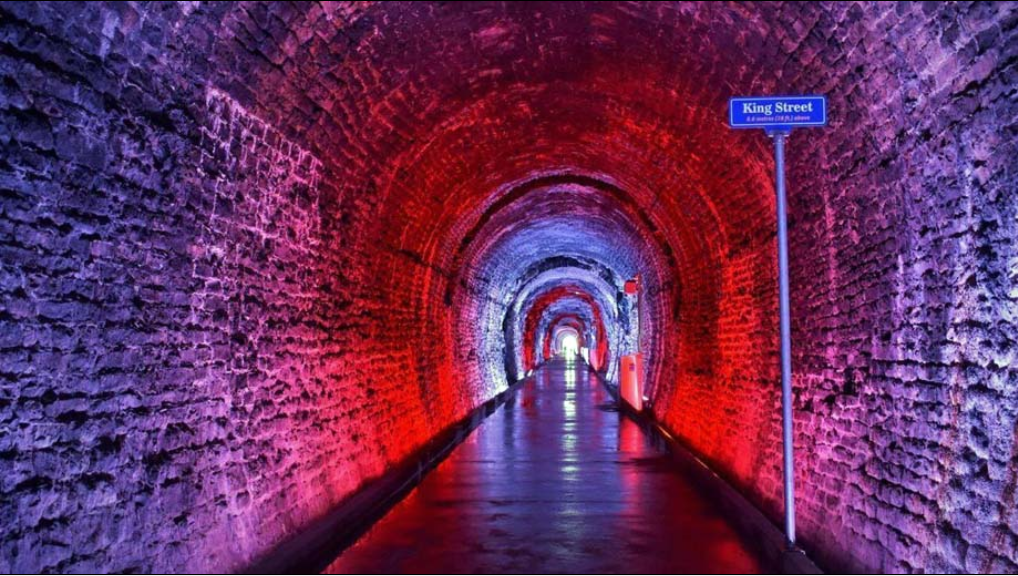
Brockville Ontario - Canada's first railway tunnel is in Ontario and it's about to open for the 2026 season.
Situated inside the earliest town to be incorporated in Ontario, the Brockville Railway Tunnel will officially begin welcoming guests to explore the iconic landmark on 15 May 2026.
And admission to this Brockville marvel is free.
"As you enter, the air cools, lights dance along the tunnel walls, and the echoes of history surround you," according to Brockville Tourism.
"From your first walk through, to your annual visit, it's always a magical experience. Here's to another unforgettable season underground."
Originally constructed between 1854 and 1860, the tunnel once connected the city's industrial waterfront to the Brockville & Ottawa Railway.
By 1969, the last train passed through the tunnel.
And in 1983, the tunnel was purchased by the City of Brockville.
Now, it's been "beautifully restored into a walkable, illuminated experience that captures the spirit of Brockville's history and innovation," Brockville Tourism states.
And to learn more about its past, construction, and geology, stop and read the information boards posted throughout the experience.
Located at 1 Water Street the tunnel runs half a kilometre underneath downtown Brockville from the waterfront to Pearl Street.
Walking through the tunnel takes most visitors around 20 to 30 minutes.
And a full light and sound program runs for 90 minutes, "so there's always something new to experience with each visit," Brockville Tourism adds.The tunnel is also wheelchair accessible and dog friendly.
During the spring, summer, and fall, visitors are welcome to explore this site from 09:00 to 21:00 including on statutory holidays.
Irelyne Lavery.
Hometown News.ca May 31, 2026
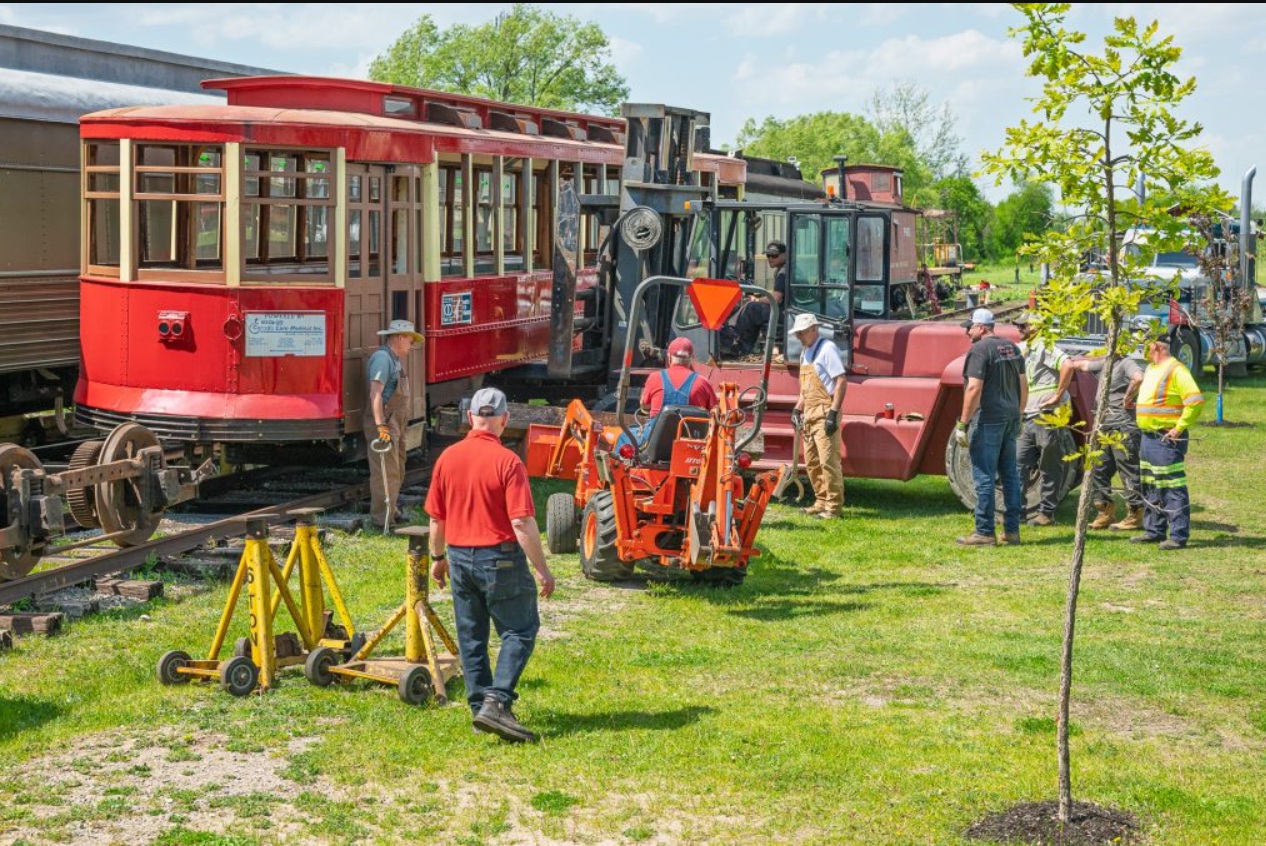
Ottawa’s Historic Streetcar 696 arrives at permanent home in Smiths Falls
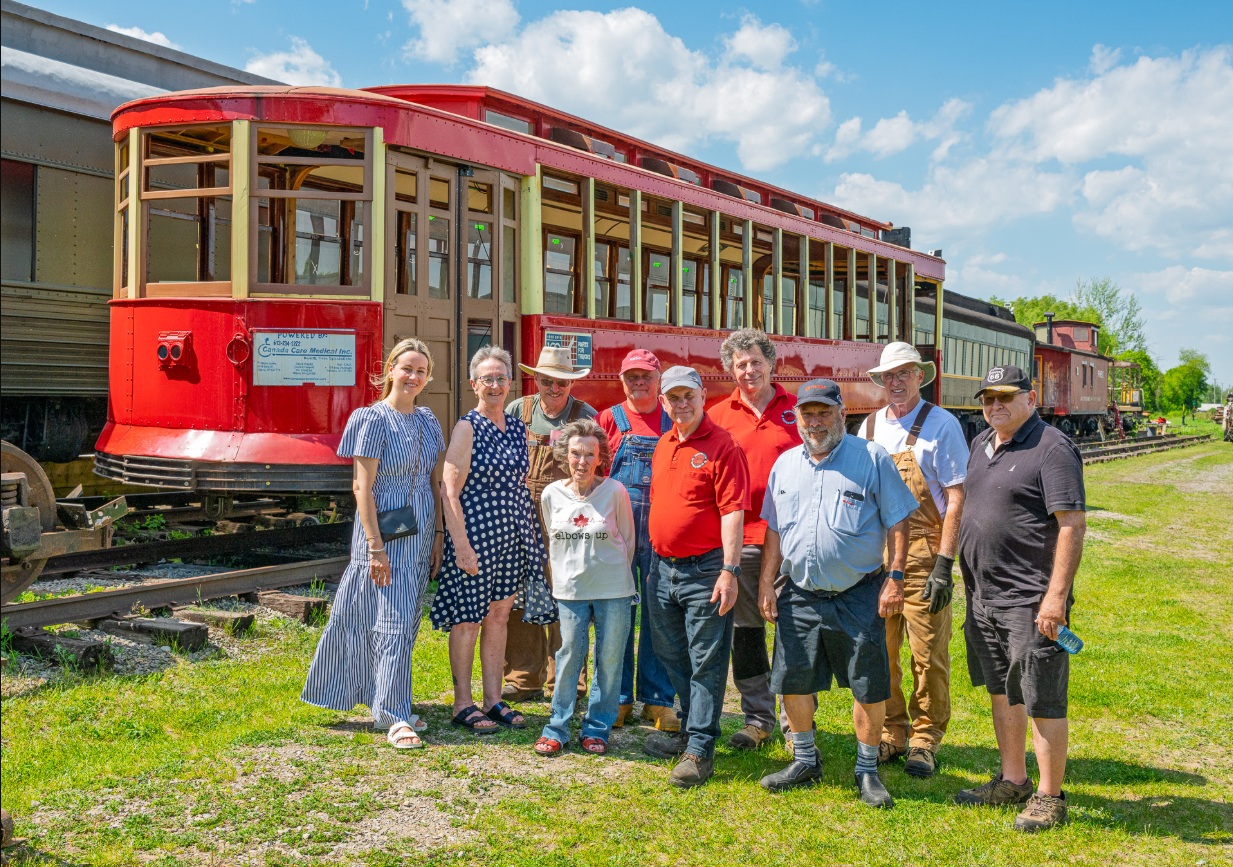
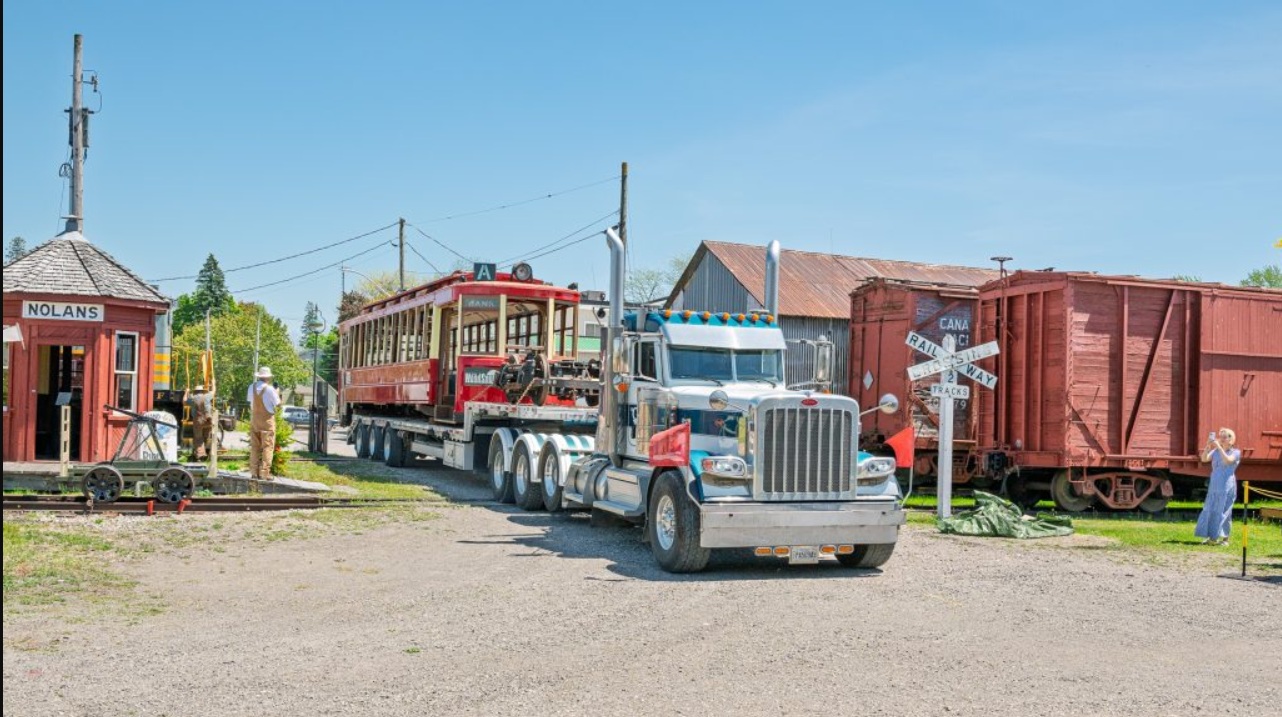
Ottawa’s historic Streetcar 696 has arrived at its new permanent home at the Railway Museum of Eastern Ontario.The 109-year-old streetcar was recently relocated from Ottawa to the museum after decades of volunteer-led restoration work. Restoration efforts will continue in Smiths Falls with the goal of eventually returning the streetcar to operation for public rides.
Streetcar 696 is believed to be Ottawa’s last remaining 600-series streetcar and represents an important part of the capital’s transit and manufacturing history. Built in Ottawa, the streetcar operated during an era when electric rail transit helped shape the city’s growth and daily life.
The project has been led for more than two decades by a group of volunteers who collectively contributed an estimated 150,000 hours to the restoration effort. The museum said it will continue working with many of those volunteers to complete the project and preserve the streetcar for future generations.
“This is about more than preserving a streetcar — it’s about preserving the stories, craftsmanship and community history connected to it,” said Tony Humphrey, president of the Railway Museum of Eastern Ontario. “Historic transportation shaped our communities and connected generations of people. We are honoured to give Streetcar 696 a permanent home where it can once again be experienced and appreciated by the public.”
Museum officials say their long-term goal is to offer rides aboard the streetcar once restoration work is completed.
“We are incredibly excited to welcome Streetcar 696 to the museum,” said Becky Allen, executive director of the Railway Museum of Eastern Ontario. “We’re thrilled to make this piece of Ottawa history accessible to visitors and to continue the incredible restoration work already accomplished by the volunteer team.”
The museum also emphasized the importance of maintaining its partnership with the original restoration volunteers, many of whom plan to continue contributing their expertise in Smiths Falls.
Streetcar 696 is now on display at the museum, with restoration work continuing in the months ahead.
Chris Uhlig Photos Source RFMEO Media release
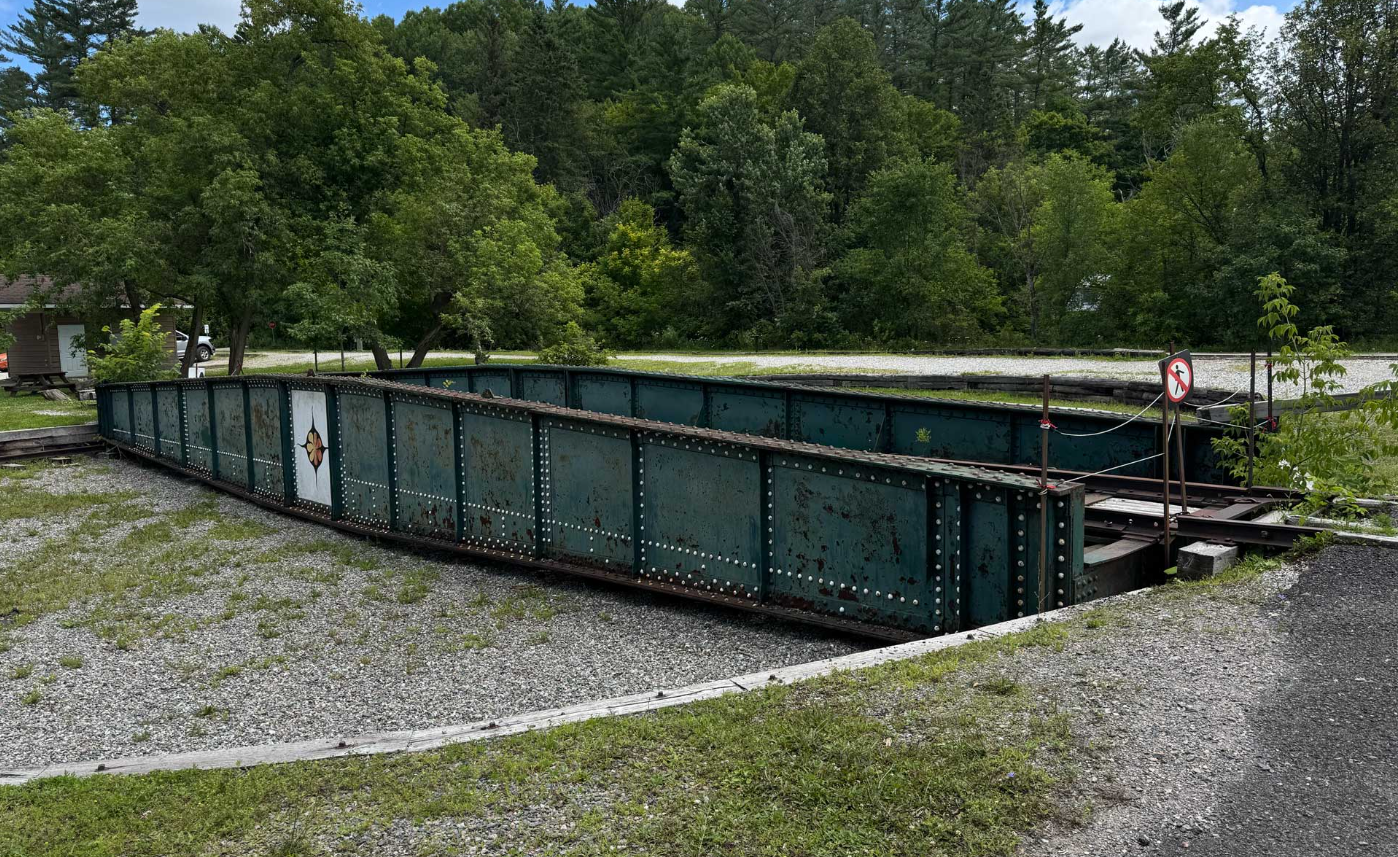
Villagers debate future of Wakefield turntable
Date uncertain around the end of June 2026
By Trevor Greenway
Former Wakefield Trails president Ken Bouchard feels that the turntable installed in the heart of Wakefield “has no place” in the village.
Speaking at an Aug. 14 consultation on Parc Roquebrune, better known by locals as turntable park, Bouchard told the Low Down that the turntable has no history connecting it to Wakefield and should be removed as the municipality gets set to give the park a major makeover.
“I personally think, and I’m persuading some of the others, that the turntable has no place,” said Bouchard during a breakout session at the Wakefield community centre with several other residents. It never was part of railroading in the Gatineau Valley. It was introduced by the National Capital Commission (NCC) to promote the tourism train in conjunction with the Museum of Science and Technology. And it never had a role.”
The NCC acquired the old turntable from Kingston in 1974 and installed it in Wakefield that same year so that the Hull-Chelsea-Wakefield tourist train could turn around in the village and make its return trip back to Hull. The NCC, in partnership with the Canada Science and Technology Museum, ran the excursions, which became a popular tourist attraction.
Whether you feel the turntable should remain in the village or not, it does come with some storied Wakefield history, notably the 1977 trip that saw Queen Elizabeth II ride the train from Hull to Wakefield on her royal visit.
Wakefield resident Stanley Britton and his Wakefield’s Rail Heritage Advocacy Group told the Low Down in the spring that they believed the Wakefield turntable to be among the last remaining working turntables in Canada.
Engine House in Sault Ste. Marie, Ont., contains an enclosed turntable at its National Historic Site of Canada. The former Canadian Northern Railway turntable in Dauphin, one of the last ones in Manitoba, will also be dismantled this summer.
Others at the consultation disagreed with Bouchard’s take and said they felt the turntable should be preserved and incorporated into any new design the municipality comes up with.
“I think the name should be changed from Parc Roquebrune to Turntable Park, because nobody in Wakefield knows what Parc Roquebrune represents,” said resident David Pritchard. “We should maintain our railway, because it is historic, and we should keep that infrastructure.”
The municipality is considering several options for the Wakefield turntable and the railway along the village’s main drag. These include: removing the turntable and commemorating it with a plaque and other educational installations, partially incorporating the turntable into the design, or completely preserving the turntable. The municipality is also considering whether to remove the train tracks throughout the village or incorporate them into a new multi-use pathway for pedestrians and cyclists.
La Pêche has been seeking input from residents on what to do with turntable park since it launched an online survey on July 1 this summer. The survey asks residents what amenities they would want to see at the park, and many of the responses have included shaded picnic areas, a community stage, chess tables, a children’s playground, an expanded swimming area, improved washrooms and changerooms and a rethink on the parking that bookends the park on Chemin de la Rivière.
“We bake in the sun there during Art in the Park,” said Paul Brown, who works with the 100-Mile Arts Network in Wakefield. The network has been hosting weekend art shows, but Brown said without any infrastructure, it’s been tough during heat wave weekends.
“It’s really hard to work in that park. There is shade and trees on the other side, but we can’t get to it because of the rails,” he added. “We’ve had funding to do this Art in the Park, but it would be a lot better if we had some infrastructure.”
Other ideas brought up during the consultations included building a tourist information kiosk that would have information for visitors on where to go and what to see, but that idea was met with strong criticism from Wakefielder Shoshana Stein, who says info kiosks are “outdated, tacky” and bad for the environment.
“When we used to come to Wakefield before we moved here, the pleasure was actually just talking to people and learning about Wakefield through those conversations,” she said.
“It happens organically, we don’t need somebody to point it out, and we have to preserve that,” added Wakefield resident Denise Giroux.
About 20 people attended the in-person consultation Aug. 14. The survey is available online at https://lapecheconsulte.ca until Sept. 5.
Globe and Mail 1 July 2026
An overnight stay in a railcar gave us history, novelty and plenty of fun
At the Railway Museum of Eastern Ontario in Smiths Falls, you can rent out one of three cabooses to stay the night.Taras Grescoe/The Globe and Mail
To the amusement, and occasional alarm, of my wife, I’ve become one of those living clichés, the middle-aged railway enthusiast. True, unlike some rail fans, I don’t spend my days in the basement tending to an ever-growing model railroad layout. But I’m pretty sure she has started to notice that every outing I propose involves at least one train ride.
So, on a recent long weekend, when I asked Erin if she wanted to join me on a road trip to a railway museum in Smiths Falls, Ont., I wasn’t surprised the response was a hard “no.” As for our eldest son, Desmond, his weekends are now fully booked with mall-hanging and movie-going with teenage friends. My only hope was Victor, who, at 10, can still see the wonder in a hulking steam locomotive. I suggested that the outing would help him with his fourth-grade project on the history of railways.
“Will we get to ride in a train?” he asked. I wasn’t sure, but when I told him we would be spending the night in a caboose, he was in. There are several places across Canada where you can sleep in railcars – some with interiors that have been renovated almost beyond recognition – but the Railway Museum of Eastern Ontario has a unique appeal for train lovers. Its Airbnb site allows visitors to choose one of three minimally restored cabooses and spend the night on a siding next to a 1912 Canadian Northern Railway station.
The station building now doubles as the museum shop.Taras Grescoe/The Globe and Mail
Though it’s possible to get to Smiths Falls by train – the town is a stop on the Via Rail line between Toronto and Ottawa – we arrived by car, taking a leisurely route from Montreal, following Highway 6 southwest through the small towns and farmland of Lanark County.
In the cool confines of the station building, which now doubles as the museum shop, we were greeted by manager Nate Flinn, who showed us to our lodgings, a 1921 Canadian National Railway caboose, resplendent in coats of glossy orange paint and fitted out with a pair of single beds. (Parties of three can opt for the 1945 Canadian Pacific caboose, or the spacious 1967 CN caboose.) After we’d dropped our bags, Flinn invited us to join him for a lesson in the operation of a handcar, one of those hand-pumped contraptions used by railworkers to inspect the tracks.
“Handcars are super fun and only a little bit dangerous, which is a fun mixture!” said Flinn, as he invited Victor to climb aboard. “Just a warning: There’s a very friendly groundhog that loves to run out on the tracks while I’m doing this, and I’d rather not hit him. If you see him, give me the signal, and I’ll hit the brake.”
By putting all his weight onto the lever (and with more than a little help from Flinn) Victor was able to careen down the track on the handcar past the museum’s dental car, which the provincial government began running as a roving dentist’s office in remote communities in northern Ontario in the 1930s. (Victor returned safely, grinning widely; later I saw the groundhog, who, according to Nate, answers to the name “6591 Diesel-Electric Canadian Pacific Locomotive,” darting across a siding.)
Instead of a television, the caboose had a chessboard for guests.Taras Grescoe/The Globe and Mail
After walking to the centre of Smiths Falls for dinner on the patio of the Lockmaster’s Taphouse, a pub that overlooks the spillway of a former mill on the Rideau River, we returned to our caboose-hotel. For entertainment, there was no television, only a chessboard next to a (non-functional) potbelly stove, and a stack of rail-themed books. Victor clambered up a ladder into the cupola, the cozy turret the crew originally used to gaze along the track, and lost himself in the latest Dog Man book, while I dozed off reading about the building of the Kettle Valley Railway as I listened to the whistle of freight trains passing through the Canadian Pacific yards across town.
We awoke to the sound of birdsong. Our caboose was staged next to a small patch of marsh, favoured by mallards and Canada geese. While Victor made friends with Monty, the station cat, I took a shower in the museum building (overnight guests have access to a full kitchen and bathroom). Then we got a lesson in the art of telegraphy from volunteer Andrew Cameron. Nattily attired in a white shirt, vest and sleeve garters, Cameron spelled out Victor’s name in Morse code and let him operate the massive levers used to crank up the signals on the station’s gabled roof.
To putter around a railway museum – they are generally staffed by gentle, if detail-oriented, souls – is a relaxing way to spend a morning. In a former Canadian National coach, volunteer Gilbert Lacroix showed us a faithful representation, in HO scale, of the area around the Smiths Falls station as it would have appeared in 1955.
The 1921 Canadian National Railway caboose was fitted out with a pair of single beds.Taras Grescoe/The Globe and MailAnd museum president Tony Humphrey, who served as a Canadian Pacific engineer for 35 years, walked us through one of the museum’s star attractions, an 1899 Wagner Palace Car, originally built for the Intercolonial Railway in the Maritimes. Impeccably restored, the dining car is a confection of highly varnished mahogany with fruitwood inlay, velour drapes and fittings for kerosene lamps. It still welcomes guests for high tea. (It also plays host to Santa Claus, when at Christmas it becomes part of the museum’s annual North Pole Express train.)
We never did get a ride in a locomotive. As it turned out, that day their diesel-electric engine was scheduled for repainting. But my son declared himself satisfied. He’d filled our camera with photos of snow-plow trains, trackmobiles, velocipedes and other rolling-stock curiosities that would come in handy for his upcoming school presentation.
As for the accommodations, Victor awarded our night at the museum five stars, and ranked our stay in a stationary caboose in eastern Ontario one of the top 10 sleeps of his life.
More railcar sleepovers
The cabooses at the Railway Museum of Eastern Ontario in Smiths Falls offer a comfortable glamping experience (the bathrooms aren’t in the railcar, but in the adjoining station building). Caboose sleeps start at $221. rmeo.oOntario: South of Gravenhurst, in the the tiny town of Kilworthy, just off Highway 11, you can stay in an Ontario Northland caboose from 1977 with ensuite, kitchenette and loft bed for one child. From $240 a night. www.sidetrackedinmuskoka.ca
Alberta: In Mossleigh (about an hour outside Calgary) you can choose from one of five Caboose Cabins; a night in the 1920s Union Pacific caboose starts at $180. Excursions on historic trains are also available. aspencrossing.com/campground/caboose-cabins
Nova Scotia: In Tatamagouche (two hours north of Halifax), 10 railcars, staged outside a 19th-century Intercolonial Railway station, have been turned into deluxe suites with ensuites. An overnight stay in Boxcar “Jimmie” starts at $199. There’s live music in the station, and meals are served in a 1928 Canadian National dining car. www.tatatrainstation.com
The writer was a guest of the Railway Museum of Eastern Ontario, which did not review or approve this article. Stories are based on merit; The Globe does not guarantee coverage.
Madawaska Valley 27 July 2026
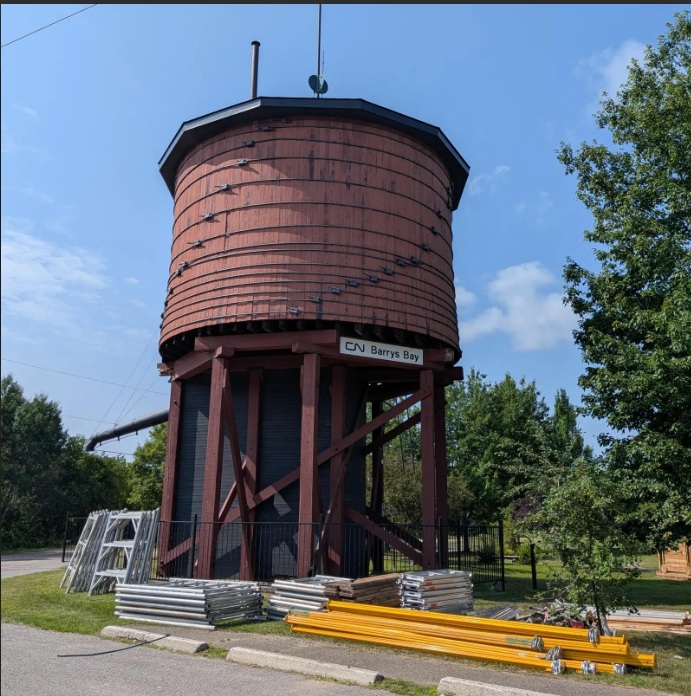
Rehabilitation Work Commences on Barry’s Bay’s Water Tower
Barry’s Bay’s iconic wooden water tower, the last of its kind in the province, will receive rehabilitation work this summer. Work commenced on Monday July 27 and is expected to wrap up in September. The tower was purchased by the Town of Barry's Bay once it was no longer in use by CN in the 1970s, and underwent significant rehabilitation in the 1980s. The Township is now investing in further repairs to insure the longevity of this landmark.
The Township has been working towards this project for a number of years. In 2023, the Township contracted an engineering firm to complete a structural assessment of the tower, which found that the timber support structure of the tower requires replacement. The following year, the Township completed a cultural heritage assessment report that detailed the history of the tower and its cultural significance to our community and the province at large. Last year, the Township had engineered drawings completed to allow us to get where we are today with shovels in the ground.
Over the course of the following weeks, the tower will be completely framed in scaffolding while beams, joists and braces are replaced. The repairs that are being completed will guarantee the structural integrity of the Tower, as well as maintain its heritage value. All interventions and replacements are being completed with identical or similar materials to the original, and all accessories on the tower will be maintained in their current locations and arrangement.
Stay tuned to the Township's Facebook page for regular photo updates of this project!
Hometown News Thursday August 27, 2026
Railway museum lands $86K grant for roof replacement
The Railway Museum of Eastern Ontario (RMEO) is pleased to announce that it has received an $86,300 capital grant from the Ontario Trillium Foundation (OTF) to replace the roof on its historic railway museum building.
The 12-month project will help protect this important heritage building from the elements and ensure that it can continue to serve the community and welcome visitors for years to come. The roof replacement is scheduled to take place this fall.
“This grant is truly transformative for the Railway Museum of Eastern Ontario,” said Becky Allen, executive director of the RMEO. “Replacing the roof will help protect this remarkable heritage building for generations to come, allowing us to continue sharing our region’s railway story while continuing to welcome tens of thousands of visitors every year. We are incredibly grateful to the Ontario Trillium Foundation for investing in the preservation of this important piece of our history.”
The museum is deeply grateful for the significant $86,300 contribution from the Ontario Trillium Foundation, which is making this critical capital project possible. The project is also supported by the generosity of the community, including $25,000 raised through contributions from individuals, as well as a $25,000 contribution from the Town of Smiths Falls.
“The support we have received for this project is a wonderful reflection of how much the Railway Museum means to our community,” said Tony Humphrey, president of the RMEO. “We are extremely grateful to the Ontario Trillium Foundation, the Town of Smiths Falls and, especially, the many individuals who stepped forward to help us raise $25,000 toward this project. Their generosity is helping us safeguard this important piece of our shared history and ensuring the museum will continue to be a place where our community can connect with its railway heritage for many years to come.”
The roof replacement represents an important investment in the long-term sustainability of the museum. By addressing this critical infrastructure need, RMEO can better protect its historic building, collections and visitor spaces while continuing to develop new programs and experiences for the community.
The Railway Museum of Eastern Ontario is dedicated to preserving, interpreting and sharing the railway heritage of Eastern Ontario. Located in Smiths Falls, the museum offers visitors an opportunity to explore the region’s rich railway history through its historic buildings, railway equipment, exhibits and collections.