|
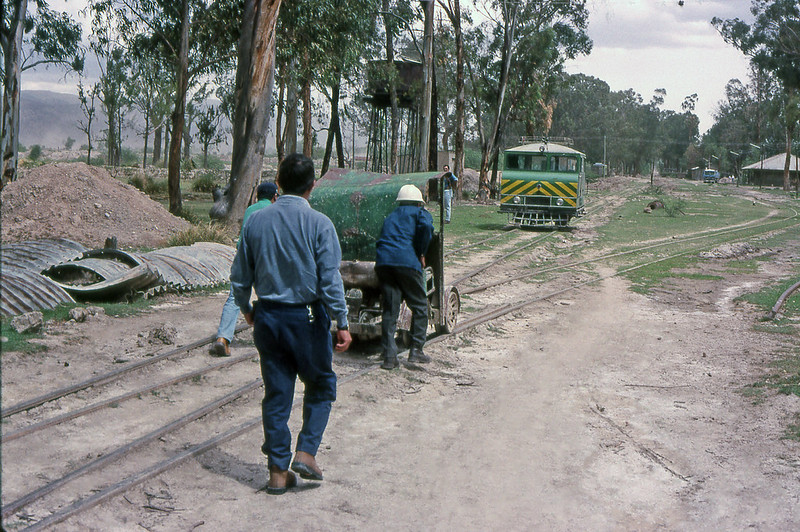
30 June 1998 My first trip was from Viacha to Guaqui on Lake Titicaca. I had made this trip twice before in earlier visits to Bolivia so I had a good idea as to what it would be like. I took Sylvia, from the CESO (Canadian Executive Service Organization) office, with me as an interpreter because I had a hard time understanding the engineer from the Superintendencia who was to accompany me. We met him and drove in his bright red VW Beetle up through El Alto and on the 10 miles or so to Viacha which is where the railway yards are. He wasn't certain of the way and we drove along an enormous trench which would have swallowed up the VW with no trouble at all. We then drove along a sidewalk because there was a wide trench across the road. A quick diversion through an army barracks and we found the railway. We met two railway civil engineers who were to accompany us. The small motor rail inspection vehicle had eight comfortable seats (one for the driver) and there was good visibility. It was completely enclosed and provided good protection from the wind. I was wearing layered clothing, including two pairs of pants. The altiplano is reputedly cold at this time of year although with the completely clear skies the sun was very hot indeed. I quickly shed a couple of layers on top but pants were more of a problem so I sweated through with them. We left at 09.15 and had quite a tussle with the trespassers and trucks who felt that they had greater claim to the tracks than we did. We made it out some two or three kilometers past a cement plant and the going got rough. The rails were bent all over the place both horizontally and vertically. There had been little maintenance for ages and the car plunged about like a ship in a heavy sea. I asked to stop a little way out and was amazed to see really tiny rails (60 lb per yard) that were rolled in 1904! When I laughed out loud they said to wait until we got further along - there was some 20 km of 40 lb rails. I had never seen anything so small! We proceeded on our way like a ship at sea and took the siding at Tiahuanaco. This is the site of the ancient ruined that we visited at the solstice a couple of weeks ago. The tracks run between the visitor center and the site itself and I had visions of picking up a couple of the ubiquitous French tourists that were milling around. Of course, there were no padlocks on the switches or any other safety niceties that I had come to expect in Canada. The train we were waiting for finally came drunkenly down the track and as the crew of the swaying locomotive waved to us I wondered whether management issued nausea pills. At one point I saw at least 50 people sitting around several fires eating lunch. They must have come to this remote spot from some way away because they were about 20 bicycles piled up. On the way back I could see they were busy building an adobe house. There were piles of mud bricks and the kids were mixing an enormous amount of dark red mud which was used for cement. We continued on our way to Guaqui which is a port on Lake Titicaca. There were several cars of Bolivian soybeans waiting for a ship to take them to Puno, Peru where they would be transferred to the Peruvian Railway for movement to the coast for export. Bolivian exports have a very difficult time reaching the sea - they must either go through this way or through Brazil, Argentina or Chile. None of the routes is direct. We sat on a wooden bench looking out at the flat, deep blue lake as we ate sandwiches and fruit provided by Hilda. It was a lovely scene, with the calm lake set against the Peruvian shore. Such a contrast with Guaqui which is muddy and dirty and replete with lots of nasty smells. Our return was relatively uneventful and although the wheels jumped off the rails a few times we came down on the right side each time. People live in adobe huts trying to create a living from a few cattle and sheep which scratch the soil to plant a few potatoes.
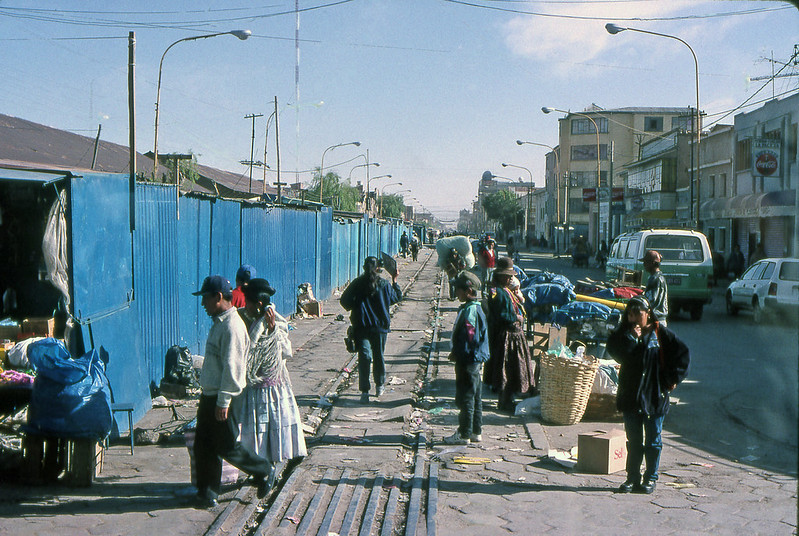
1 July 1998. I was up at 04:45 and we met the fellow from the Superintendencia, complete with red VW at 0600. We had to be at Viacha by 07.00 for we were to go to Charana and back on the border with Chile. It was cold at this hour and everyone huddled in their clothes for warmth. I had been told that Charana would be really cold because it was in the mountains so I put on even more layers of clothes than yesterday but took a second pair of pants with me because I hadn't needed them the day before. Our driver drove like M. Hulot - very concentrated and not more than 45 kmph. We chugged away through the sleeping city of La Paz ignoring all red lights. Not learning from the previous day, we skirted the trench but could not get down the sidewalk because it was blocked by another car. We then tried to make it across the closed part of the road but the bug bottomed out and we had to use reverse which seemed to be a bit of a new experience. We managed to find another way to drive through the army barracks and finally made it to Viacha station in time where I decided to put on the second pair of pants because it was very cold. The same car and people as for yesterday were waiting for us although this time they had some additional food and some blankets. We had to wait until 07:30 for a train to come in so that we would have a clear run. Today we were traveling west into the mountains. Charana is on the border with Chile and the line continues to Arica on the Pacific coast. This is part of the Ferrocarril de Arica a La Paz which was built by the British interests around the turn of the century. We started off across the altiplano but quickly climbed out and through a range of mountains. We had to stop at Comanche to allow a train past and then climbed further. The day began to warm up and, although the air was cold, it was a lovely day and layers quickly began to come off. There was a stop at Calacoto, which is a small village of adobe huts, for a chat with the section crew who were told to get some 40 km down the track to replace a broken rail we had found. Just after Calacato (which is also the name of the district where we are living in La Paz) we came across a wide lago which was filled with pink flamingos feeding in the shallows. There were a number of other wading birds in the deeper water and the scene was flanked with herds of llama, alpaca and sheep grazing peacefully. As we progressed, it became obvious that people subsisted on llama, alpaca and sheep. We would approach the herd which was strung across the track. A toot on the horn would wake up a small boy who would run around chasing his charges off the tracks and then grin at us as we went past. We saw a few vicunas which are prized for the wool but are much rarer and I wondered whether these were wild. A little further on, at Perez, we caught up with a train. It was pretty slow moving and so a call on the radio to Augusto persuaded him to stop and let us get around him at the next siding. This is strictly against the rules but no one minded. This gave us a clear run to Charana which is a small, mud village located close to the railway and the Bolivian customs shed. We were met by the village idiot although it wasn't apparent whether he had been born in this condition or whether living in Charana had done this to him. There was time to have lunch and watch the Chilean locomotive do some switching then beetle off to its own side of the border. We had to wait for Augusto to bring in his train before we could leave and this gave me a chance to walk around the block. The sun was very strong and it was very hot. There was some snow in the streets. Apart from a couple of women sitting in the gutter with fruit and vegetables to sell, there was no movement. The snow on the mountains in the distance was very bright. In response to my “Buenos tardes" to the two ladies, they replied " Buenos tardes, Caballero”. Augusto finally arrived with a big grin on his face and we left at 15.05. I asked one of the engineers when it was going to be as cold as he had said it would be. He looked at this watch and said "dos horas” (in 2 hours). On the return the animals were being brought in for the night so there were even more diversions. This time the small boys were joined by little girls or one of the parents. Sheep seem to make up their minds quickly to do stupid things. Llamas and alpacas pretend not to hear the train coming then will stand stock still in the middle of the tracks with bemused expression wondering what to do - they do stupid things. We didn't hit anything although it was a good thing that they get the animals in before it gets dark otherwise there would have been wholesale carnage We passed the flamingos still eating in the setting sun and came to a halt at Calacoto. We only had authority to go to Calacoto and had to call the dispatcher for further instructions. We couldn't raise anyone on the radio and there certainly wasn't a telephone in the village. I had visions of a spending the night here but I was surprised and not a little annoyed to find us proceeding slowly, without authority, calling on the radio every 5 minutes or so. We would find a good spot where the reception was better and stop to try our luck. At one time we even managed to speak to the dispatcher but lost contact before receiving instructions. The sun was setting and if there had been an approaching train we wouldn't have been able to see it. We finally made contact at kilometer 87, 11 km beyond our limits. In Canada, this stupidity simply would not have happened. Canadian railroaders are well trained and, in any case, I would have stepped in and stopped it. The rest of the trip was carried out in darkness with the weak headlight piercing the gloom. There was no crossing protection, neither do the trains whistle for them. I was glad to get back to Viacha around 20.30. It had been a long day of 412 km of poor, rough, track. 3 July 1998 Today they arranged for me to ride in the cab of a locomotive of a freight train. The train from Viacha to Oruro normally leaves at 03.00 but the railway rescheduled it to 07.00 for us and we were also accompanied by the chief engineer of the railway. I was up early and met at the house by Sylvia, my interpreter, and Cesar from the Superintendencia. Caesar's Beetle was not used this time so we took a taxi all the way to Viacha. Our train was ready when we arrived and they sent the locomotive to the station to pick us up and to collect the clearance (Via libre). A Japanese Mitsubishi locomotive, number 1008, then coupled onto the train and we left with no delay. It was just getting light and there was a promise of another blazing hot winter day on the altiplano. There was a light frost and some mist which soon cleared and we could watch people beginning to start their day. Several were laying out potatoes to dry in the sun. They are piled up at night in the frost and then laid out on the earth to dry in the sun. These are called chuno and are one of a number of dried potatoes - others are stood in running water for a month before being dried. Chuno are used in a Bolivian soup called chairo and I said that I enjoyed chairo to which the entire cab erupted in laughter. It seems that chairo is not considered gringo food. The locomotive rode well and was quite quiet. It was not operated at full throttle and run four was enough to maintain 45 kmph. Her train only weighed 159 tons! One Canadian freight car, fully loaded, can weigh around 130 tons. We had been underway about an hour when the second crew man broke out some plastic glasses and a bottle of coca-cola. He then made breakfast for everybody. This consisted of two slices of bread, mustard on one and ketchup up on the other with a couple of slices of ham or luncheon meat. It was good and I suffered no ill effects afterwards. This trip was southward down the true altiplano. It is a wide flat valley with rows of mountains to the east and west on the horizon. There is some subsistence farming but the land gets poorer towards the south. There are a number of shallow lagoons and salt pans. As the sun rose higher in the sky the heat caused the mountains to shimmer in the distance. Wildlife was very much in evidence. We saw a couple of small herds of vicuna which are protected. There will also many ducks, and at two locations, we saw some pink flamingos. This time they were quite close and rose into the air as we approached. They are white with some black on the underside of the wings while the pink is quite a bright shade of red. There are lots of dogs in Oruro and at one point it looked as if we had run over one. Sylvia was sitting right over it and it didn't seem too happy. Unfortunately this is a fact of railway life. The railway runs down the main street at Oruro which is also the site of the market. As we approached we could see people frantically moving umbrellas and wooden plastic sheeted stalls out of the way as they would normally expect the train to come much earlier in the day. The more permanent stalls were constructed about two feet from the side of the locomotive and people were walking around eating lunch etc. At one point we passed a monkey on a stool. He is there every day it seems. We made our way slowly through the market, blowing our whistle. The engineer was actually blowing at the pretty girls but he claimed he was blowing for the traffic. He couldn't fool me - I used to do that myself. We said goodbye to the very friendly crew and walked to a nearby restaurant for lunch. It had a good reputation for pejerry, a whitefish which is caught in one of the local lakes. It was very good, having been well filleted, but was very big. Other people were eating lamb which is the local specialty - a half lamb with the extremities hanging over the ends of the plate. After lunch Sylvia and I took a taxi to the bus station and caught a bus back to La Paz. It cost just $2 for the 200 km ride back. The bus was on time but it was very hot because people did not want to open the windows - it was winter remember.
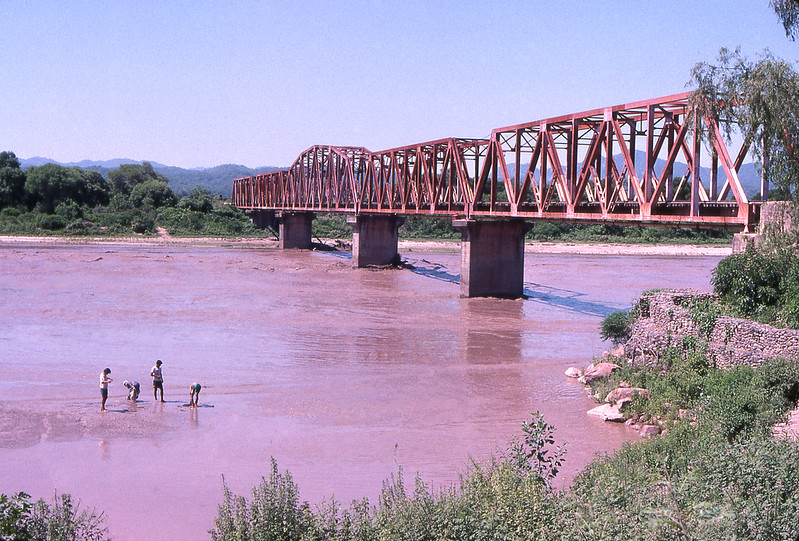
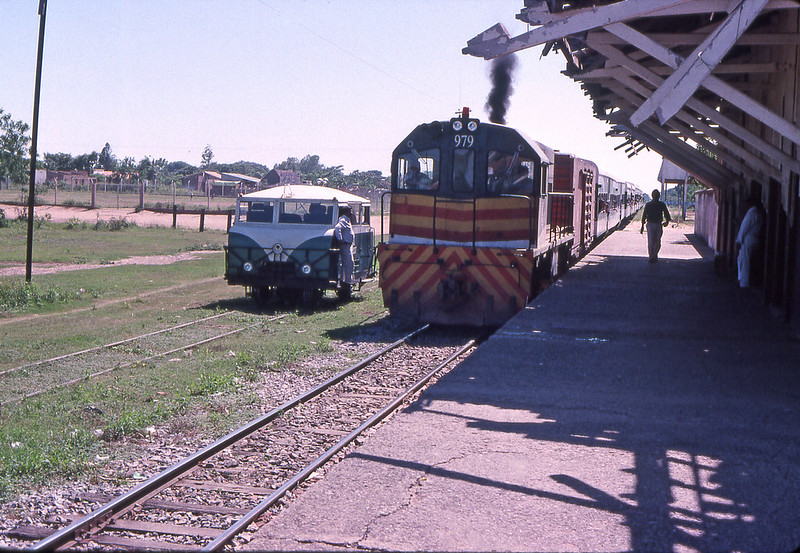
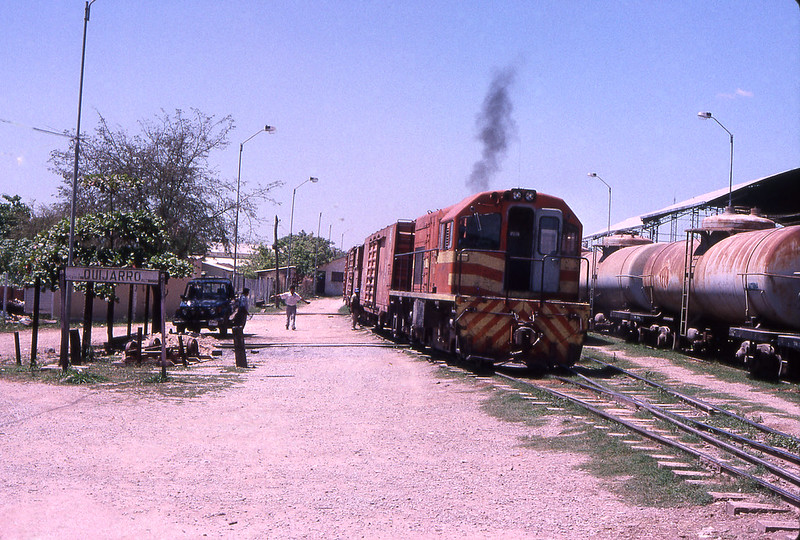
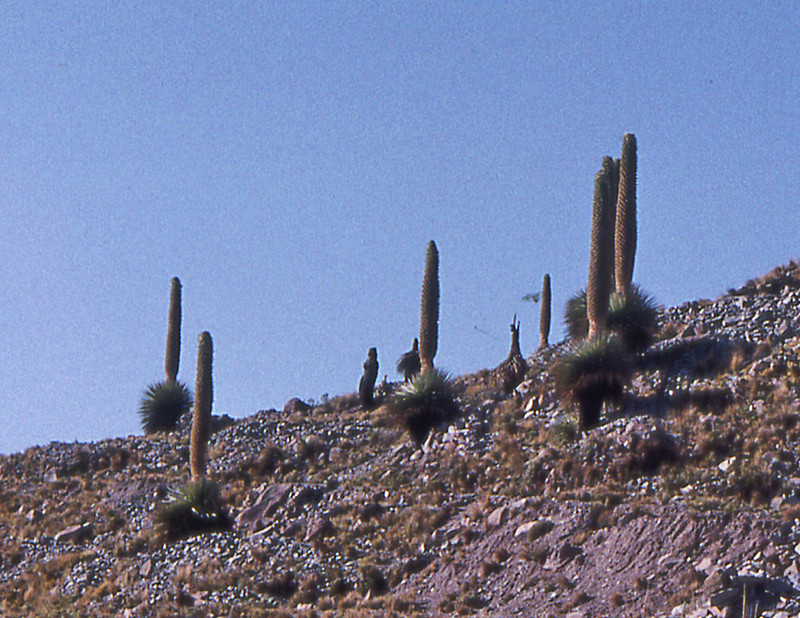
The above visit took place in June-July 1998. I went back for four weeks in November – Decemnber during which time I inspected the entire Bolivian railway system, I did not keep a diary but I took many pictures. To see all pictures click here https://www.flickr.com/photos/colinchurcher/albums/72157607198702203/
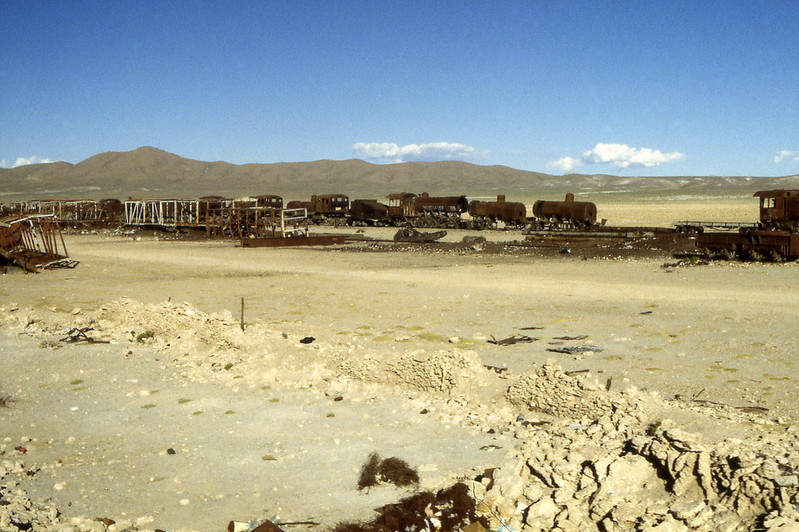
Locomotive graveyard near Uyuni
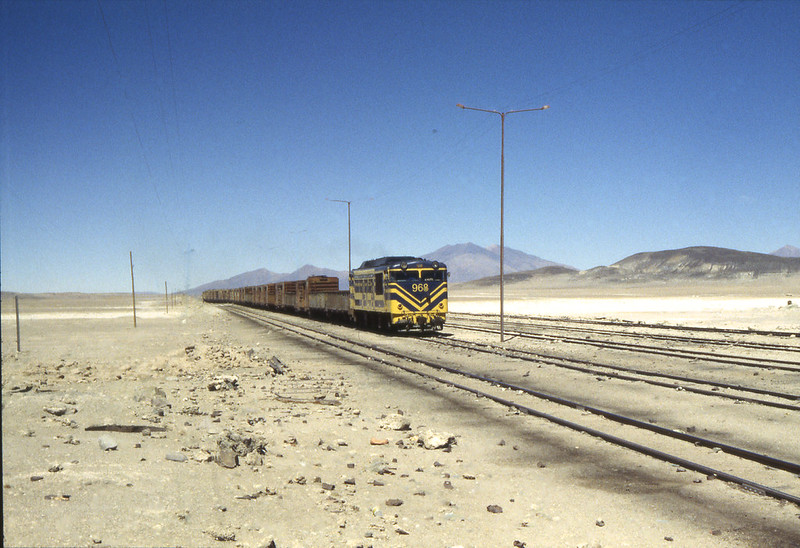
Train on the salt flats returning from Avaroa, (Chile)
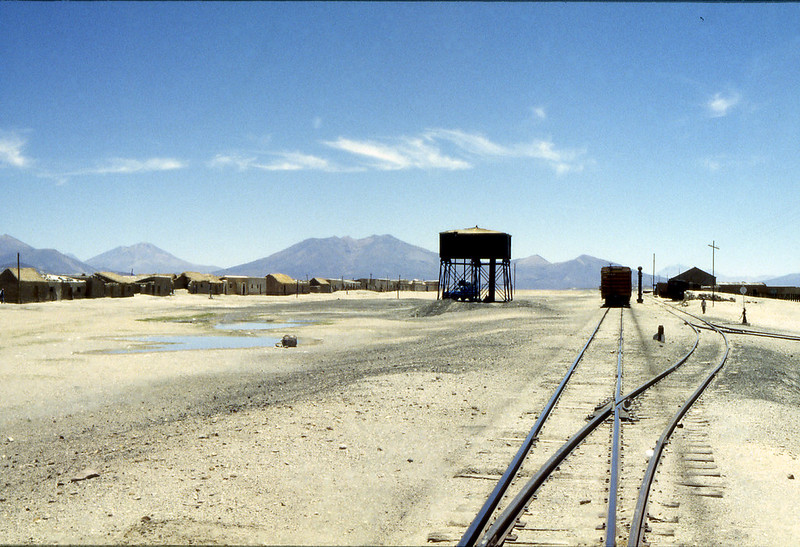
Avaroa yard
Villazon Line Andina Railway
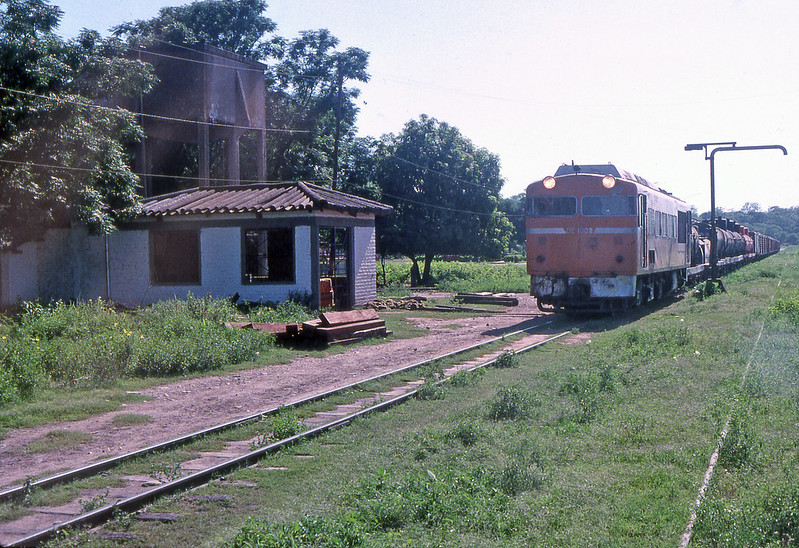
Abapo, Oriental Railway
Yacuiba line
Puerto Quijarro – Oriental Railway
Charana Line
Cochabamba
line - Andina Railway
Oruru
Uyuni
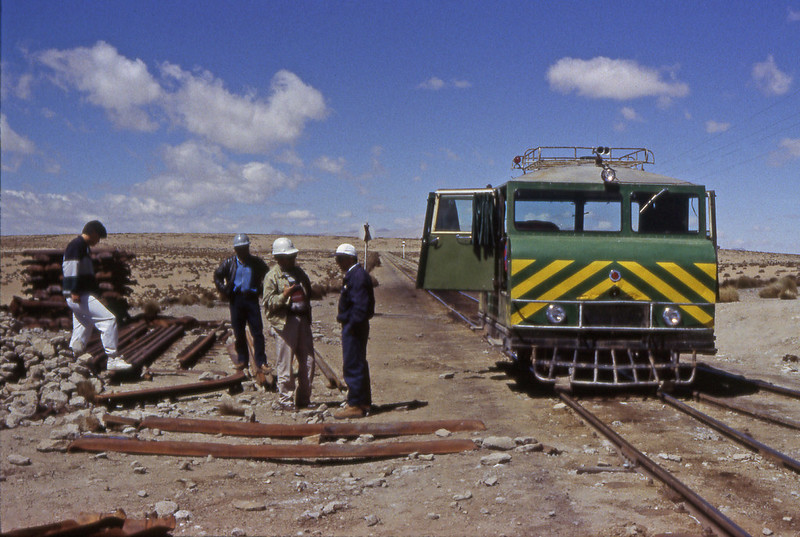
Near Uyuni. Track inspection car after we had hit a rail that had been placed too close to the track bya crossing.
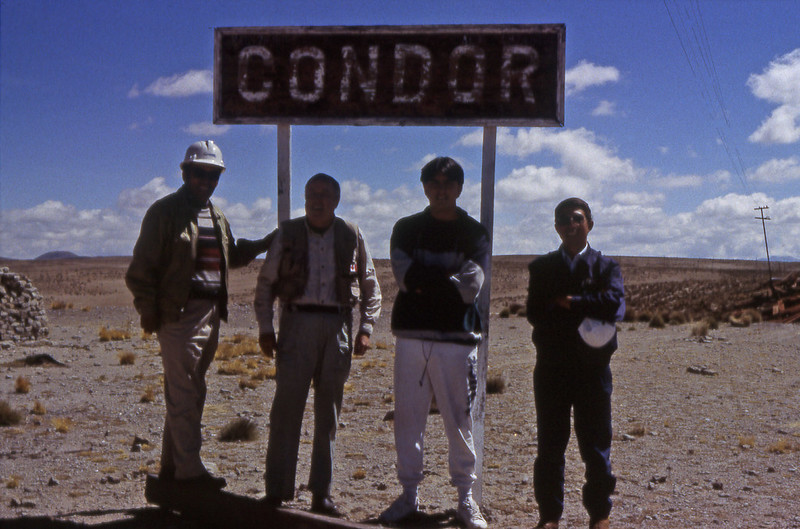
Condor summit
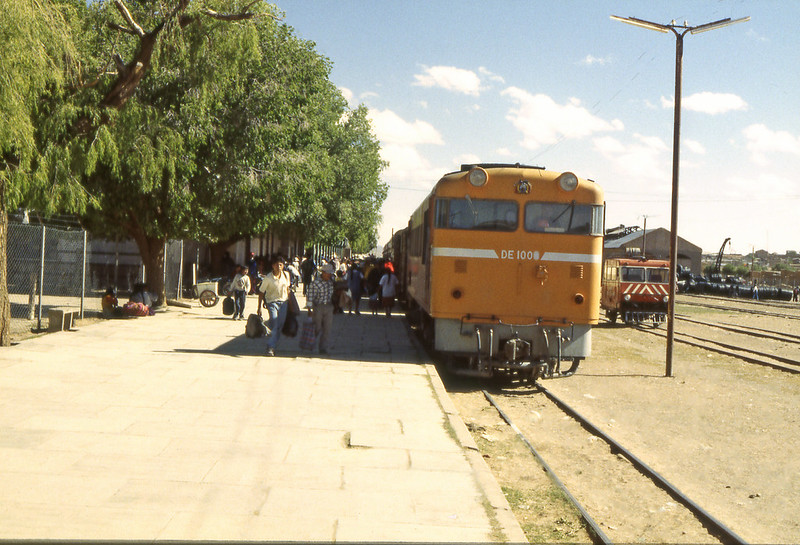
Villazon line The passenger train about to leave Villazon for Uyuni and Oruro with D1000.
|